Too much reality
Lynne Malcolm | Sunday 27 April 2014

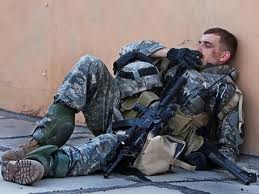
Image: (Steve Jacobs (Getty))
It used to be known as shell shock but we now know that post traumatic stress disorder can develop in a range of contexts, and that the devastating symptoms are not only psychological and emotional, but can severely effect our physical health as well. Meet a retired SAS military commander and a Cambodian refugee who both know this only too well. We also hear about the latest treatments including neurofeedback.
Guests
- Leahkhana Suos - Cambodian refugee & client at the NSW Service for the Treatment and Rehabilitation of Torture and Trauma Survivors (STARTS)
- Stuart Bonner - Retired SAS military commander
- Professor Sandy McFarlane
- Mirjana Askovic - Psychologist & Senior Neurofeedback Counsellor at the NSW Service for the Treatment and Rehabilitation of Torture and Trauma Survivors (STARTTS)
Publications
Redback One: The True Story of an Australian SAS Hero by Robert Macklin
Further Information
- NSW Service for the treatment and rehabilitation of torture and trauma survivors
- Veterans and veterans families counselling service
- Department of Veterans Affairs
- Lifeline 131114
Showing posts with label combat. Show all posts
Showing posts with label combat. Show all posts
Sunday, April 27, 2014
All in the Mind - Too Much Reality (on PTSD)
A good episode of All in the Mind this week that looks at PTSD, particularly as related to war and combat. They also examine one of the newer treatment approaches, neurofeedback.


Wednesday, July 03, 2013
Understanding PTSD: Researchers Explore Causes, Treatment
This is a good introductory overview of PTSD, with a nice section explaining the impact of trauma on the amygdala and hippocampus (I've formatted this section as an inset for easier access). While the explanation is good, I disagree with the treatment model they propose, for two different reasons.
(1) Exposure therapy may, over time, create habituation to the stimuli that trigger flashbacks or anxiety. This does not address the hypervigilance, the sense that one must be continually alert to possible threats in the environment, or testing people to make sure they are safe. Nor does it address the numbing that can result from trauma, and the desire to numb feelings with addictive behaviors.
(1) Exposure therapy may, over time, create habituation to the stimuli that trigger flashbacks or anxiety. This does not address the hypervigilance, the sense that one must be continually alert to possible threats in the environment, or testing people to make sure they are safe. Nor does it address the numbing that can result from trauma, and the desire to numb feelings with addictive behaviors.
(2) Those who experience PTSD, which is only 20-35% of those who experience trauma (depending on the trauma), generally have a history of big T traumas (physical, emotional, or sexual abuse; severe neglect; natural disaster; refugee status; death of parent) or a collection of small T traumas (bullying, shaming and humiliation, emotionally distant caregivers, etc). It is the reduction in resilience created by these earlier traumas that make one vulnerable to PTSD. Part of recovery has to be addressing and resolving these prior traumas, and the model presented in the article.
With that, here's the article.
With that, here's the article.
Understanding PTSD: Researchers explore causes, treatment
by Pete Zrioka
Eric Batory, pictured during his time as a special operations medic, assigned to the U.S. Army's 1st Ranger Battalion, 75th Ranger Regiment. Batory went through two years of extensive medical and special forces training to qualify for the position. Credit: Eric Batory
(Medical Xpress)—In 2005, ASU student Eric Batory was a long way from Arizona. He was in Mosul, Iraq on his first deployment as a special operations medic with the U.S. Army's 1st Ranger Battalion, 75th Ranger Regiment.
During a night raid to extract a high-value target, his unit came under fire as they were entering a compound. The squad leader was shot on his right side, where the round glanced off his body armor and came to rest near his heart. The only medic on the scene, Batory began rendering aid to the Ranger in the midst of a heated firefight, feeling the concussive force of grenades and gunfire all around him.
"That's what really rung my bell," says Batory, who is now a student in ASU's College of Liberal Arts and Sciences. "I'm in a closed room, with an LED light on this guy, all this stuff blowing up, concrete raining down."
Batory's patient survived and Batory was awarded the Bronze Star with Combat 'V' for his actions, the fifth-highest combat decoration. After that, Batory says he started to feel a little bit "off." He became withdrawn from his platoon, obsessing over every possible medical scenario. He distanced himself from his fellow Rangers, afraid he'd lose someone as a result of his actions.
Two years and two deployments later, he left the Army as a sergeant, joining the scores of veterans living with cognitive and psychological wounds from the Global War on Terror.
Six years and a world away from the battlegrounds of Iraq and Afghanistan, Batory still lives with post-traumatic stress disorder (PTSD) from his time in combat.
Any traumatic experience, such as combat, violent assault or natural disaster, can cause PTSD. Symptoms can include flashbacks to the event, nightmares, avoiding triggering situations, numbness and withdrawal, fear and increased emotional arousal.Why do these kinds of experiences create such a painful and long-lasting effect? The answer lies in very old structures in the human brain, called the amygdala and the hippocampus. These are nestled within the temporal lobe, which manages sensory input, speech and language, and memory formation and association. Memories are formed, stored and contextualized by the hippocampus. The amygdala is tied to our emotions, particularly those felt in fearful, life-or-death situations."The hippocampus' job is to remember the context of the situation and the amygdala ensures the longevity of that memory, especially the emotional memory," says Harold Burke, a faculty associate in ASU's College of Health Solutions. "It's not just the context of the visual and audio cues, but the emotional experience of fear."In addition to branding these memories in the brain, the amygdala also regulates part of the sympathetic nervous system, commonly known as the fight or flight system."It's a very old part of brains from an evolutionary standpoint," says Burke, who teaches courses in ASU's Doctor of Behavioral Health program. "It's been designed over millions of years of evolution to trigger in an emergency situation to save our lives."In these emergency situations, like the heated combat Batory experienced, the sympathetic nervous system pumps out norepinephrine.

Norepinephrine increases heart rate as well as oxygen supply to the brain, allows us to breathe faster and deeper, dilates pupils to take in more visual information and triggers the release of glucose stores for extra energy."It also activates the upper part of the brain, namely the cerebral cortex, so you can be very alert and make quick decisions," says Burke.A secondary system, which takes longer to kick in, lasts longer and aids the body's recovery. The hypothalamic-pituitary-adrenal axis, or HPA axis, is a conglomerate of structures throughout the body that responds to highly stressful situations by releasing the hormone cortisol.Cortisol is incredibly beneficial to both the body and mind in small, measured doses. But with chronically stressful situations, cortisol becomes more of a problem than a solution.Back in the hippocampus, there are neurons that act as a thermostat that regulates cortisol production. But prolonged or repeated release of cortisol kills the very neurons that help inhibit it, resulting in a negative feedback loop of more cortisol and fewer neurons to stop its release."It's like smashing the thermostat," Burke explains.Furthermore, repeated exposure to similar high-stress trauma not only kills neurons and can inhibit cognition, but can also result in the strengthening of the memories being encoded in the hippocampus and amygdala."Here's the issue: with PTSD, the activation of the amygdala and HPA axis is so intense that the synapses, the various connections between the neurons, how well they communicate, are strengthened as a product of that intensity and it can last a very, very long time," says Burke.It's like tracing a picture over and over again. The more you go over those lines, the clearer and more distinct an image becomes, just as repeated exposure to trauma enhances the emotional memory and deeply encodes a fear response.To make matters worse, the job of the hippocampus and amygdala together is to not just remember that exact, specific situation, but to remember things that are similar to it."The brain generalizes the stimuli, so that if anything else is even somewhat similar it will trigger the same response," says Burke. "And that's actually a good thing. We want to be able to generalize our learning to different contexts, but the catch with PTSD is that then other things that are pretty innocent actually trigger the same kind of memories or re-experiencing."For instance, some veterans who spent time on convoys have difficulty driving if there's trash or debris in the road, as hiding improvised explosive devices in garbage is a common insurgent tactic. In the case of Batory, there's a gamut of different stimuli that trigger an intense fear response for him back in the civilian world.
"Dogs barking, alarms or phones ringing. Anything beeping or with a high pitch," says Batory, listing the things that send his heart racing. "Noise in the dark, or a lot of light at night ... I don't like bright lights at night, I feel like you're exposed."
The sound and concussive force of fireworks has sent him diving to the ground before.
"Even at Fourth of July, knowing what it was, just feeling the concussions or hearing the blasts gets my heart rate up," says Batory.
Batory's struggle with PTSD and its lingering effects aren't limited to barking dogs or fireworks. When he was honorably discharged from the Army in 2007, he was bored. After deploying three times as a special operations medic and working through two years of intensive schooling to qualify for the coveted position, a desk job left him restless.
"I was so dissatisfied with feelings of insignificance and lack of stimulation, compared to what I was used to," says Batory.
Distracted, depressed and disillusioned with civilian life, Batory joined the Army Reserves, which only seemed to exacerbate his symptoms. Batory had trouble sleeping, and when he did, he was sleepwalking. He started to fear social events and public places like movie theatres, malls or sporting events.
"I started to get overwhelming anxiety being around groups of people," says Batory. "Whenever I was around large crowds, I'd want to leave because I'd feel overwhelmed, because there was no structure and no order. That all started to compound until I started having dissociative episodes, getting in car accidents where I would zone out and think about Iraq or Afghanistan. I'd hit a median or rear end someone. Started getting a lot of tickets and got into financial trouble."
Eventually, Batory's car was repossessed and he became homeless, all in the midst of trying to attain his undergraduate degree. He put in a disability claim with the VA and sought additional help there, receiving neuropsychological testing. He found some relief with medication, but he wasn't happy about it.
"It's disheartening to know that you have this pile of pills in front of you and you're dependent on it to feel human," says Batory.
Batory sought out additional resources available to ASU students. Fortunately for him, ASU offers a range of counseling services and has been named a Military Friendly School four years running.
He began therapy with Andrea Hekler, a clinical psychologist at ASU Health Services - NP Healthcare, located near the Downtown Phoenix campus. Hekler provides two types of evidence-based psychotherapies for PTSD patients: cognitive processing therapy and prolonged exposure therapy. Both are a class of therapies called cognitive behavioral therapies.
"Cognitions refer to the thoughts we have and how we perceive life through a certain lens," says Hekler, who has previously worked with the National Center for PTSD. "When individuals experience a trauma – be it combat, Hurricane Sandy, 9/11 in New York or being sexually assaulted – having those traumatic experiences leads us to perceive the world in different ways. People tend to start thinking the world is a much more dangerous place than most people believe and they're not able to handle and cope with the world."
Cognitive processing therapy focuses on the assumptions that PTSD victims have as a result of their trauma. Prolonged exposure therapy homes in on a victim's behavior.
Cognitive processing therapy teaches patients how their thoughts are connected to how they behave and feel.
"It's essentially using logic and rational thinking to help them understand the assumptions they have and challenge those assumptions," says Hekler.
Prolonged exposure therapy can be more challenging as it's based on the premise that PTSD victims haven't processed their trauma or even talked about it, according to Hekler.
This therapy breaks down into four parts: education on what PTSD is and its symptoms, breathing exercises to relax the patient and two types of exposure. In the first, imaginal exposure, patients close their eyes and describe their trauma as if it were happening in the moment, not the past. This process is repeated, recorded and listened to outside of the sessions as well.
"Through this rehearsal, they come to something called habituation," says Hekler. "Essentially, stimuli that once had a very strong intensity, over time reduces that intensity. Each time, when someone comes back to therapy they recite the event again and typically what happens is they don't become as emotionally distressed or upset about it. Eventually it becomes a memory, not one that you want to revisit all the time, but without the same emotional intensity."
The second type of exposure is in vivo exposure, where patients list all of the situations they avoid and then insert themselves in them. This fosters a similar process of habituation, where the patient learns to manage the crippling fear or anxiety they experience in situations they avoid.
"At the heart of PTSD is avoidance," says Hekler. "Avoidance is really good in the short term because it makes anxiety go away – what it's really doing is telling your brain that this is terrifying and we need to get away."
In other words, it's only serving to strengthen the fear conditioning in the amygdala and hippocampus. The process of habituation doesn't seek to overwrite those incredibly intense emotional memories, but to create a separate set of circuits that associate the same stimuli with a safe emotional response.
"Cognitive behavior therapy literally sets up and strengthens circuits to inhibit fear," says Burke. "You don't get rid of the original trauma, but you overlay it with other behavior."
For Batory, in vivo exposure proved to be a beneficial form of therapy.
"It was effective not because it changed what I feel or think, but because I learned to deal," says Batory. "Even though I feel anxiety, it's not as severe and I know how to keep it in check."
While both therapy and medication can be effective, Burke believes that PTSD demands a holistic approach to treatment in which different health professionals work closely together.
"I think ASU is on the cutting edge of integrated health solutions," says Burke. "We can have Dr. A doing one thing to a person and Dr. B doing something else to the same person across town, especially when Dr. A is just physical medicine and Dr. B is just psychological. Those two groups have not been talking nearly enough over the last decades, and that's got to change. And ASU is right on the cusp of it. The Doctorate of Behavioral Health program is the first of its kind in the whole country."
Batory now lives with a group of other veterans and is on track to graduate with a bachelor's degree in microbiology in December 2013. After spending years of attaching negative associations to his military experience, even when saving lives, he has newfound perspective and direction. He is applying to medical schools in the coming months, saying he wants to get back to helping people.
"I've taken up an interest in medicine again, and I think it's a good measure of the return of myself and my life's purpose," says Batory. "But I really had to rebuild myself to get back to that point."
To others suffering from PTSD, Batory offers pretty straightforward advice: "You're not weak. You're not any less of a person for acknowledging you're struggling, and the sooner you do that, the sooner you'll be on the road to recovering."
Tuesday, November 27, 2012
Traumatic Childhood Predicts Adult PTSD in Soldiers

In nearly every client I have seen in my short time as therapist, survivors of sexual trauma had really messed up childhoods - those with "good enough" childhoods recover quickly from rape or assault compared to those who were molested, neglected, or emotionally/verbally abused as children.
New research suggests this is also true for soldiers who suffer from posttraumatic stress disorder (PTSD) - the ones who had traumatic or troubled childhoods are much more likely to develop PTSD as a result of their combat exposure.
Full abstract is at the bottom - the article is pay-walled.
Full abstract:Embattled childhoods may be the real trauma for soldiers with PTSD
Posted On: November 19, 2012
New research on posttraumatic stress disorder (PTSD) in soldiers challenges popular assumptions about the origins and trajectory of PTSD, providing evidence that traumatic experiences in childhood - not combat - may predict which soldiers develop the disorder.
Psychological scientist Dorthe Berntsen of Aarhus University in Denmark and a team of Danish and American researchers wanted to understand why some soldiers develop PTSD but others don't. They also wanted to develop a clearer understanding of how the symptoms of the disorder progress.
"Most studies on PTSD in soldiers following service in war zones do not include measures of PTSD symptoms prior to deployment and thus suffer from a baseline problem. Only a few studies have examined pre- to post-deployment changes in PTSD symptoms, and most only use a single before-and-after measure," says Berntsen.
The team aimed to address these methodological issues by studying a group of 746 Danish soldiers and evaluating their symptoms of PTSD at five different timepoints. Their study is published in Psychological Science, a journal of the Association for Psychological Science.
Five weeks before the soldiers were scheduled to leave for Afghanistan, they completed a battery of tests including a PTSD inventory and a test for depression. They also completed a questionnaire about traumatic life events, including childhood experiences of family violence, physical punishment, and spousal abuse.
During their deployment, the soldiers completed measures related to the direct experience of war: perceptions of war zone stress, actual life-threatening war experiences, battlefield wounds, and the experience of actually killing an enemy.
The researchers continued to follow the soldiers after their return home to Denmark, assessing them a couple weeks after their return, two to four months after their return, and seven to eight months after their return.
What Berntsen and her colleagues found challenges several widely held assumptions about the nature of PTSD.
Rather than following some sort of "typical" pattern in which symptoms emerge soon after a particularly traumatic event and persist over time, Berntsen and colleagues found wide variation in the development of PTSD among the soldiers.
The vast majority of the soldiers (84%) were resilient, showing no PTSD symptoms at all or recovering quickly from mild symptoms.
The rest of the soldiers showed distinct and unexpected patterns of symptoms. About 4% showed evidence of "new-onset" trajectory, with symptoms starting low and showing a marked increase across the five timepoints. Their symptoms did not appear to follow any specific traumatic event.
Most notably, about 13% of the soldiers in the study actually showed temporary improvement in symptoms during deployment. These soldiers reported significant symptoms of stress prior to leaving for Afghanistan that seemed to ease in the first months of deployment only to increase again upon their return home.
What could account for this unexpected pattern of symptoms?
Compared to the resilient soldiers, the soldiers who developed PTSD were much more likely to have suffered emotional problems and traumatic events prior to deployment. Childhood experiences of violence, especially punishment severe enough to cause bruises, cuts, burns, and broken bones actually predicted the onset of PTSD in these soldiers. Those who showed symptoms of PTSD were more likely to have witnessed family violence, and to have experienced physical attacks, stalking or death threats by a spouse. They were also more likely to have past experiences that they could not, or would not, talk about. And they were less educated than the resilient soldiers.
According to Berntsen and colleages, all of these factors together suggest that army life - despite the fact that it involved combat – offered more in the way of social support and life satisfaction than these particular soldiers had at home. The mental health benefits of being valued and experiencing camaraderie thus diminished when the soldiers had to return to civilian life.
The findings challenge the notion that exposure to combat and other war atrocities is the main cause of PTSD.
"We were surprised that stressful experiences during childhood seemed to play such a central role in discriminating the resilient versus non-resilient groups," says Berntsen. "These results should make psychologists question prevailing assumptions about PTSD and its development."
Peace and War
Trajectories of Posttraumatic Stress Disorder Symptoms Before, During, and After Military Deployment in Afghanistan
- Dorthe Berntsen1,
- Kim B. Johannessen1,
- Yvonne D. Thomsen2,
- Mette Bertelsen3,
- Rick H. Hoyle4 and
- David C. Rubin1,4
+ Author Affiliations
- Dorthe Berntsen, Department of Psychology and Behavioral Sciences, Center on Autobiographical Memory Research, Aarhus University, Nobelparken, Jens Chr. Skousvej 4, 8000 Aarhus C, Denmark E-mail: dorthe@psy.au.dk
Abstract
In the study reported here, we examined posttraumatic stress disorder (PTSD) symptoms in 746 Danish soldiers measured on five occasions before, during, and after deployment to Afghanistan. Using latent class growth analysis, we identified six trajectories of change in PTSD symptoms. Two resilient trajectories had low levels across all five times, and a new-onset trajectory started low and showed a marked increase of PTSD symptoms. Three temporary-benefit trajectories, not previously described in the literature, showed decreases in PTSD symptoms during (or immediately after) deployment, followed by increases after return from deployment. Predeployment emotional problems and predeployment traumas, especially childhood adversities, were predictors for inclusion in the nonresilient trajectories, whereas deployment-related stress was not. These findings challenge standard views of PTSD in two ways. First, they show that factors other than immediately preceding stressors are critical for PTSD development, with childhood adversities being central. Second, they demonstrate that the development of PTSD symptoms shows heterogeneity, which indicates the need for multiple measurements to understand PTSD and identify people in need of treatment.
Berntsen, D., Johannessen, KB, Thomsen, YD, Bertelsen, M, Hoyle, RH, and Rubin, DC. (2012, Nov 5). Peace and War: Trajectories of Posttraumatic Stress Disorder Symptoms Before, During, and After Military Deployment in Afghanistan. Psychological Science, Epub ahead of publication.
Wednesday, February 29, 2012
NIH - PTSD: Treatment and Prevention
Interesting talk - except that exposure therapy can sometimes make PTSD even worse. The good outcomes for this approach that I have seen are in combat veterans, and even that is questionable in my opinion. I wonder if the medical establishment will eventually join the rest of the psychological community in recognizing that behavioral interventions generally do not work as anything more than a short-term band-aid?
PTSD: Treatment and Prevention
Click here to watch the video. Or you can download the video at the link at the bottom of this post.
Description: BSSR Lecture Series
In the US, approximately 70% of adults will experience a traumatic event and 20% will develop posttraumatic stress disorder (PTSD). Both civilian and combat-related PTSD are major public health concerns with long term medical and mental health sequelae. Initial but transient PTSD symptoms may be considered part of the normal reaction to trauma, as they occur almost universally following severe enough traumas. In contrast, those who suffer from chronic PTSD show decreasing PTSD symptoms in the first month following trauma, which then remain fairly steady across time. They do not worsen; they just don't extinguish their original fear reactions. Therefore, PTSD can be viewed as a failure of recovery caused in part by a failure of fear extinction following trauma. Exposure therapy follows the same paradigms as extinction training and has received more evidence of its efficacy for treating PTSD than any other intervention. In this lecture, PTSD will be reviewed and treatments for PTSD will be discussed, with data on the efficacy of each, including exposure therapy (both imaginal exposure and virtual reality exposure therapy), EMDR, and pharmacotherapy. These are treatments for chronic PTSD. An important goal is secondary prevention, trying to intervene for those at risk in an attempt to prevent the development of PTSD. In the same way that there are rapid ED-based protocols for stroke or heart attack, we envision a personalized ED-based rapid intervention protocol that may prevent the development of PTSD following trauma. In translational research based on basic, preclinical, and clinical models for the consolidation of fear memories, pilot data with 137 emergency department (ED) patients seen an average of 11-12 hours after trauma exposure, randomly assigned to receive 3 sessions of exposure therapy beginning in the ED or assessment only, will be presented and discussed.
Author: Barbara O. Rothbaum, Ph.D., ABPP, Emory University School of Medicine
Runtime: 01:11:22
Download: Download Video
Subscribe to:
Posts (Atom)