Showing posts with label theology. Show all posts

Wednesday, July 31, 2013

David Christopher Lane - Ken Wilber's Eye: Exploring the Dangers of Theological Reifications

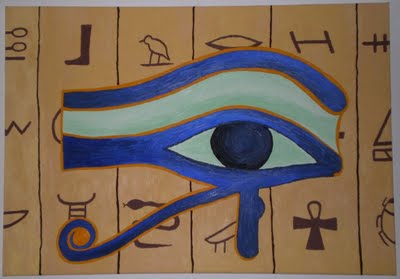
The Eye of Ra

From Integral World, David Lane recently posted an article in response to Wilber's new "Integral Semiotics." While he is slightly critical of Wilber's overgeneralizations in some areas - his reifications - Lane is overall much kinder to this new rewrite of old ideas than am I.

When Lane says, "Wilber wants to argue that reality is far more than mere sensorimotor referents," I want to say, "Well, duh!" He's been saying that for close to 35 years. And really, as I have mentioned previously, this is simply another iteration of his basic model with a few new terms.

Here is a sort of summary paragraph:
The fundamental problem, I would suggest, is not in the fact that there are many worldspaces (there are), but over how we interpret such experiences. The very reason we have confidence in the relative reality of an apple versus one person’s claim of seeing God is that the former can be socially mediated whereas the latter lacks such social verification. It is premature to say the least that such experiences can be properly adjudicated even if we have an idealized Wilber sangat of enlightened beings. David Blaine, the noted street magician, can easily trick onlookers with the most rudimentary of magic and all this even while we are well trained in our five senses. One can only imagine how easy it would be to trick someone into inflating their own meditative experiences into something far grander than it actually is. Furthermore, the term apple is much more specific than the word God which is far too abstract and too generalized a term to be useful in a discussion designed for specificity. 
Lane gets at, with less vigor than I would have, one of the major flaws that has been inherent in Wilber's work from the beginning - it is focused on individual subjectivity almost exclusively, while only paying obligatory lip-service to intersubjective and interpersonal experience.

Despite my nit-picking, this is an excellent opening response to Wilber - I wonder if he will also respond to the second part of Wilber's new work, the "Giga Glossary" proposal.


~ David Christopher Lane, Ph.D. Professor of Philosophy, Mt. San Antonio College Lecturer in Religious Studies, California State University, Long Beach Author of Exposing Cults: When the Skeptical Mind Confronts the Mystical (New York and London: Garland Publishers, 1994) and The Radhasoami Tradition: A Critical History of Guru Succession (New York and London: Garland Publishers, 1992).

Ken Wilber's Eye: Exploring the Dangers of Theological Reifications

David Christopher Lane, Ph.D.

I still vividly recall the night I first read Ken Wilber’s article, “Eye to eye: The relationship between science, reason, and religion and its effect on transpersonal psychology,” in the then new journal, ReVision (Winter/Spring, Vol. 2, No. 1.). It was 1980 and I was teaching full-time at Moreau Catholic High School and working on my M.A. in the History and Phenomenology of Religion at the Graduate Theological Union in Berkeley, California. For a number of months I had been undergoing a severe intellectual dilemma that was precipitated by my obsessive readings of all things scientific. Although I was deeply immersed in Indian philosophy (particularly the practice of shabd yoga and philosophically the purview of Advaita Vedanta), I felt a deep unease about how such an internal pursuit could hold up under rational scrutiny, particularly given the tremendous progress physics and neuropsychology had made over the past century.

At the time I was deeply into meditation and also deeply into skeptically analyzing my religious-spiritual outlook. I was having, more or less, an epistemological crisis. Reading Wilber’s essay was (and the pun is intended) an eye opener, since he very clearly explained three different levels of acquiring knowledge: sensory-empirical; mental-rational; spiritual-transcendental. Brad Reynolds gives a nice summary of Wilber’s tripartite schema:
“Eye to Eye introduces the notion of epistemological pluralism with the (Christian mystic) metaphor of the "three eyes of knowing," i.e., sensory/flesh (sensibilia), mind/reason (intelligibilia), spirit/contemplation (transcendelia). This multi-leveled understanding then brings to light a "category error," or when one "eye" (or realm) tries to usurp the roles of the other two, or is outright mistaken for another. Therefore the "problem of proof" can be solved since each domain provides their own particular validity claims for differentiating the principle spheres of human knowledge (respectively, science, psychology/philosophy, mysticism). The presentation thus contains an extended examination of the philosophical history of science and its reductionistic tendencies (known as scientism), yet it does so by offering a rational synthesis (or a vision-logic of mandalic reasoning) which can not only include science but also authentic spirituality and contemplative practices. Eye to Eye also contains the all-important essay "The Pre/Trans Fallacy," whose conception (a few years back) overturned the common Romantic error adopted by Wilber's earlier writings. This pre/trans fallacy clarifies a major (and disastrous) confusion in the modern world, which simply states that if we are to truly understand and accept the "form of development" (identify, transcend, integrate) at each stage of evolution in a pluridimensional universe, then we must always properly differentiate between pre- and trans- personal domains of consciousness. The book therefore offers not only a strong critique of scientific materialism, but it also brilliantly shines an illuminating light to help guide the "New Age" out of its dark cave of mythic thinking and its regressive (pre-rational) approaches to spirituality.”
I read Wilber’s article very closely several times late into the night and into the next morning. It was about 3 or so in the morning when I experienced an intellectual moment of satori, a flash of clarity about the pursuit of knowledge and its many pathways. I immediately became a Wilber convert, since he had by his clarity of thought provided me with an intellectually satisfying way to justify both my scientific and mystical pursuits. They were not, as I originally feared, mutually exclusive.

I say this is as a prefatory note to Ken Wilber’s latest essay Integral Semiotics (which is reportedly an excerpt from volume 2 of the “Kosmos Trilogy"), since it is in many ways a sophisticated, if still debatable, extension of Wilber’s "Eye to Eye" article which was originally penned nearly 35 years ago.

Given my earlier admiration of Wilber’s essay on methodological pluralism, I find there is much that I like in his new refinement, even though one has to be cautious not to fall prey to some of his unnecessary reifications. Wilber provides a clear overview of his thesis in paragraph three where he writes,
"But my point is that they all, in fact, exist in a specific worldspace that can itself be discovered and experienced—such as the causal or formless state of consciousness, particular stages of meditation, specific peak experiences or altered states. When one is in those worldspaces—and not simply staring at the sensorimotor worldspace—then the actual referents (the "real phenomena" of each referent)—can be clearly seen or experienced. And this changes the nature and meaning of semiotics altogether, by asserting that any given referent of a particular signifier exists in a specific worldspace, and in order to experience that referent appropriately (if it exists at all), the subject must get itself into that particular worldspace, and only then look around for the referent."
Wilber’s point, though obvious, is important in understanding that there are multiple states of awareness and to properly understand what is transpiring in any one of those states necessitates actually being within that particular stream of consciousness--what Wilber repeatedly calls “worldspace.” Otherwise, one cannot fully appreciate the inherent nuances that attend within that conscious space. I can draw on an obvious example from my own medical history to back up Wilber’s assertion here. For a number of years I completely lost my sense of smell and taste and thus an entire “worldspace” (what one may call an olfactory universe) was shut off from me, try as I might to imagine it once again. However, shortly after surgery (or a heavy dose of prednisone) my sense of smell comes back and I enter into the most wonderful galaxy of scents--from sea weed, to coffee, to Chiptole salsa! It is literally unimaginable (in terms of lived through experience) to conjure up such a sensual region unless one is immersed within that region. 
Importantly, and this goes to the very heart of why methodological pluralism is vital to Integral theory, Wilber wants to argue that reality is far more than mere sensorimotor referents:
“But in addition to the sensorimotor worldspace, there are the emotional, the magical, the mythical, the rational, the planetary, the holistic, the integral, the global, the transglobal, the visionary, the transcendental, and the transcendental-immanent worldspaces, to name a prominent handful. And all of those worldspaces have their own phenomenologically real objects or referents. A dog exists in the sensorimotor worldspace, and can be seen by any holon with physical eyes. The square root of a negative one exists in the rational worldspace, and can be seen by anyone who develops to the dimension of formal operations. And Buddha-nature exists in the causal worldspace, and can be easily seen by anybody who develops to that very real dimension of their own state possibilities. But neither the square root of a negative one nor Buddha-nature can be seen in the sensorimotor world—and all the philosophies that take the material realm or the sensorimotor realm as the prime reality (or that take consciousness-free ontology as the basic given), will not be able to locate either of those, and will hence conclude they both lack a fundamental reality (unless they go out of their way to make an exception, as, for example, positivism does when it says that all that is real are things and numbers—but too bad for Buddha-nature or Spirit: just can’t be found in the realm of dirt or numbers and thus is unceremoniously erased from the face of the Kosmos.) In other words, the real referent of a valid utterance exists in a specific worldspace. The empiricist theories have failed in general because they ultimately recognize only the sensorimotor worldspace (and thus cannot even account for the existence of their own theories, which do not exist in the sensorimotor worldspace but in the rational worldspace).”
While Wilber’s argument from a phenomenological perspective makes eminently good sense, the danger in his approach is that he tends to fall prey to premature reifications when he uses such words as “Buddha nature or Spirit” as if such terms have already been universally accepted by all and sundry . . . which they have not. Moreover, he tends to confuse experience with its causation-reality, forgetting in the process of how easy it is for anyone to be deceived or duped by how certain phenomena are produced.

Ironically, Wilber tends to invoke a naive realism when addressing a so-called shared reality. For example, he argues
“When we perceive an apple, and say “I see the apple,” and the brain lights up in a particular way, we do not conclude, “The apple only exists as a brainwave pattern; it otherwise has no reality.” No, we conclude that the apple is a real object in the real world, and as the brain perceives it, it lights up in various specific ways.”
While on the surface this seem evidential, the fact remains that what we could be mistaken about the perceived object and on closer inspection discover that it wasn’t an apple but a pear or perhaps a 3-D paper object which only “appears” to be a real fruit. I am belaboring this point because there is no absolute given even in the sensory-empirical world, which could not potentially be mislabeled or misinterpreted. This may seem like a trivial point, but I think it looms much larger than we might at first suspect when we enter into the mystical domain which doesn’t have the same overwhelming consensual feedback correctives (at least not yet).

This become readily apparent when right after his “apple example” Wilber writes,
“But what happens when we say the same type of sentence but a different referent, such as, when engaged in contemplation, “I see God,” and the brain again lights up in a specific way. Do we give to God the same reality we gave to the apple, and conclude that God is a real phenomenon in the real world, and the brain is lighting up as it sees this real item? No, in fact we don’t. In fact, we do just the opposite. We take whatever brainwave pattern we can find at the time—perhaps an increase in gamma waves—and we say, “When the brain produces excess gamma waves, then the subject will imagine that he or she is seeing God.” In other words, where with the apple the brainwaves are taken as extra proof that apples are real, with God, the brainwaves are taken as extra proof that God is just an imaginary object; it’s not real in the real world, but simply an imaginary product of certain brainwave patterns. What’s going on here?”
As I pointed out previously, we could potentially be wrong about an apple (and indeed this happens more than we realize), but the reason we might be doubly suspicious about a contemplator claiming “I see God” (versus him or her saying “I see an apple”) is that it doesn’t generally take a specialized skill for us to recognize an apple or something similar to it. In addition, the commonality of the experience is anything but extraordinary, which is not the case with someone claiming to see God (whatever such a nebulous term might mean and in what context). In addition, the subjective nature of meditation circumscribes how easy it is to share with others the content of what he or she encountered. For Wilber’s example to be equatable with seeing an apple necessitates a socially mediated worldview, not a purely subjective one, regardless of how real it may or may not be. 
Now this doesn’t mean that the contemplator’s worldspace is something that isn’t valuable or important; it simply means that the experience of an apple which others can see and share in the same time-space referent shouldn’t be conflated with what a contemplator sees or hears or experiences in the privacy of his own being. 
For instance, you cannot appreciate dreaming unless you too have dreamt. That seems obvious. But that doesn’t mean that the dreamer is somehow privileged because of that ability to know the causation or ontological status of that dream. Thus, while I applaud Wilber’s insistence that we should explore varying regions of consciousness (via mediation or otherwise), I think it is misleading to then pontificate about the “reality” or “truth-value” of such experiences by trying to equate seeing an apple in the sensorimotor arena with seeing God in contemplation and then lambasting those who argue that there may be a difference between them. 
The fundamental problem, I would suggest, is not in the fact that there are many worldspaces (there are), but over how we interpret such experiences. The very reason we have confidence in the relative reality of an apple versus one person’s claim of seeing God is that the former can be socially mediated whereas the latter lacks such social verification. It is premature to say the least that such experiences can be properly adjudicated even if we have an idealized Wilber sangat of enlightened beings. David Blaine, the noted street magician, can easily trick onlookers with the most rudimentary of magic and all this even while we are well trained in our five senses. One can only imagine how easy it would be to trick someone into inflating their own meditative experiences into something far grander than it actually is. Furthermore, the term apple is much more specific than the word God which is far too abstract and too generalized a term to be useful in a discussion designed for specificity. 
Later on in his essay, Wilber elaborates on the importance of knowing the correct “Kosmic Address” to enter into these worldspaces.
“This is also directly related to what is referred to as the “Kosmic Address” of a phenomenon. In order to locate a referent (e.g., a dog, the square root of a negative one, or Buddha-nature), one has to know the worldspace in which the referent exists. Simply giving a signifier or name to the object or event tells us nothing about whether that object or event is real (what about “unicorns,” or the “tooth fairy,” or “Santa Claus”? Turns out those are real, but only in the mythic worldspace. They cannot be found in the sensorimotor world, the rational world, the holistic world, etc., and are thus usually dismissed as fantasy, overlooking the genuine phenomenological reality those items have for those in the mythic worldspace, where those items are as real as any other object or event that can enter awareness at that level)."
I appreciate Wilber’s nice turn of phrase here about Kosmic addresses and how we need to access certain phenomena by correctly entering those domains. 
Phenomenologically speaking, yes we do live in a multiverse of differing states of awareness. But I think we should be cautious about how we use the word “real” when describing what these experiences ultimately mean and entail. 
For instance, I remember as a young kid walking on the beach in Santa Monica and my friends and I would see gold glittering on the wet sand. For part of the day we really thought we were going to be rich since we had discovered a precious metal! Of course, our parents quickly dampened our millionaire dreams when they explained that it was only “fool’s” gold since it was simply how the light reflected off the water and sand to give it that unique sparkle. 
Okay, so as a kid I had an experience of “gold” but it wasn’t really gold at all. What changed? My interpretation of the phenomenon. The thing “itself” remained the same, even though my experience was irrevocably altered. 
When it comes to subtler realms of consciousness, the difficulty in determining the relative reality (or permanence? or consensually share inputs?) of what arises is much more fraught with potential missteps, given the paucity of an overwhelming agreement on such matters. 
I can draw upon my own spiritual tradition to underline this epistemological conundrum. In shabd yoga circles (particularly within Radhasoami branches), it is almost axiomatic that when an initiate goes within during meditation he or she will see the radiant form of their guru who will guide them by light and sound to higher and higher regions of awareness and bliss. 
Within Radhasoami Satsang Beas, to give an example from the largest sect of the tradition, meditators almost universally believe that the radiant form is a vision created by their Master’s grace from the audible life stream. However, Faqir Chand, a longtime practitioner of shabd yoga and later an acknowledged adept, came to an entirely different realization. Due to a series of now famous events, Faqir realized that inner visions of his guru and other fantastic apparitions were projections of his own mind. I still remember when I gave a copy of Faqir’s life story and teachings (see The Unknowing Sage: The Life and Work of Baba Faqir Chand) to my satsangi friend who was also my local mail woman. I caught up with her a few days later and see looked slightly distraught. I inquired about why and she said, “I started crying after I read about Faqir Chand’s revelations. It made me doubt all that I believed before concerning meditation and the Master’s radiant form.” 
So let’s agree with Wilber that in order to access the inner sound current and explore subtler and subtler realms of consciousness one has to engage in some sort of meditation technique (or something similar to it). But what does that then mean in terms of “reality” or truth value? Isn’t the real issue not one of worldspaces (that is an obvious given) and not even Kosmic addresses (don’t we already know this from from drugs and dreaming?), but of competing interpretations of what such inner and outer states mean? 
Wilber does write about this, but I think he assumes far too much in his mandalic way of mapping things out as if the mystical cartography has already been settled upon by earlier pioneers. 
There is a sort of ontological hubris in Wilber’s writing that lacks the open ended sense of wonder that an adventurer in this field should have, particularly when even in this state of awareness we know so little, what to speak of realms yet to be explored.
This why I hesitate when he says “And Buddha-nature exists in the causal worldspace, and can be easily seen by anybody who develops to that very real dimension of their own state possibilities.” 
It would be one thing to say that in certain elevated states one can experience something that MAY be interpreted by contemplators to be akin to what some Buddhists have called Buddha-nature, but it is quite another to reify (as Wilber is prone to do) what a certain state provides. Perhaps if a Faqir Chand entered into that same realm he may doubt that interpretative nexus and argue for something quite different. Simply put, if we can be easily deceived within this world by sleight of hand, neural trickery, and more, then we should be much more wary when it comes to meditative states where deceptive illusions abound as well. 
I wish Wilber would stay within the bounds of reasonableness where he makes strong and believable arguments for exploring differing realms of consciousness. Where he loses me and where he sinks into spiritual platitudes is when he then moves beyond open exploration (with the operative word being “open”) and writes theological puffery such as,
“As you approach the causal, your Awareness will begin to profoundly unwind and uncoil in the vast expanse of All Space, and you will be opened to states of increasing Radiance, Freedom, Love, Consciousness, and Bliss or Happiness. Your separate-self sense will begin to dissolve in a pure feeling of I AMness, and your own highest Self will increasingly come to the fore, marked by being grounded in the timeless Now or pure Presence in the Present. As you break through into causal consciousness without an object, or Pure Subjectivity, you will recognize your True Condition as spaceless and infinite, timeless and eternal, Free and Transparent, Unborn and Undying. You will meet your own Original Face, or Divine Spirit itself, naked and spontaneous, all-pervading and all-embracing, a state from which you have never really deviated and could not possibly deviate, but one that has been there all along, in every moment, as the simple Feeling of Being. You will have a profound sense of “coming home,” met often with torrents of grateful tears and gales of endless laughter. You have, after all these painful years, arrived at your Native Condition, which does not recognize the name of suffering, is a stranger to the pain of existence, is alien to weeping, cannot pronounce agony. And then when somebody asks you, “Does God exist?,” you will be able to answer them based on direct personal experience. “Yes, and I have seen It myself.”
The problem with such statements as “I have seen It [God] myself” is that it lacks skepsis and tends by its very language to cut off further discussion or inquiry. Wilber’s continued use of such flowery descriptors as “Divine Spirit itself,” “naked and spontaneous, all pervading and all embracing”, “Buddha nature”, etc., suggests that his real goal is to bring us into his theological ballroom, but in order to accomplish this he misleadingly dresses us up with plausible personal and scientific possibilities. 
In this regard, I wish I could see eye to eye with Wilber since I agree with him on a number of issues, but when he succumbs to prematurely theologizing the inner quest with unnecessary reifications, I end up cross eyed. 
Perhaps if Wilber spent more time with critics of his work like Visser, Falk, Meyerhoff, [Lane] and others, than with questionable sycophants such as the now disgraced Andrew Cohen, he could better understand why erstwhile admirers of his work are not rushing into his peculiar worldspace. 
I say all of this because Wilber has given us many valuable insights, but they seem hamstrung by his apparent conceit to prefigure and finalize that which is still open for vigorous debate and refutation. As Scott London tellingly explained in his review of Ken Wilber’s book, One Taste:
“Someone once observed that there are at bottom two kinds of writers, those who write what they know and those who write in order to know. Wilber clearly belongs to the former camp. His instincts are always explanatory rather than exploratory. His goal is always to reveal rather than discover.”
One yearns for more of Wilber as the explorer and less of Wilber as the pontificator. Perhaps the recent downfall of Andrew Cohen will be the necessary lesson to shock Wilber into realizing this.

Sunday, April 08, 2012

BBC Documentary - Jesus was a Buddhist Monk

Greco-Buddhist Sculpture (1st or 2nd Century CE)

I do not really believe in this version of Jesus' life - that he did not die on the cross and then wandered to Asia and became a monk, Buddhist or otherwise. Another popular version of this story is that he did not die on the cross, and he married Mary Magdalene and had children.

There is also the suggestion in another video (presented below) that Jesus was educated by Buddhist teachers during the lost years, perhaps traveling to India during that time. More likely, to me, is that he did leave Palestine and traveled north to one of the philosophical centers, where he encountered and integrated some Buddhist teachings (including reincarnation).

The second thesis makes the most sense to me. The teachings of Jesus, at least the ones considered most accurate (The Gospel of Thomas), contain elements of Buddhist thought filtered through a Jewish worldview. This makes more sense than other versions - there was a considerable interplay between Greek culture and Buddhism following Alexander the Great's conquest of India in the 4th century BCE. It's not at all out of the question that Jesus was exposed to these ideas before beginning his teaching career.

Here is a little history from Wikipedia:
In 326 BCE, Alexander invaded India. King Ambhi, ruler of Taxila, surrendered his city, a notable center of Buddhist faith, to Alexander. Alexander fought an epic battle against Porus, a ruler of a region in the Punjab in the Battle of Hydaspes in 326 BCE.

Several philosophers, such as Pyrrho, Anaxarchus and Onesicritus, are said to have been selected by Alexander to accompany him in his eastern campaigns. During the 18 months they were in India, they were able to interact with Indian ascetics, generally described as Gymnosophists ("naked philosophers"). Pyrrho (360-270 BCE) returned to Greece and became the first Skeptic and the founder of the school named Pyrrhonism. The Greek biographer Diogenes Laertius explained that Pyrrho's equanimity and detachment from the world were acquired in India.[3] Few of his sayings are directly known, but they are clearly reminiscent of eastern, possibly Buddhist, thought:
"Nothing really exists, but human life is governed by convention"
"Nothing is in itself more this than that" (Diogenes Laertius IX.61)
Another of these philosophers, Onesicritus, a Cynic, is said by Strabo to have learnt in India the following precepts:
"That nothing that happens to a man is bad or good, opinions being merely dreams"
"That the best philosophy [is] that which liberates the mind from [both] pleasure and grief" (Strabo, XV.I.65[4])
Sir William Tarn wrote that the Brahmans who were the party opposed to the Buddhists always fought with Alexander.

These contacts initiated the first direct interactions between Greek and Indian philosophy, which were to continue and expand for several more centuries.
Pyrrhonism, or Pyrrhonian skepticism, a philosophy attributed to the philosopher Pyrrho, who was with Alexander in his conquest of India, is based on the recorded teachings of Pyrrho and these contain a definite Buddhist flavor (perhaps a good insight into Theravada Buddhism in its early years):
It is necessary above all to consider our own knowledge; for if it is in our nature to know nothing, there is no need to inquire any further into other things. […] Pyrrho of Elis was also a powerful advocate of such a position. He himself has left nothing in writing; his pupil Timon, however, says that the person who is to be happy must look to these three points: first, what are things like by nature? second, in what way ought we to be disposed towards them? and finally, what will be the result for those who are so disposed? He [Timon] says that he [Pyrrho] reveals that things are equally indifferent and unstable and indeterminate (adiaphora kai astathmêta kai anepikrita); for this reason, neither our perceptions nor our beliefs tell the truth or lie (adoxastous kai aklineis kai akradantous). For this reason, then, we should not trust them, but should be without opinions and without inclinations and without wavering, saying about each single thing that it no more is than is not, or both is and is not, or neither is nor is not (ou mallon estin ê ouk estin ê kai esti kai ouk estin ê oute estin oute ouk estin). Timon says that the result for those who are so disposed will be first speechlessness (aphasia), but then freedom from worry (ataraxia); and Aenesidemus says pleasure. These, then, are the main points of what they say (Aristocles in Eusebius PE 14.18.1–5 = DC53; tr. Bett 2000 with changes) 
 The best evidence for the Buddhist ideas in some of Jesus' teachings comes from the Greek philosophers who were influenced by Buddhist teachings and from the almost certain presence of Buddhist "missionaries" in the Mediterranean region, including what was then Palestine.


BBC Documentary - Jesus was a Buddhist Monk


This BBC 4 documentary examines the question "Did Jesus Die?" It looks at a bunch of ideas around this question until minute 25, where this examination of ideas takes a very logical and grounded turn with surprising conclusions that demonstrate...

The three wise men were Buddhist monks who found Jesus and came back for him around puberty. After being trained in a Buddhist Monastery he spread the Buddhist philosophy, survived the crucifixion, and escaped to Kashmir, Afghanistan where he died an old man at the age of 80.

* * * * * * *

Mysteries of the Bible - The Lost Years of Jesus


Monday, March 21, 2011

The Media Storm Surrounding Rob Bell's "Love Wins"

As promised yesterday, here is a collection of links to some of the many stories about and responses to Rob Bell's new book, Love Wins: A Book About Heaven, Hell, and the Fate of Every Person Who Ever Lived.

First up is an interview Bell did with Martin Bashir of MSNBC - Bashir asks some tough questions and makes Bell look very uncomfortable. Although, in my viewing of this, Bashir comes off as belligerent, making statements that would seem to come from critics, followed by, "Isn't that true?" Not a very honest form of interviewing.


Two Huffington Post bloggers, at least, have written on the book and the controversy.
Rabbi Brad Hirschfield, in the Washington Post's On Faith column, had a few things to say in The afterlife shapes this life:

Over the centuries, millions of people have been subjected to everything from regular degradation to the most horrendous suffering, including mass murder, all because they were outside of some other group’s salvation scheme. That tragic behavior continues to this very day in more places and ways than we can name.

Unfortunately, even those who are well-intentioned, including Rob Bell, may be guilty of perpetuating this problem. While not necessarily as toxic as consigning people with whom he disagrees to hell, Bell’s description of them as “truly humbled, broken, and desperate for reconciliation” is not much better. Am I in that category because I am a non-Christian? Are atheists in that category because they don’t believe in the existence of God?

While Bell argues for love, he does so in a way which embraces a belief in the still real spiritual failings of what I am sure equals billions of people. While his approach is a big deal within Christian theological circles, and is certainly an upgrade on those beliefs which regard many of us not only as damaged but as eternally cursed, it’s far from where I think such beliefs need to be.

Read the whole article - I tend to agree with what the Rabbi says here - but I still will have to read the book to know what Bell is all about.

Baptist Press gave the book the expected critical review:

Few events in recent memory have caused as much controversy and confusion among evangelicals as the latest book by well-known pastor Rob Bell, who in "Love Wins" denies hell and affirms universalism -- all the while claiming he has done neither.

Bell's Mars Hill Bible Church in Grand Rapids, Mich., is nondenominational, but his books, "Velvet Elvis" among them, are popular among young evangelicals of all denominations and his Nooma videos -- well-produced and thought-provoking -- are used in even the most conservative of churches.

Bell -- a key figure in the emerging church movement -- often has flirted with controversy, such as the time in 2007 when he was asked about homosexuality and danced around the issue, refusing to take a historical biblical stand. Nothing that Bell has written or said, though, has been as controversial as Love Wins.

Read the whole review - at the end of the article they link to several evangelical reviews of the book.

USA Today offers up 'Love Wins': Pastor's book kindles firestorm over hell with a few brief excerpts from the book:

Bell's new book, Love Wins: A Book About Heaven, Hell, and the Fate of Every Person Who Ever Lived, has provoked weeks of fierce infighting among pastors, theologians and anyone else who scans the Christian blogosphere where critics rage that he's a hipster heretic.

In Love Wins, which arrives in stores Tuesday, Bell claims:

• Heaven and hell are choices we make and live with right now. "God gives us what we want," including the freedom to live apart from God (hell) or turn God's way (heaven).

• Death doesn't cut off the ability to repent. In his Bible, Bell sees no "infinite, eternal torment for things (people) did in their few finite years of life."

• Jesus makes salvation possible even for people who never know his name. "We have to allow for mystery," for people who "drink from the rock" of faith "without knowing who or what it was."

• Churches that don't allow for this are "misguided and toxic."

Small wonder that traditionalists call him a false teacher of a Jesus-optional Gospel, leading innocents to damnation and a traitor to the evangelical label.

Here are the excerpts:

Excerpts from Rob Bell's Love Wins: A Book About Heaven, Hell, and the Fate
of Every Person Who Has Ever Lived

"A staggering number of people have been taught that a few select Christians will spend forever in a peaceful, joyous place called heaven, while the rest of humanity spends forever in torment and punishment in hell with no chance for anything better. It's been clearly communicated to many that this belief is a central truth of the Christian faith and to reject it is, in essence, to reject Jesus. This is misguided and toxic and ultimately subverts the contagious spread of Jesus message of love, peace, forgiveness, and joy that our world desperately needs to hear."

"At the center of the Christian tradition since the first church has been the insistence that history is not tragic, hell is not forever, and love, in the end, wins."

"When people say they're tired of hearing about "sin" and "judgment: and "condemnation," it's often because those have been confused for them with the nature of God. God has no desire to inflict pain or agony on anyone."

"For some, the highest form of allegiance to their God is to attack, defame, and slander others who don't articulate matters of faith as they do."

"None of us have cornered the market on Jesus, and none of us ever will."

The Boston Globe presents Alex Beam's A heck of a theological debate, which observes:
Happily for Rob Bell’s book sales, conservative divines across the country are denouncing him as a heretic for his core message: “Love Wins,’’ also the title of his book. There is even a modestly populated Facebook site called “People against Rob Bell’s (and Mars Hill’s) heresy!’’ “The purpose of this group is not to attack this man personally, but to attack his false teachings,’’ we read.
Nothing sells a book like a good controversy.

At the Wall Street Journal, John Wilson's article is What Happened to Heaven and Is Gandhi There? It feels like a fair review from someone who has been tracking Bell's career and theology since Bell was in his 20s.

So is Mr. Bell one more Christian liberal describing God as a mountain you can climb any way you want? Not exactly.

I first heard him preach in 1999, soon after he founded Mars Hill. The service consisted of about 20 minutes of music and then a sermon that lasted 70 minutes. I'd heard Mars Hill described as one of the so-called "seeker churches," disdained by some for softening the gospel to get people in the door.

Really? With sermons lasting 70 minutes? And about Leviticus? You could go to many evangelical churches every week for 10 years and never hear a single sermon on Leviticus. Mr. Bell—then still in his late 20s—talked about God's judgment in a way I'd not encountered.

His book, in other words, didn't come out of nowhere. It seems the measured culmination of his work as pastor and teacher.

Why, then, the bitter controversy? Consider this: In a promotional video about the book, Mr. Bell asks, "Gandhi's in hell? He is?" And: "Will billions and billions of people burn forever in hell? And if that's the case how do you become one of the few?"

Albert Mohler, president of the Southern Baptist Theological Seminary and a leading conservative evangelical, wrote that in the video Mr. Bell "affirms what can only be described as universalism," the belief that ultimately all people are "saved." Most evangelicals find this position incompatible with scripture.

But anyone who carefully reads "Love Wins" will see that Mr. Bell is not a universalist.
Philosopher Timothy Dalrymple who writes at Philosophical Fragments, offers a more nuanced review of the book in his post, A Framework for Understanding the Rob Bell Controversy, which is less a review and more of a delineation of the Universalist accusations against Bell:
I wanted to offer what I hope is a helpful framework for understanding some of the issues at hand. I happen to believe that only 10-20% of the controversy is really about universalism. The greater part of the controversy is about the questions behind the questions — progressive accommodation to contemporary culture versus conservative holding-fast to inherited theological tradition, selective reinterpretation of the Christian message versus a profession of the whole counsel of scripture regardless of its offensiveness to modern ears, etc; the other, central theological issues Bell reformulates — the character of God, the nature of the person and work of Christ, and the means of salvation; and the way in which Bell thoroughly and repeatedly casts doubt on, caricatures, and condemns what has been the traditional teaching of the western churches for many centuries now.

Bell is to be complimented and thanked for some things, and criticized for others. But more on that anon.

For now, it strikes me that people are wrestling with the question, “Is Rob Bell a universalist?” in part because the terms have not been sufficiently clear. Some say Bell is clearly not a universalist because he says that God will not forcibly save everyone, and some may continue to reject God even in the afterlife. Some say Bell clearly is a universalist because he strongly implies that God’s loving pursuit of every individual — in the present life and in the life to come — must eventually prevail. Still others say that Bell should properly be called a Christian universalist or an evangelical universalist, because he believes that all (can?) (will?) be saved but through the intermediation of Christ.

Read the whole review if you want to understand all of the issues around Universalism in Christianity.

Scott McKnight, whose blog is called Jesus Creed, offers a measured and supportive perspective on the book, since he has not read it he is commenting on the controversy - Waiting for Rob Bell. This is only one section of the article.

I’m grateful to God that Rob Bell is opening this after-life door and, from what I’m hearing, he’s only looking inside the door to see the prospects of universalism, asking you and me to realize both that we have some thoroughly unbiblical ideas and that we need to rethink this stuff all over again. I don’t expect Rob Bell to say one thing new, though I expect him to say what he says well enough to grab our attention.

Friends, this is an old discussion, and there are some great studies out there. Rob Bell is almost certainly not adding something new, but he’s pushing the door open and saying, “Folks, this vast and massive room of universalism and what’s awaiting us when we die are things we must take much more seriously. The next generation of Christians are pressing upon this door and we better stop and listen and think it through one more time.”

My contention is this: the approach to this generation is not to denounce their questions, which often enough are rooted in a heightened sensitivity to divine justice and compassion, but to probe their questions from the inside and to probe thoughtful and biblically-responsible resolutions. We need to show that their questions about justice and God’s gracious love are not bad questions but good questions that deserve to be explored.

I’ve not read the book, and I don’t trust blurbs or excerpts. Nor do I trust my own judgment of watching a provocative promo video and think I know where he’s going. Nor do I trust those who say they have read the book or parts of the book.

But I’ll tell you this: Rob Bell is asking my students’ questions on that promo video and then, as you watch the video, he walks away. Rob and his people are artists, and you can read that walking away any way you want – but I’ll wait until I read that book for myself. I hope you do too.

Finally, Mark Galli, senior managing editor of Christianity Today, weighs in with his perspective in Heaven, Hell, and Rob Bell: Putting the Pastor in Context.

A great many of the responses to Bell assume that there is only one right way to think about the destiny of people who do not put their trust in Christ in this life: they will experience eternal, conscious punishment in hell. Despite the cultural stereotypes, people don't think this because they are cruel and vindictive, because they relish the thought of people roasting in hell. No, they are trying to take seriously the teaching of Scripture, especially the words of Jesus. As Tim Keller has pointed out, Jesus talked about hell more than anyone else in the New Testament. So if you take Jesus seriously, you are going to have to take hell seriously.

This view has become the standard among contemporary evangelicals. Two evangelical books that have rested comfortably on the New York Times bestseller list are Crazy Love by Francis Chan and Radical by David Platt. Both are ardent pleas for more committed, sacrificial devotion to Christ and love for the world. And both motivate readers with the occasional mention of the huge numbers of people across the world who have yet to hear the gospel. For example, Platt notes anxiously "the 4.5 billion people, who … at this moment are separated from God in their sin and (assuming nothing changes) will spend an eternity in hell."

Many faithful, devout Christians, then, assume the scenario criticized by the CT letter writer. But not all, and what is being lost in the anxious chatter is that faithful, devout Christians try to reconcile the love of God with the judgment of God in a number of ways. Many evangelicals who hold to the standard view assume, as one prominent blogger wrote yesterday, that the Bible's teaching on this is "clear." But especially in the last century, things don't seem that clear to many of the devout.

To keep this article from wandering too far afield, let's talk about one of a constellation of theological issues raised in this discussion: the fate of the person who has heard the gospel portrayed fairly, lovingly, and clearly, and yet refuses to respond in faith.

Read the whole article.

I'm sure I could find dozens more links, but this should give you sense that within the Christina world, there is an important conversation taking place (at least among those willing and able to entertain other perspectives) that may help reshape Christian theology from premodern into modern and maybe even into the postmodern.


Tags: , , , , , , , , , , , , , , , , , , , , , , , , ,

Friday, March 04, 2011

Slavoj Zizek - God Without the Sacred

http://multitunes.blogsome.com/images/zizek2.jpg

Via FORA.tv - the always thought-provoking Slavoj Zizek.
Slavoj Zizek - God Without the Sacred

The three religions of the Book each help us to differentiate the divine from the sacred. This liberating concept culminates in Paul's claim, from Ephesians, that "our struggle is not against flesh and blood, but against leaders, against authorities, against the world rulers of this darkness, against the spiritual wickedness in the heavens." Can religious fundamentalism be overcome only with the help of an emancipatory political theology? Philosopher Slavoj Zizek debates this and other incendiary questions on the LIVE stage.

This event is sponsored by the Carnegie Corporation of New York.

Paul Holdengräber

Paul Holdengräber is the Director of LIVE from the NYPL.

Slavoj Zizek

Slavoj Zizek, born 1949 in Ljubljana, Slovenia, Senior Researcher at Birkbeck College, University of London, is a Hegelian Philosopher, Lacanian psychoanalyst, Christian atheist, Communist political activist, and he thinks these four features are four aspects of one and the same Cause. His latest publications are: in philosophy The Parallax View, in psychoanalysis How to Read Lacan, in theology The Monstrosity of Christ, and in politics Living at the End Times.


Tags: , , , , , , , , , , , , , , , , , ,

Saturday, February 12, 2011

John Haldane - Philosophy Lives: Why Stephen Hawking’s attempt to banish natural theology only shows why we need it

From First Things, John Haldane critiques the recent book from Stephen Hawking and Leonard Mlodinow, The Grand Design. I posted a critique from Alva Noe the other day (who was frustrated by the lack of philosophical sophistication in the book), and there is another critique from Farzana Hassan in Arts & Opinion that is much more supportive (not worried about the philosophy aspect of their perspective).

There are more than 430 comments (as of 7:45 am, 2/12/11), so this has generated some serious discussion. It must be noted, however, that Haldane is a Catholic - so he has a definite bias.
Why Stephen Hawking’s attempt to banish natural theology only shows why we need it.

Philosophy, Étienne Gilson observed, “always buries its undertakers.” “Philosophy,” according to Stephen Hawking and Leonard Mlodinow, in their new book The Grand Design, “is dead.” It has “not kept up with modern developments in science, particularly physics, [and] scientists have become the bearers of the torch of discovery in our quest for knowledge.” Not only, according to Hawking and Mlodinow, has philosophy passed away; so, too, has natural theology. At any rate, the traditional argument from the order apparent in the structure and operations of the universe to a transcendent cause of these, namely God, is wholly redundant—or so they claim: “[Just] as Darwin and Wallace explained how the apparently miraculous design of living forms could appear without intervention by a supreme being, the multiverse concept can explain the fine tuning of physical law without the need for a benevolent creator who made the Universe for our benefit. Because there is a law of gravity, the Universe can and will create itself from nothing. Spontaneous creation is the reason there is something rather than nothing, why the Universe exists, why we exist.”

Notwithstanding their death notice for philosophy, in introducing their idea of a fundamental physical account of the universe, M-theory, the authors themselves cannot resist engaging in evident philosophizing about the nature of theories and their relationship to reality. To address the paradoxes arising from quantum physics, they use what they call “model-dependent realism,” which “is based on the idea that our brains interpret the input from our sensory organs by making a model of the world.”

When such a model is successful at explaining events, we tend to attribute to it, and to the elements and concepts that constitute it, the quality of reality or absolute truth. But there may be different ways in which one could model the same physical situation, with each employing different fundamental elements and concepts. If two such physical theories or models accurately predict the same events, one cannot be said to be more real than the other.
While a professional philosopher might disambiguate and refine some of these expressions and formulations, Hawking and Mlodinow are describing a position familiar within the philosophy of science and known variously as “constructive empiricism,” “pragmatism,” and “conceptual relativism.” They are not replacing philosophy with science. Indeed, their discussion shows that, at its most abstract, theoretical physics leaves ordinary empirical science behind and enters the sphere of philosophy, where it becomes vulnerable to refutation by reason.


Certainly their argument from M-theory to the redundancy of the God hypothesis, for example, is open to direct philosophical criticism. If the necessary conditions of our existence did not obtain, we would not exist, and if the necessary conditions of the necessary conditions of our existence had not obtained, then neither we nor many other aspects and elements of the present universe would have been. Any scientific theory that is incompatible with things having been as they had to have been, in order for the universe to be as it is, is thereby refuted.

None of this may be very profound or took science to establish, but it does raise a question: Is the obtaining of the necessary conditions in question explicable, and, if so, how? What we know about the observable universe, and what we can infer about what is unobservable, indicate that it is composed of a number of types of entities and forces whose members exhibit common properties and are subject to a small number of simple laws.

There is nothing obviously inevitable about this fact. The universe could have been spatially and temporally chaotic. Yet it isn’t. Chemistry tells us that elements share well-defined structural properties in virtue of which they can and do enter into systematic combinations, and physics tells us that these elements are themselves constructed out of more basic items whose properties are, if anything, purer and simpler.

Why is there order rather than chaos? One might say that, if there had been chaos, the question would not arise because we would not exist. In a sense that is true, but it leaves untouched the central question, which is that of the preconditions of the possibility of order. Cosmic regularity makes our existence possible; the underlying issue concerns the enabling conditions of this order itself.

Some “proofs” of God as existing cause and sustainer of the universe (and of the enabling conditions) argue from spatiotemporal regularity alone. They reason that, while events in nature can be explained by reference to the fundamental particles and the laws under which they operate, natural science cannot explain these factors. Natural explanations having reached their logical limit, we are forced to say that either the orderliness of the universe has no explanation or that it has an extra-natural one.

The latter course cannot plausibly take the form of embedding the facts of the universe within the laws and initial conditions of a SuperUniverse. That would amount to retracting the claim to have specified the ultimate facts of the material universe, and nature would then be regarded as a spatial and / or temporal part of SuperNature. The search for the source of order must reach a dead end if scientific explanation is the only sort there is. But it is not the only sort, for there is also explanation by reference to purpose and intention.

The universe’s otherwise inexplicable regularity will have an adequate explanation if it derives from the purposes of an agent. By definition, no natural agent could have made the universe, so the only possible explanation of its regularity is that the natural order has a transcendent cause outside of the universe, which introduces the idea of a creator God.

This traditional argument predates the physical and cosmological investigations that produced the evidence of “fine tuning” Hawking and Mlodinow discuss under the heading of “The Apparent Miracle.” They correctly observe that earlier versions of this argument, such as that favored by Newton, focused on our “strangely habitable solar system,” and they point out that this argument lost its power when it was discovered that our sun is but one of many stars orbited by countless planets. “That makes the coincidences of our planetary conditions far less remarkable and far less compelling as evidence that the Earth was carefully designed just to please us as human beings.”

They then go on to note, however, that “it is not only the peculiar characteristics of our solar system that seem oddly conducive to the development of human life but also the characteristics of our entire Universe, and that is much more difficult to explain.” The forces of nature had to allow the production of carbon and other heavy elements, and allow them to exist stably; they had to facilitate the formation of stars and galaxies but also the periodic explosion of stars to distribute the elements needed for life more widely, permitting the formation of planets suitably composed for the evolution of life; and the strengths of the forces themselves and the masses of the fundamental particles on which they operate had to be of the correct orders of magnitude, and these lie within very small ranges.

“What,” they ask, “can we make of these coincidences? . . . Our Universe and its laws appear to have a design that both is tailor made to support us and, if we are to exist, leaves little room for alteration. That is not easily explained and raises the natural question of why it is that way.” Fortunately, however, M-theory provides a scientific answer, and it is analogous to the many-solar-systems response to Newton’s wonder at the habitability of our solar system. Hawking and Mlodinow write:

According to M-theory, ours is not the only universe. Instead M-theory predicts that a great many universes were created out of nothing. Their creation does not require the intervention of some supernatural being or god. Rather these multiple universes arise naturally from physical law. They are a prediction of science. Each universe has many possible histories and many possible states at later times, that is, at times like the present, long after their creation. Most of these states will be quite unlike the Universe we observe and quite unsuitable for the existence of any form of life. Only a few would allow creatures like us to exist.
In short, and sparing the detail, ours is but one of an indefinite number of universes with different laws and forces, each universe being a spontaneous creation out of nothing: “Because there is a law such as gravity, the Universe [that is, ours] can and will create itself from nothing.”

There are two telling objections to this: the first to the idea of spontaneous creation, the second to that of multiple universes.

What of spontaneous creation? When Aquinas and others in the Western natural-theology tradition argued from the character of the universe to the existence of its transcendent cause, they were acute enough to describe that original source of the being and character of things as an uncaused cause and not as the cause of itself. That was a matter of logical coherence, since the idea that something could create itself from nothing simply makes no sense—be that something God or the Universe. In order to create, one first has to exist.

What then of “multiverses”? How effective is this response to the argument from cosmic order? If there are infinitely many other universes, ordered either in parallel or in temporal sequence, it may seem inevitable that at least one like ours should exist, but all one can say is that, as the number of universes proceeds towards infinity, the probability of a difference between the actual distribution and the probable one diminishes almost to zero. Further, unless the theory claims that all possibilities are or must be realized, it concedes that a finely tuned universe might not have existed and thereby allows a probability argument for design.

One may query directly the coherence of the many-universe hypothesis, however. What is meant by talking about many universes? It might mean unobservable regions of the universe—the one spatio-temporal-causal continuum—or, although this is much harder to make sense of, entirely distinct cosmic setups, wholly discontinuous with the universe we inhabit. The first possibility fails to serve Hawking and Mlodinow’s purpose. Any evidence we could have for these distant regions would necessarily be evidence for situations exhibiting the same orderliness whose existence seemed to call for explanation.

The second possibility—that there are many universes, entirely distinct realities, wholly discontinuous and sharing no common elements—fails also. There can be no empirical evidence in support of the hypothesis, nor could it be derived as a necessary condition of the possible existence and character of the only universe of which we have or could have scientific knowledge.

Hawking and Mlodinow write that the “multiverse idea is not a notion invented to account for the miracle of fine tuning.” Whether or not it was invented as such, its deployment in this context appears ad hoc, introduced only to avoid the conclusion that the general regularities and particular fine-tuning are due to the agency of a creator.

The basic components of the material universe and the forces operating on them exhibit properties of stability and regularity that invite explanation—the more so given the narrow band within which they have to lie in order for there to be intelligent animals able to investigate and reflect on the conditions of their own existence. Science cannot provide an ultimate explanation of order.

As Hawking and Mlodinow occasionally seem to recognize, far from philosophy being dead, having been killed by science, the deepest arguments in this area are not scientific but philosophical. And if the philosophical reasoning runs in the direction I have suggested, it is not only philosophy but also natural theology that is alive and ready to bury its latest would-be undertakers.

John Haldane is professor of philosophy at the University of St. Andrews and author of Faithful Reason (2006), Practical Philosophy (2009), and Reasonable Faith (2010).


Thursday, December 16, 2010

NPR - Neurotheology: This Is Your Brain On Religion (Andrew Newberg)

Hmmm . . . I'm a little dubious about this field. As much as I find it interesting to see what parts of the brain light up when people meditate or pray or experience nondual awareness, in the end they are just pretty pictures. We make a huge mistake when we assume that brain, mind, consciousness, and subjective experience can be conflated into colorful images and brain maps.
The effect of meditation on the brain activity in Tibetan meditators: frontal lobes

... And This Is Your Brain On Buddha: As part of his research, Andrew Newberg studied the brain activity of experienced Tibetan Buddhists before and during meditation. Newberg found an increase of activity in the meditators' frontal lobe, responsible for focusing attention and concentration, during meditation. He found similar results in a similar study of older individuals experiencing memory problems.

For thousands of years, religion has posed some unanswerable questions: Who are we? What's the meaning of life? What does it mean to be religious?

In an effort to address those questions, Dr. Andrew Newberg has scanned the brains of praying nuns, chanting Sikhs and meditating Buddhists. He studies the relationship between the brain and religious experience, a field called neurotheology. And he's written a book, Principles of Neurotheology, that tries to lay the groundwork for a new kind of scientific and theological dialogue.


Newberg tells NPR's Neal Conan that neurotheology applies science and the scientific method to spirituality through brain imaging studies.

"[We] evaluate what's happening in people's brains when they are in a deep spiritual practice like meditation or prayer," Newberg says. He and his team then compare that with the same brains in a state of rest. "This has really given us a remarkable window into what it means for people to be religious or spiritual or to do these kinds of practices."

Newberg's scans have also shown the ways in which religious practices, like meditation, can help shape a brain. Newberg describes one study in which he worked with older individuals who were experiencing memory problems. Newberg took scans of their brains, then taught them a mantra-based type of meditation and asked them to practice that meditation 12 minutes a day for eight weeks. At the end of the eight weeks, they came back for another scan, and Newberg found some dramatic differences.

"We found some very significant and profound changes in their brain just at rest, particularly in the areas of the brain that help us to focus our mind and to focus our attention," he says.

According to Newberg, many of the participants related that they were thinking more clearly and were better able to remember things after eight weeks of meditation. Remarkably, the new scans and memory tests confirmed their claims.

Andrew Newberg
Andrew Newberg

Andrew Newberg is the director of research at the Myrna Brind Center of Integrative Medicine at Thomas Jefferson University and Hospital in Philadelphia.

"They had improvements of about 10 or 15 percent," Newberg says. "This is only after eight weeks at 12 minutes a day, so you can imagine what happens in people who are deeply religious and spiritual and are doing these practices for hours a day for years and years."

Newberg emphasizes that while neurotheology won't provide definitive findings about things like the existence of a higher power, it will provide a deeper understanding of what it means for a person to be religious.

"For those individuals who want to go down the path of arguing that all of our religious and spiritual experiences are nothing more than biological phenomena, some of this data does support that kind of a conclusion," Newberg says. "But the data also does not specifically eliminate the notion that there is a religious or spiritual or divine presence in the world."

Because of that, Newberg says the success of neurotheology hinges on open-mindedness.

"One could try to conclude one way or the other that maybe it’s the biology or maybe God's really in the room, but the scan itself doesn't really show that," Newberg says. "For neurotheology to really work as a field it needs to be very respectful and open to both perspectives."

Excerpt: 'Principles Of Neurotheology'

Principles of Neurotheology
By Andrew B. Newberg
Paperback, 284 pages
Ashgate
List price: $29.95

"Neurotheology" is a unique field of scholarship and investigation that seeks to understand the relationship specifically between the brain and theology, and more broadly between the mind and religion. As a topic, neurotheology has garnered substantial attention in the academic and lay communities in recent years. Several books have been written addressing the relationship between the brain and religious experience and numerous scholarly articles have been published on the topic. The scientific and religious communities have been very interested in obtaining more information regarding neurotheology, how to approach this topic, and whether science and religion can be integrated in some manner that preserves, and perhaps enhances, both.

If neurotheology is to be considered a viable field going forward, it requires a set of clear principles that can be generally agreed upon and supported by both the theological or religious perspective and the scientific one as well. The overall purpose of this book is to set forth the necessary principles of neurotheology which can be used as a foundation for future neurotheological discourse and scholarship.

It is important to infuse throughout the principles of neurotheology the notion that neurotheology requires an openness to both the scientific as well as the spiritual perspectives. It is also important to preserve the essential elements of both perspectives. The scientific side must progress utilizing adequate definitions, measures, methodology and interpretations of data. The religious side must maintain a subjective sense of spirituality, a phenomenological assessment of the sense of ultimate reality that may or may not include a Divine presence, a notion of the meaning and purpose in life, an adherence to various doctrinal processes, and a careful analysis of religion from the theological perspective.

In short, for neurotheology to be successful, science must be kept rigorous and religion must be kept religious. This book will also have the purpose of facilitating a sharing of ideas and concepts across the boundary between science and religion. Such a dialogue can be considered a constructive approach that informs both perspectives by enriching the understanding of both science and religion.

It is at the neurotheological juncture that the science and religion interaction may be most valuable and help establish a more fundamental link between the spiritual and biological dimensions of the human being. Therefore, neurotheology, which should provide an openness to a number of different perspectives, might also be viewed as a nexus in which those from the religious as well as scientific side can come together to explore deep issues about humanity in a constructive and complementary manner. There, no doubt, will be differing view points that will be raised throughout this process, some of which may be more exclusive of one perspective or the other. However, it should be stressed that for neurotheology to grow as a field, it is imperative that one remains open, at least somewhat, to all of the different perspectives including those that are religious or spiritual, cultural, or scientific.

In addition to the complex interrelationship between science and religion over the years, neurotheological research must draw upon the current state of modern scientific methods and existing theological debates. Science has advanced significantly in the past several decades with regard to the study of the human brain. Neurotheology should be prepared to take full advantage of the advances in fields of science such as functional brain imaging, cognitive neuroscience, psychology, and genetics. On the other hand, neurotheological scholarship should also be prepared to engage the full range of theological issues. That theology continues to evolve and change from the more dogmatic perspectives of the past, through natural theology and systematic theology, neurotheology must acknowledge that there are many fascinating theological issues that face each religious tradition.

When considering the primary reasons for developing neurotheology as a field, we can consider four foundational goals for scholarship in this area. These are:

1. To improve our understanding of the human mind and brain.

2. To improve our understanding of religion and theology.

3. To improve the human condition, particularly in the context of health and well being.

4. To improve the human condition, particularly in the context of religion and spirituality.

These four goals are reciprocal in that they suggest that both religious and scientific pursuits might benefit from neurotheological research. The first two are meant to be both esoteric as well as pragmatic regarding scientific and theological disciplines. The second two goals refer to the importance of providing practical applications of neurotheological findings towards improving human life both individually and globally.

Given the enormity of these tasks to help understand ourselves, our relationship to God or the absolute, and the nature of reality itself, neurotheology appears poised to at least make a substantial attempt at addressing such issues. While other theological, philosophical, and scientific approaches have also tried to tackle these "big" questions, it would seem that neurotheology holds a unique perspective. It is one of the only disciplines that necessarily seeks to integrate science and theology, and if defined broadly, many other relevant fields. And this is perhaps the greatest gift of neurotheology, the ability to foster a rich multidisciplinary dialogue in which we help others get it right so that we can advance the human person and human thought as it relates to our mental, biological, and spiritual selves.

Excerpted from Principles of Neurotheology by Andrew B. Newberg. Copyright 2010 by Andrew B. Newberg. Excerpted by permission of Ashgate.

Related NPR Stories