Showing posts with label tea. Show all posts

Monday, September 16, 2013

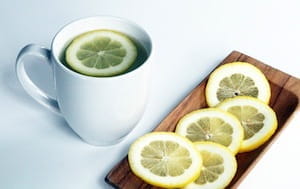
Mike Geary - Lemon Tea First Thing in the Morning for Better Health

Craig Ballantyne (Turbulence Training) linked to this post from Mike Geary (Truth About Abs) this morning, saying he was going to add it to his daily routine. It's cheap, it's easy, and I am also going to give it a go and see if it produces any noticeable pain/inflammation.

Drink THIS First Thing in the Morning

This daily trick can help you detoxify, improve your digestion and boost your metabolism & energy levels


by Mike Geary - Certified Nutrition Specialist
Author of the best seller: The Top 101 Foods that FIGHT Aging


You're bombarded with toxins in today's modern world... everywhere from the polluted air you breathe, the water you drink, the shampoos and other cosmetics that lather your body with chemicals, and of course, all of the chemical additives, pesticides, hormones, antibiotics and other harmful compounds in the food that you eat.

All of these TOXINS can have harmful effects on your body, harming your metabolism and hormones, impairing your digestive system, and zapping your energy levels.

If I could tell you ONE thing that you could do each morning right as you wake up to help your body eliminate some of these toxins, improve your digestion, stimulate your metabolism, and BOOST your energy, would you do it?

Of course you would... and it takes less than 1 minute!

Here's the trick...

Immediately upon waking each day, squeeze about 1/2 to 1 full lemon (depending on size of the lemon) into an 8 oz glass of warm or room temperature purified water. This is gentler on your body first thing in the morning compared to ice cold water. I've found that slicing the lemon into quarters before squeezing by hand is easier than squeezing halves.

Drink this at least 10 minutes before eating any food for the day.

Make sure to use fresh organic lemons to make this drink, and not bottled lemon juice. You want to use organic lemons to avoid the pesticides that can accumulate.

3 Major benefits of this morning drink to your body, health, and energy


According to a leading health publication, TheAlternativeDaily.com:

"The health promoting benefits of lemons are powerful. For centuries, it has been known that lemons contain powerful antibacterial, antiviral and immune boosting components. We know that lemons are a great digestive aid and liver cleanser. Lemons contain citric acid, magnesium, bioflavonoids, vitamin C, pectin, calcium and limonene, which supercharge our immunity so that the body can fight infection.

Lemons are considered one of the most alkalizing foods you can eat. This may seem untrue as they are acidic on their own. However, in the body, lemons are alkaline; the citric acid does not create acidity once it has been metabolized. The minerals in lemons are actually what helps to alkalize the blood. Most people are too acidic (from eating too much sugar and grains), and drinking warm lemon water helps reduce overall acidity, drawing uric acid from the joints. This reduces the pain and inflammation which many people feel. And the American Cancer Society recommends warm lemon water to encourage regular bowel movements."
Benefits that you can enjoy:

1. Improves your digestion:

Lemon juice helps your body improve digestion and stimulates bile production. Lemon juice can even be an aid for heartburn and indigestion.

2. Boosts your energy for the day:

Even just the scent of lemon juice has been shown to improve your mood and energy levels, and reduce anxiety. Plus the detoxifying effect and alkalizing effect of fresh organic lemon juice can improve your energy through the removal of toxins from your body.

3. Helps you to lose fat:

Since lemon juice helps to improve your digestive system, aids in removal of toxins, and increases your energy levels, this all combines together to help you to lose body fat as well through improving your hormonal balance... Yet another reason to add warm lemon water to your daily morning routine!

Saturday, February 27, 2010

Seven Cups Teahouse - Chinese Tea Ceremony (Oolong) History

WuYi06033.jpg

Jami and I just came home from the Seven Cups Tea House, in Tucson, where we participated in a Chinese Oolong Tea Ceremony (the name “Oolong” or “Wu Long” meaning “Black Dragon”). I have never been a huge tea fan - sure, I like some good green tea, but I have never really gotten into the depth of variety in flavors and the Chinese associations of various teas and their health benefits.

teaceremony2.jpg

Chinese Tea Ceremony History

The evolution of the Chinese Tea Ceremony mirrors the growth and importance of tea within Chinese culture. In the beginning, tea was cultivated and used solely as herbal medicine mostly within temples. Monks began to use tea to teach a respect for nature, humility and an overall sense of peace and calm. In fact, the spirit of the Chinese Tea Ceremony is described as he, jing, yi, zhen which translates to peace, quiet, enjoyment and truth. Monks felt they could illustrate deep philosophical concepts through tea service. It is for that reason that the underlying philosophies of Confucianism, Taoism and Buddhism blend together through the Chinese Tea Ceremony. Over time, people recognized the health benefits of tea but also its overall enjoyment. Tea ceremonies could be seen in memorial celebrations for both emperors and family ancestors.

The first written account of tea ceremonies was during the Tang Dynasty over 1200 years ago. The term to describe the serving of tea was initially called cha dao or the way of tea. Japanese monks traveling through China during this period began to learn tea and tea culture. After bringing this knowledge back to Japan, tea ceremonies evolved in Japan as it blended with Japanese culture resulting in the well-known Japanese Tea Ceremony and is still called cha dao. Although cha dao originated in China, many felt a new term was needed to distinguish between Japanese and Chinese tea ceremonies. In 1970, a Taiwanese tea master Lu Zi Kuang coined the term cha yi or art of tea, to represent current Chinese tea ceremonies.

There are six major aspects to consider when performing a Chinese Tea Ceremony. The following is a summary of both the technical knowledge and subtle skills for a successful ceremony.

  1. Attitude – The attitude of the person performing the ceremony should reflect both a happy and confident demeanor. The performer should exude a calm and relaxed manner to create a peaceful and enjoyable tea ceremony.
  2. Tea Selection – There are many considerations when selecting the right tea. In addition to fragrance, shape and taste, the tea should have a beautiful story and name.
  3. Water Selection – The best quality tea leaves will have poor taste if bad quality water is used. Therefore, select pure, light and clean water to ensure a wonderful tasting tea.
  4. Teaware Selection – It is important to select the correct teaware for brewing your tea leaves. In addition, allow your participants to fully appreciate the teaware by selecting both useful and beautiful items.
  5. Ambiance – A peaceful and calm environment can be created with a clean, comfortable and quiet room. Artwork can be used to enhance the overall atmosphere of the space.
  6. Technique – The basic skills for brewing tea are needed but also a graceful manner reflected through hand movements, facial expressions and clothing.
After speaking with Rene (our wonderful host - the Chinese Tea Ceremony is much less formal than the Japanese Tea Ritual), I bought some Rock Oolong tea, which is supposed to be good for people who exercise a lot. Wow, how perfect.
A famous culinary grease cutter in its own right, Rock Oolong tea also offers nutrients from the mineral rich soil of Wu Yi Shan, which are popularly believed to benefit joint health, to relieve muscle aches and are considerably popular in Japan as an aid to liver health.
And it's called Iron Arhat - seems like a good name for a Buddhist gym.