Showing posts with label philosophy of mind. Show all posts

Monday, December 08, 2014

Best Philosophy, Mind, and Consciousness Books of 2014 (according to me)

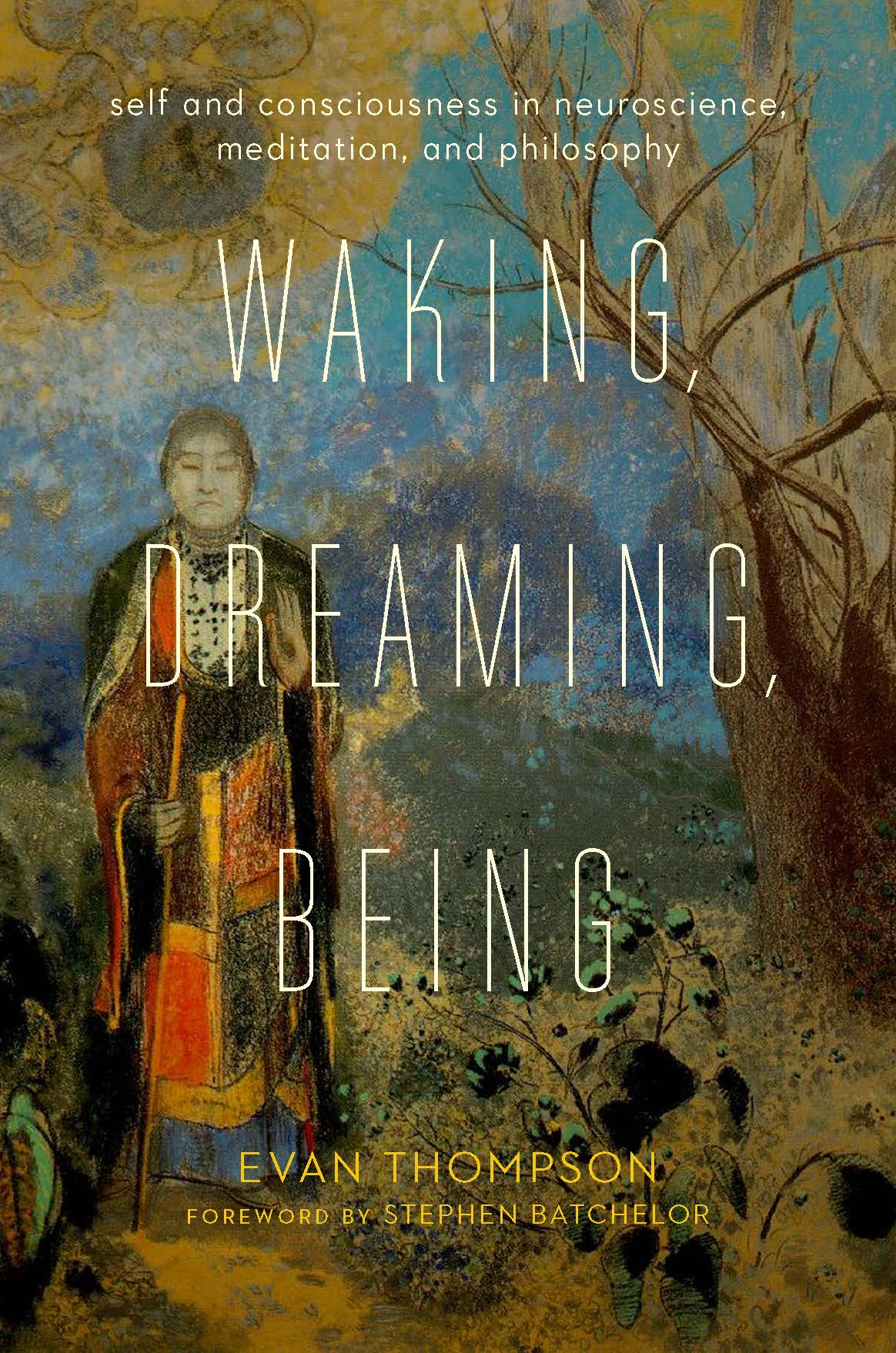
http://evanthompsondotme.files.wordpress.com/2012/11/waking-dreaming-being.jpg

Here are some of the best books I have been exposed to this year. Obviously, I cannot read everything, so this is a partial list at best. They are listed in alphabetical order. Descriptive text is from the publisher's blurb on Amazon.

A few of these books warrant the RECOMMENDED READ classification.


Consciousness: Theories in Neuroscience and Philosophy of Mind
Andrea Eugenio Cavanna and Andrea Nani
This book reviews some of the most important scientific and philosophical theories concerning the nature of mind and consciousness. Current theories on the mind-body problem and the neural correlates of consciousness are presented through a series of biographical sketches of the most influential thinkers across the fields of philosophy of mind, psychology and neuroscience. The book is divided into two parts: the first is dedicated to philosophers of mind and the second, to neuroscientists/experimental psychologists. Each part comprises twenty short chapters, with each chapter being dedicated to one author. A brief introduction is given on his or her life and most important works and influences. The most influential theory/ies developed by each author are then carefully explained and examined with the aim of scrutinizing the strengths and weaknesses of the different approaches to the nature of consciousness.


Enactive Cognition at the Edge of Sense-Making: Making Sense of Non-Sense
Massimiliano Cappuccio and Tom Froese, Editors
The enactive approach is a growing movement in cognitive science that replaces the classical computer metaphor of the mind with an emphasis on biological embodiment and social interaction as the sources of our goals and concerns. Mind is viewed as an activity of making sense in embodied interaction with our world. However, if mind is essentially a concrete activity of sense-making, how do we account for the more typically human forms of cognition, including those involving the abstract and the patently nonsensical? To address this crucial challenge, this collection brings together new contributions from the sciences of the mind that draw on a wide variety of disciplines, including psychopathology, phenomenology, primatology, gender studies, quantum physics, immune biology, anthropology, philosophy of mind, and linguistics. This book is required reading for anyone who is interested in how the latest scientific insights are changing how we think about the human mind and its limits.


The Escape of the Mind
Howard Rachlin
The Escape of the Mind is part of a current movement in psychology and philosophy of mind that calls into question what is perhaps our most basic, most cherished, and universally accepted belief--that our minds are inside of our bodies. Howard Rachlin adopts the counterintuitive position that our minds, conscious and unconscious, lie not where our firmest (yet unsupported) introspections tell us they are, but in how we actually behave over the long run. Perhaps paradoxically, the book argues that our introspections, no matter how positive we are about them, tell us absolutely nothing about our minds. The name of the present version of this approach to the mind is "teleological behaviorism."

The approaches of teleological behaviorism will be useful in the science of individual behavior for developing methods of self-control and in the science of social behavior for developing social cooperation. Without in any way denigrating the many contributions of neuroscience to human welfare, The Escape of the Mind argues that neuroscience, like introspection, is not a royal road to the understanding of the mind. Where then should we look to explain a present act that is clearly caused by the mind? Teleological behaviorism says to look not in the spatial recesses of the nervous system (not to the mechanism underlying the act) but in the temporal recesses of past and future overt behavior (to the pattern of which the act is a part).
 
But scientific usefulness is not the only reason for adopting teleological behaviorism. The final two chapters on IBM's computer, Watson (how it deviates from humanity and how it would have to be altered to make it human), and on shaping a coherent self, provide a framework for a secular morality based on teleological behaviorism.


The Hidden Agenda of the Political Mind: How Self- Interest Shapes Our Opinions and Why We Won’t Admit It
Jason Weeden and Robert Kurzban
When it comes to politics, we often perceive our own beliefs as fair and socially beneficial, while seeing opposing views as merely self-serving. But in fact most political views are governed by self-interest, even if we usually don't realize it. Challenging our fiercely held notions about what motivates us politically, this book explores how self-interest divides the public on a host of hot-button issues, from abortion and the legalization of marijuana to same-sex marriage, immigration, affirmative action, and income redistribution.

Expanding the notion of interests beyond simple economics, Jason Weeden and Robert Kurzban look at how people's interests clash when it comes to their sex lives, social status, family, and friends. Drawing on a wealth of data, they demonstrate how different groups form distinctive bundles of political positions that often stray far from what we typically think of as liberal or conservative. They show how we engage in unconscious rationalization to justify our political positions, portraying our own views as wise, benevolent, and principled while casting our opponents' views as thoughtless and greedy.

While many books on politics seek to provide partisans with new ways to feel good about their own side, The Hidden Agenda of the Political Mind illuminates the hidden drivers of our politics, even if it's a picture neither side will find flattering.


Interdisciplinary Perspectives on Consciousness and the Self
Sangeetha Menon, Anindya Sinha, B.V. Sreekantan, Editors
This volume is a collection of 23 essays that contribute to the emerging discipline of consciousness studies with particular focus on the concept of the self. The essays together argue that to understand consciousness is to understand the self that beholds consciousness. Two broad issues are addressed in the volume: the place of the self in the lives of humans and nonhuman primates; and the interrelations between the self and consciousness, which contribute to the understanding of cognitive functions, awareness, free will, nature of reality, and the complex experiential and behavioural attributes of consciousness. The book presents cutting-edge and original work from well-known authors and scholars of philosophy, psychiatry, behavioural sciences and physics. This is a pioneering attempt to present to the reader multiple ways of conceptualizing and thus understanding the relation between consciousness and self in a nuanced manner.


Living with a Wild God: A Nonbeliever's Search for the Truth about Everything
Barbara Ehrenreich 

RECOMMENDED READ.
From the New York Times bestselling author of Nickel and Dimed comes a brave, frank, and exquisitely written memoir that will change the way you see the world.

Barbara Ehrenreich is one of the most important thinkers of our time. Educated as a scientist, she is an author, journalist, activist, and advocate for social justice. In LIVING WITH A WILD GOD, she recounts her quest-beginning in childhood-to find "the Truth" about the universe and everything else: What's really going on? Why are we here? In middle age, she rediscovered the journal she had kept during her tumultuous adolescence, which records an event so strange, so cataclysmic, that she had never, in all the intervening years, written or spoken about it to anyone. It was the kind of event that people call a "mystical experience"-and, to a steadfast atheist and rationalist, nothing less than shattering.

In LIVING WITH A WILD GOD, Ehrenreich reconstructs her childhood mission, bringing an older woman's wry and erudite perspective to a young girl's impassioned obsession with the questions that, at one point or another, torment us all. The result is both deeply personal and cosmically sweeping-a searing memoir and a profound reflection on science, religion, and the human condition. With her signature combination of intellectual rigor and uninhibited imagination, Ehrenreich offers a true literary achievement-a work that has the power not only to entertain but amaze.


Macrocognition: A Theory of Distributed Minds and Collective Intentionality
Bryce Huebner
We live in an age of scientific collaboration, popular uprisings, failing political parties, and increasing corporate power. Many of these kinds of collective action derive from the decisions of intelligent and powerful leaders, and many others emerge as a result of the aggregation of individual interests. But genuinely collective mentality remains a seductive possibility.

This book develops a novel approach to distributed cognition and collective intentionality. It argues that genuine cognition requires the capacity to engage in flexible goal-directed behavior, and that this requires specialized representational systems that are integrated in a way that yields fluid and skillful coping with environmental contingencies. In line with this argument, the book claims that collective mentality should be posited where and only where specialized subroutines are integrated to yields goal-directed behavior that is sensitive to the concerns that are relevant to a group as such. Unlike traditional claims about collective intentionality, this approach reveals that there are many kinds of collective minds: some groups have cognitive capacities that are more like those that we find in honeybees or cats than they are like those that we find in people. Indeed, groups are unlikely to be "believers" in the fullest sense of the term, and understanding why this is the case sheds new light on questions about collective intentionality and collective responsibility.


Making Minds: How Theory of Mind Develops
Henry M. Wellman
Developmental psychologists coined the term "theory of mind" to describe how we understand our shifting mental states in daily life. Over the past twenty years researchers have provided rich, provocative data showing that from an early age, children develop a sophisticated and consistent "theory of mind" by attributing their desires, beliefs, and emotions to themselves and to others. Remarkably, infants barely a few months old are able to attend closely to other humans; two-year-olds can articulate the desires and feelings of others and comfort those in distress; and three- and four-year-olds can talk about thoughts abstractly and engage in lies and trickery.

This book provides a deeper examination of how "theory of mind" develops. Building on his pioneering research in The Child's Theory of Mind (1990), Henry M. Wellman reports on all that we have learned in the past twenty years with chapters on evolution and the brain bases of theory of mind, and updated explanations of theory theory and later theoretical developments, including how children conceive of extraordinary minds such as those belonging to superheroes or supernatural beings. Engaging and accessibly written, Wellman's work will appeal especially to scholars and students working in psychology, philosophy, cultural studies, and social cognition.


Mind, Language, and Subjectivity: Minimal Content and the Theory of Thought
Nicholas Georgalis
In this monograph Nicholas Georgalis further develops his important work on minimal content, recasting and providing novel solutions to several of the fundamental problems faced by philosophers of language. His theory defends and explicates the importance of ‘thought-tokens’ and minimal content and their many-to-one relation to linguistic meaning, challenging both ‘externalist’ accounts of thought and the solutions to philosophical problems of language they inspire. The concepts of idiolect, use, and statement made are critically discussed, and a classification of kinds of utterances is developed to facilitate the latter. This is an important text for those interested in current theories and debates on philosophy of mind, philosophy of language, and their points of intersection.


Perspectives on Social Ontology and Social Cognition
Mattia Gallotti and John Michael, Editors
Perspectives on Social Ontology and Social Cognition brings together contributions discussing issues arising from theoretical and empirical research on social ontology and social cognition. It is the first comprehensive interdisciplinary collection in this rapidly expanding area. The contributors draw upon their diverse backgrounds in philosophy, cognitive science, behavioral economics, sociology of science and anthropology.

Based largely on contributions to the first Aarhus-Paris conference held at the University of Aarhus in June 2012, the book addresses such questions as: If the reference of concepts like money is fixed by collective acceptance, does it depend on mechanisms that are distinct from those which contribute to understanding the reference of concepts of other kinds of entity? What psychological and neural mechanisms, if any, are involved in the constitution, persistence and recognition of social facts?

The editors’ introduction considers strands of research that have gained increasing importance in explaining the cognitive foundations of acts of sociality, for example, the theory that humans are predisposed and motivated to engage in joint action with con-specifics thanks to mechanisms that enable them to share others’ mental states. The book also presents a commentary written by John Searle for this volume and an interview in which the editors invite Searle to respond to the various questions raised in the introduction and by the other contributors.


The Routledge Handbook of Embodied Cognition
Lawrence Shapiro, Editor
Embodied cognition is one of the foremost areas of study and research in philosophy of mind, philosophy of psychology and cognitive science. The Routledge Handbook of Embodied Cognition is an outstanding guide and reference source to the key topics and debates in this exciting subject and essential reading for any student and scholar of philosophy of mind and cognitive science.
Comprising over thirty chapters by a team of international contributors, the Handbook is divided into six parts:
  • Historical underpinnings
  • Perspectives on embodied cognition
  • Applied embodied cognition: perception, language, and reasoning
  • Applied embodied cognition: social and moral cognition and emotion
  • Applied embodied cognition: memory, attention, and group cognition
  • Meta-topics.
The early chapters of the Handbook cover empirical and philosophical foundations of embodied cognition, focusing on Gibsonian and phenomenological approaches. Subsequent chapters cover additional, important themes common to work in embodied cognition, including embedded, extended and enactive cognition as well as chapters on empirical research in perception, language, reasoning, social and moral cognition, emotion, consciousness, memory, and learning and development.


Self and Other: Exploring Subjectivity, Empathy, and Shame
Dan Zahavi

RECOMMENDED READ - I recommend this book even though I disagree with Zahavi's basic understanding of consciousness and selfhood. My sense is that his philosophy lacks an adequate grounding in attachment theory and relational neuroscience (specifically, interpersonal neurobiology).
Can you be a self on your own or only together with others? Is selfhood a built-in feature of experience or rather socially constructed? How do we at all come to understand others? Does empathy amount to and allow for a distinct experiential acquaintance with others, and if so, what does that tell us about the nature of selfhood and social cognition? Does a strong emphasis on the first-personal character of consciousness prohibit a satisfactory account of intersubjectivity or is the former rather a necessary requirement for the latter?

Engaging with debates and findings in classical phenomenology, in philosophy of mind and in various empirical disciplines, Dan Zahavi's new book Self and Other offers answers to these questions. Discussing such diverse topics as self-consciousness, phenomenal externalism, mindless coping, mirror self-recognition, autism, theory of mind, embodied simulation, joint attention, shame, time-consciousness, embodiment, narrativity, self-disorders, expressivity and Buddhist no-self accounts, Zahavi argues that any theory of consciousness that wishes to take the subjective dimension of our experiential life serious must endorse a minimalist notion of self. At the same time, however, he also contends that an adequate account of the self has to recognize its multifaceted character, and that various complementary accounts must be integrated, if we are to do justice to its complexity. Thus, while arguing that the most fundamental level of selfhood is not socially constructed and not constitutively dependent upon others, Zahavi also acknowledges that there are dimensions of the self and types of self-experience that are other-mediated. The final part of the book exemplifies this claim through a close analysis of shame.


Speculative Realism: Problems and Prospects
Peter Gratton
Speculative realism is one of the most talked-about movements in recent Continental philosophy. It has been discussed widely amongst the younger generation of Continental philosophers seeking new philosophical approaches and promises to form the cornerstone of future debates in the field.

This book introduces the contexts out of which speculative realism has emerged and provides an overview of the major contributors and latest developments. It guides the reader through the important questions asked by realism (what can I know? what is reality?), examining philosophy's perennial questions in new ways. The book begins with the speculative realist's critique of 'correlationism', the view that we can never reach what is real beneath our language systems, our means for perception, or our finite manner of being-in-the-world. It goes on to critically review the work of the movement's most important thinkers, including Quentin Meillassoux, Ray Brassier, and Graham Harman, but also other important writers such as Jane Bennett and Catherine Malabou whose writings delineate alternative approaches to the real. It interrogates the crucial questions these thinkers have raised and concludes with a look toward the future of speculative realism, especially as it relates to the reality of time.


Waking, Dreaming, Being: New Light on the Self and Consciousness from Neuroscience, Meditation, and Philosophy
Evan Thompson

RECOMMENDED READ - I am not in complete agreement with some of Thompson's views, but his position on consciousness as enactive and embodied is, in my mind, spot on, as is his position on self as a verb (process) not a noun (thing).
A renowned philosopher of the mind, also known for his groundbreaking work on Buddhism and cognitive science, Evan Thompson combines the latest neuroscience research on sleep, dreaming, and meditation with Indian and Western philosophy of the mind, casting new light on the self and its relation to the brain. 

Thompson shows how the self is a changing process, not a static thing. When we are awake we identify with our body, but if we let our mind wander or daydream, we project a mentally imagined self into the remembered past or anticipated future. As we fall asleep, the impression of being a bounded self distinct from the world dissolves, but the self reappears in the dream state. If we have a lucid dream, we no longer identify only with the self within the dream. Our sense of self now includes our dreaming self, the "I" as dreamer. Finally, as we meditate--either in the waking state or in a lucid dream--we can observe whatever images or thoughts arise and how we tend to identify with them as "me." We can also experience sheer awareness itself, distinct from the changing contents that make up our image of the self. 

Contemplative traditions say that we can learn to let go of the self, so that when we die we can witness the dissolution of the self with equanimity. Thompson weaves together neuroscience, philosophy, and personal narrative to depict these transformations, adding uncommon depth to life's profound questions. Contemplative experience comes to illuminate scientific findings, and scientific evidence enriches the vast knowledge acquired by contemplatives.

Monday, July 28, 2014

Is Quantum Mechanics Relevant to the Philosophy of Mind (and the Other Way Around)?


Quentin Ruyant posted this article on the possible relevance of quantum mechanics to a philosophy of mind and consciousness. While he seems convinced (as are many neuroscientists and philosophers) that QM is not scientifically relevant to a philosophy of mind, he allows that there may be some metaphysical reasons to examine a possible connection. Posted at the Scientia Salon site.

Be sure to check out the comments on this post at the original site - some interesting stuff. For an excellent review of this article, check out this post at Conscious Entities.

Is quantum mechanics relevant to the philosophy of mind (and the other way around)?

6a00d8341bf7f753ef01910260a3e7970c

There have been speculations on a possible link between quantum mechanics and the mind almost since the early elaboration of quantum theory (including by well known physicists, such as Wigner, Bohr and Pauli). Yet despite a few proposals (e.g. from Stapp, Penrose, Eccles [1]) what we could dub “quantum mind hypothesis” are often readily dismissed as irrelevant and are seldom discussed in contemporary philosophy of mind. My aim in this article is to defend the relevance of this type of approach.

For the purpose of this discussion it is useful to distinguish two different theses regarding the putative links between quantum mechanics and the mind:
  1. The mind is relevant in interpreting quantum mechanics
  2. Quantum mechanics is relevant in the philosophy of mind
Of course the two theses are not necessarily construed as independent by the proponents of quantum-mind hypothesis. One could argue that the mind is relevant in interpreting quantum mechanics, precisely for the same reasons that quantum mechanics is relevant in the philosophy of mind. This is actually what I will argue here (or at least that it is a promising hypothesis that should be pursued). However, the two theses face different kinds of objections and need to be distinguished.

Is consciousness a biological problem?

Quite logically, I will first tackle the second one: the idea that quantum mechanics could help us explain consciousness. Such claim is sometimes dismissed on the ground that the problem of understanding consciousness is a biological problem, not a physical one. Let me clarify a bit: by “biological/physical problem” I understand: a problem which is better informed by biology/physics, not necessarily a purely scientific (as opposed to philosophical) problem. Quantum mechanics, it is said, is only relevant at very small scales of reality, while conscious organisms are biological organisms, typically found at a macroscopic level, where quantum effects manifest themselves as mere noise. Besides, it is said, randomness is not a proper substitute for free-will, so quantum mechanics wouldn’t help anyway. Therefore quantum mechanics is irrelevant to philosophy of mind.

First, let us observe that typical quantum effects are not necessarily foreign to biology, as illustrated by the burgeoning field of quantum biology. Nor are they in principle confined to the microscopic level — this is the heart of the measurement problem, as illustrated by the famous Schrödinger’s cat thought experiment. Quantum effects such as entanglement also help explain macroscopically observable properties, such as heat capacities or magnetic susceptibilities [2]. It is generally assumed that decoherence precludes the observability of quantum effects on macroscopic objects, but as Zurek et al. note, decoherence is more a heuristic tool to be applied on a case by case basis than a generic consequence of the theory [3]. Finally, quantum entanglement is hard to measure on complex systems. The idea that no quantum effect exists at all on our scale is thus neither empirically nor theoretically grounded. At most we can say that no quantum effect is detectable in common physical objects whose behavior can be accurately described using Newtonian mechanics alone, such as tables and chairs, but of course these are not the sort of conscious objects we are interested in (unless, of course, you think that biological phenomena can be explained with Newtonian mechanics alone).

However, my main contention concerns the idea that the problem of consciousness is a biological problem. Let us follow Chalmers in distinguishing the “easy problems” of consciousness from the “hard problem.” The easy problems concern everything that is scientifically tractable from a third person perspective — how do we discriminate and integrate information, etc. that is, all the cognitive aspects of consciousness. These (not so easy) problems are undeniably biological or psychological. The “hard problem” concerns the phenomenal aspect of consciousness, the subjective first-person “what it’s like” to be conscious. And this question, Chalmers argues, is not scientifically tractable: it is a metaphysical problem.

Metaphysics addresses the most fundamental aspects of reality and arguably the phenomenal aspect of consciousness is one of them. Now, if there is a branch of science which more closely resembles metaphysics in its specific interest for the fundamental aspects of reality, it is physics — not biology. Physics and metaphysics overlap in many respects (just consider the wild speculations about a mathematical universe advanced by physicists such as Tegmark [4]) and there is probably a continuum between the two. On the contrary, a contribution of biology to fundamental metaphysical issues seems to me rather implausible. I could be wrong (and Chalmers could be wrong in thinking that phenomenal aspects of consciousness are metaphysical), but I contend that the hard problem of consciousness, if it exists, is not a biological problem, but a physical one: it is just too fundamental a problem to be addressed from a biological perspective. Note that I don’t mean to deny that there are relations between phenomenal and psychological aspects, in the sense that certain cognitive states are correlated with specific phenomenal aspects, but explaining such correlations is distinct from explaining why there are phenomenal aspects to begin with.

Of course, no metaphysician denies that physics is of interest in the philosophy of mind. Kim’s causal exclusion argument involves the principle of “physical closure.” The argument precisely addresses the problem of the relations between the physical and the mental [5]. What some metaphysicians apparently deny is that quantum physics or any actual physics is of particular interest for such issues: for these authors metaphysics can still produce interesting insights about the physical “in general,” that is, whatever actual physics says. They seem to assume that the physical “in general” poses no important problem of interpretation apart from the well entrenched problems of classical metaphysics.

It seems to me that there is no such thing as “the physical in general, whatever actual physics says”: our conception of the physical changes with our physics. There is no point in reasoning on the physical without taking into account what our best current physics says about it. And our best current physics is quantum mechanics (quantum field theory to be precise). For this reason I think, following Ladyman, Ross and Spurrett [6], that metaphysicians should be informed by our best physics rather than work on a dated conception of the physical, or, as they say provocatively, on “A-level chemistry.” (Ladyman, Ross and Spurrett note that some of Kim’s central arguments rely on conceptions of the physical that are no longer accepted by physicists. The same goes, I would say, of thought experiments involving clones and mind duplication: the no-cloning theorem in quantum mechanics precludes the possibility of such perfect physical duplication [7]).

I am not saying that all metaphysicians should be trained in contemporary physics to produce valuable work (Kim’s Mind in a Physical World is very valuable and important, in my opinion), but contemporary physics is definitely a place we should look at to address fundamental issues in the philosophy of mind. My overall impression is that this is hardly the case today, although such inputs are considered in Chalmers’ The Conscious Mind [8].

Does embracing a quantum mechanical view of the physical really change the perspective for the metaphysics of mind? At the very least metaphysical interpretations of the physical inspired by contemporary physics could open new avenues to be explored, and, perhaps, help make progress on important conundrums in the field, such as the problem of mental causation. It seems to me that there are no good reasons not to follow this path.

Is the mind foreign to the measurement problem?

Which leads us directly to the second point, i.e., the first thesis sketched above: that the mind is relevant in interpreting quantum mechanics. The idea was initially proposed by some physicists as a solution to the measurement problem — the problem of reconciling the theoretical structure of quantum mechanics, which describes non-local “superpositions of states,” with actual phenomena, where no superposition is ever observed. The theoretical structure does all the predictive job, so to speak (apart from the Born rule, which maps the structure with outcome probabilities [9]) and ultimately, the fact that no superposition exists for measured quantities is only ascertained by our conscious observation. Hence the idea that it is the mind which makes the wave-function “collapse.” Of course there are other, less anthropocentric theories, such as Bohm’s, Ghirardi-Rimini-Weber [10] or the infamous many-worlds interpretation [11].

The main type of objection against interpretations involving an observer, I would say, is that they seem too reminiscent of either 19th century Idealism or early 20th century neo-Kantian and phenomenalist views (which did strongly influence said physicists). These doctrines have declined in favor of a renewal of scientific realism in the course of the 20th century.

From a realist perspective, such interpretations seem to attribute a privileged ontological status to the human brain, which is increasingly not acceptable. Was there really no definite reality before life appeared on earth? Does the moon vanishes when no one is looking? All this seems barely good enough for mystics and new age gurus (there might be more sensible anti-realist interpretations, but let’s not quibble…) However, having previously rejected the idea that phenomenal aspects of consciousness are to be addressed by biology, all of this is easily defused: a privileged ontological status of human observers only makes sense for those who pretend that biology can inform deep metaphysical questions.

Let me be more specific and draw on an example. I suggested that phenomenal aspects of consciousness could eventually be explained under a proper interpretation of physics. A possible such explanation could take the form of panpsychism: the idea that, somehow, all matter is conscious. In fact, by distinguishing phenomenal aspects from cognitive aspects of consciousness and relegating the former to physics and the latter to biology or psychology, we would have something like panphenomenalism: the idea that all matter is “phenomenal.” Anyway, in the context of either panpsychism or panphenomenalism, granting a particular role to phenomenality in physics, say, in the collapse of the wave function, does not amount to granting a privileged ontological status to the brain.

Perhaps panpsychism is implausible, but panphenomenalism fares a bit better in my opinion. Obviously, tables and chairs are not conscious. Following panphenomenalism, what they lack is not phenomenality (which would be a feature of their fundamental constitution) but cognitive abilities. Phenomenality without memory, persistence, information integration and a capacity for world and self representation is simply not awareness, or not full awareness — it is at best being transiently aware of nothing identifiable, without the very possibility of knowing that one is or was aware,nothing close to consciousness. I would readily grant this feature to electrons if it could convincingly explain some relevant metaphysical issue.

Another frequent objection against panpsychism is the so-called combination problem: if phenomenal aspects are present in the microscopic constituents of reality, how is it that we have a unified phenomenal experience? I don’t have an answer to this question, but it is not specific to panpsychism (it is a version of the binding problem also found in computational theories of mind, for example). My guess is that it has something to do with a link between quantum entanglement and cognition, perhaps in line with Tononi’s integrated information theory [12], but this is pure speculation. In any case, quantum holism, if accepted, seems to provide a good basis to answer this [13], whatever quantum-mind theory we endorse.

At any rate, although I find it attractive, my goal is not to convince you that panphenomenalism is the one true theory of mind, but to illustrate the fact that one can make sense of an involvement of the mind in the interpretation of quantum mechanics without falling back into Idealism. And, of course, there are other alternatives too, such as Eccles’ dualism for example, or Stapp’s kind-of dual aspect theory, or perhaps some versions of neutral monism.

Another common objection to considering a role of the observer in the measurement problem is that it involves non-locality, which is at odds with Lorentz invariance in special relativity. This is actually a potential problem for most collapse interpretations of quantum mechanics (but apparently, GRW theory does not face it). However, invoking phenomenal aspects in a solution to the measurement problem does not necessarily involve an objective wave-function collapse: it could involve, say, a relational or a modal interpretation of quantum mechanics [14]. Which interpretation of quantum mechanics best fits our needs to account for phenomenal aspects depending on which theory of mind we endorse is precisely the kind of question which should be addressed in the philosophy of mind.

In sum, my goal is not to defend one or the other interpretation of quantum mechanics, nor to defend one or the other theory of mind, but rather to stress the relevance and potential fruitfulness of discussions relating these two domains of inquiry. The hard problem of consciousness and the measurement problem in quantum mechanics share a strong conceptual affinity: both concern the relations between physical structure and phenomenal aspects of reality, broadly construed. Either the world viewed from the mind, or the mind viewed from the world, if you like. This conceptual affinity should not be neglected on the ground of unfounded suspicions of Idealism or anti-realism or any other similar concern. The example of panphenomenalism above shows that a common treatment to both problems might be explored without presenting insurmountable obstacles, something worth pondering.

Yet, in spite of the conceptual affinity between these two central problems of philosophy, talk of quantum mechanics in the philosophy of mind is often brushed aside. At the same time, talk of consciousness and rational agents in, say, discussions on the many-worlds (or many-minds) interpretation of quantum mechanics is ubiquitous, and difficult to avoid. Both camps act as if important issues in the other camp were already settled. This is a strange situation. Aren’t we perhaps missing something by being too compartimentalized? One of the main roles of philosophy — and metaphysics in particular — is after all to provide a unified picture of the world. Is it inconceivable that some considerations in the philosophy of mind (or other areas of philosophy) might inform our interpretations of physics as much as the converse?

Is quantum mechanics useful at all?

To conclude, let me address a final worry that I have so far left aside: that quantum mechanics is of no help in explaining the mind at all. I don’t know about the debate concerning the relationship between free-will and randomness — except that randomness in quantum mechanics is closely tied to the measurement problem, and that what we mean by “randomness” is also up to interpretation. (Shouldn’t we say “unpredictability” instead? Or shall I suggest “physical privacy”?)

Besides, I do not claim that quantum mechanics can explain consciousness. My argument is more modest: the question of phenomenal aspects of consciousness should be addressed in relation to quantum mechanics, because only our best physics can inform such metaphysical questions, and because quantum effects are not necessarily confined to the microscopic realm. Moreover, it should be addressed in relation to the measurement problem, because they share conceptual affinities, and because the “threat” of Idealism is unfounded. All I claim is that a suitable metaphysical interpretation of quantum mechanics could eventually explain the metaphysical problem of consciousness.

Having said that, some features of quantum mechanics such as non-locality/holism or the no-cloning and the free-will theorem [15], could eventually help address some questions in the philosophy of mind, such as the binding problem or the problem of causal exclusion.

In light of this, quantum mechanics certainly deserves more consideration in the philosophy of mind. In my view, claiming that quantum effects reduce to “microscopic noise” simply disregards the epistemic depth of the measurement problem, just as claiming that the problem of consciousness is essentially biological disregards its ontological depth. These two “dogmas” of philosophy of mind are mutually reinforcing and we should reject them altogether if we want to make sense of consciousness as well as of quantum mechanics.
_____
Quentin Ruyant is a PhD student in philosophy of science in Rennes, France and former engineer. He maintains a blog dedicated to the popularization of philosophy of science (in French)
[1] Quantum approaches to consciousness, Stanford Encyclopedia of Philosophy.
[2] Macroscopic entanglement witnesses.
[3] Deconstructing decoherence.
[4] Our mathematical universe;  and Why physicists are saying consciousness is a state of matter, like a solid, a liquid or a gas.
[5] See “The completeness of the physical,” in Mental causation, Stanford Encyclopedia of Philosophy.
[6] Every Thing Must Go: Metaphysics Naturalized.
[7] No-cloning theorem.
[8] The Conscious Mind: In Search of a Fundamental Theory.
[9] The Born rule.
[10] On collapse theories and the Ghirardini-Rimini-Weber model.
[11] See this recent essay by Sean Carroll about why the many-worlds interpretation of QM is not that crazy after all.
[12] Integrated information theory.
[13] See: Holism and nonseparability in physics, Stanford Encyclopedia of Philosophy.
[14] Modal interpretations of quantum mechanics and Relational quantum mechanics, Stanford Encyclopedia of Philosophy.
[15] Free will theorem.

Friday, August 02, 2013

On Identity - From a Philosophical Point of View


This cool article on the philosophy of identity comes from the unlikeliest place, the journal Child and Adolescent Psychiatry and Mental Health, but it is a very useful breakdown of the various ways in which we experience and construct identity.

Here is a section from the conclusion:
[P]hilosophically we are challenged in defining the complexity of different perspectives in their convergence respectively divergence and incompatibility. It is the question of how to (re-)construct a model of the self in its identity [21] that integrates the perspective of:
  • phenomenology, which is concerned about the the essence, content and feel of a mental state, and, concerning identity, the self as implicitly, tacitly, and immediately experienced in consciousness; 
  • philosophy of mind, which focuses on the logical connection and systematization of our knowledge of mind; 
  • cognitive science, which designs models of how the mind works as basis for further empirical research, in regard to identity particularly in terms of self relatedness and self-specificity; 
  • social science as well as personality psychology, which is concerned with how people regard themselves, with their different roles in society and the interaction between both. 
A philosophically reflected integration of these different perspectives in a conceptual framework will provide a basis for empirical research as well as clinical practice. Furthermore, it will help to distinguish adaptive forms of identity development that our adolescents and patients may reveal, and pathological forms in social interaction, in self related representations, intra-psychic conflicts as well as in their neurobiological correlates – perspectives that finally may provide the key anchoring point of psychotherapeutic (and other) treatments.
Some of the variations on identity mentioned here include quantitative identity, qualitative identity, and identity as self-sameness. He also mentions Paul Ricoeur's subtle differentiation of self-sameness, which he called “idem-identity,” and selfhood or self-relatedness, for which he coined the term “ipse-identity.”

Here is another, more expanded definition of Ricoeur's distinction:
In Oneself as Another, Ricoeur distinguishes between two fundamental aspects of the self, or of identity, i.e. our I. Ricoeur refers to these two aspects as ipse and idem: ipse is identity understood as selfhood, close to our individuality, that kind of inner inexpressible core that marks us out as what we really are. Idem, on the other hand, is identity understood as sameness, as a more external possibility of identifying the self as self despite loss or mutability of the attributions of that self in time. Ipse identifies “who” the self is, idem “what” the self consists of. 
In integralese (i.e., Wilberese), ipse-identity might be understood as the proximate self, the subjective sense of "who I am." On the other hand, idem-identity might be seen as the distal self, the sense of myself that I can hold as an object of awareness and share with others.

This is only a brief part of the whole essay. It's not as long as it might seem and it is certainly worth the time to read it.

[NOTE: There were a lot of typos and grammar errors in this piece, some of which I have corrected, and others I no doubt missed. Please note the disclaimer below - this is not the final text.]

This Provisional PDF corresponds to the article as it appeared upon acceptance. Fully formatted PDF and full text (HTML) versions will be made available soon.


On identity: From a philosophical point of view


Daniel Sollberger, M.D., Ph.D.
Psychiatric University Hospital Basel
Wilhelm Klein-Strasse 27
CH – 4012 Basel
Switzerland
Phone: + 41 61 325 55 90
Fax: + 41 61 325 55 83
E-Mail: daniel.sollberger@upkbs.ch
Full Citation:
Sollberger, D. (2013, Jul 31). On identity: from a philosophical point of view. Child and Adolescent Psychiatry and Mental Health, 7:29. doi:10.1186/1753-2000-7-29

Abstract

Background: The term “identity” has a much longer tradition in Western philosophy than in psychology. However, the philosophical discourse addresses very different meanings of the term, which should be distinguished to avoid misunderstandings, but also to sharpen the key meanings of the term in psychological contexts. These crucial points in the philosophical concepts of identity in the sense of singularity, individuality, or self-sameness may structure the ongoing discussion on identity in psychiatric diagnoses (as in DSM-5, [1]), in psychology, psychoanalysis, but also neuroscience and neurophilosophy [2]. Method: The concept of identity is subjected to a systematic philosophical analysis following some milestones in its history to provide a background for recent discussions on identity in psychiatry and psychology. Results: The article focuses first on the philosophical core distinctions of identity in the different meanings to be addressed, second, briefly on some of the diverse psychological histories of the concept in the second half of the 20th century. Finally some reflections are presented on borderline personality disorder, considered as a mental disorder with a disturbance or diffusion of identity as core feature, and briefly on a newly developed instrument assessing identity development and identity diffusion in adolescence, the AIDA that is also presented in the special issue of this journal [3]. Conclusion: As a conclusion, different points of view concerning identity are summarized in respect to treatment planning, and different levels of description of identity in phenomenology, philosophy of mind, cognitive science, and social science and personality psychology are outlined.

Keywords: Identity, individuality, self, self-sameness, identity disturbance, identity diffusion, borderline personality disorder

Background

The term “identity” has a long tradition in Western philosophy and much shorter antecedents in psychology and social psychology. In the last six decades, since E. H. Erikson made his path breaking contributions to psychoanalytic theory and character pathology, elevating the term to a theoretical concept, “identity” has been given many interpretations. Nowadays, in a late modern society we see the difficulties that are related to the ambiguity of the term “identity.” Nevertheless, we realize that it cannot be abandoned but is needed to understand both the successful and the unsuccessful processes of psychological development of children, particularly adolescents, as well as of adults in the so-called “emerging adulthood”. We are confronted with questions on identity in a world, where flexibility is seen as a virtue and accelerating change pervades society, in the vocational world, in families, relationships, and in the biographies of individuals. Thus, beside one of the fundamental questions, like “Who do I want to be, which kind of person and personality?” we are basically challenged by the question “How come that I feel like the same person in my whole life, although many and very crucial things changed and will change, like my age and life cycles, marital status, my friendships, occupation, residence, political engagement, my religious beliefs, and social values? What enables me to feel being the same ‘I’, the same ‘self’, or ‘person’ in all the different roles, that I have to play, with all my different qualities, in the changing course of world events and my biography?”

Method

The concept of identity is subjected to a philosophical analysis in focusing some core conceptual distinction in the history of the term and its meaning throughout the history of Western philosophy. This provides a basis for a further discussion of the modern psychological and psychopathological concepts of identity and identity diffusion in psychology and psychiatry, particularly in the diagnosis of borderline personality disorders. On this background some comments on the new instrument AIDA (Assessment of Identity Development in Adolescence) are made.

Results and discussion

Identity in philosophy: Some systematic distinctions

In philosophy “identity” is a predicate, which functions as an identifier, i.e. a marker that distinguishes and differentiates one object from another object. Thus, identity in this sense focuses on the uniqueness of the concerned object. Plato firstly made the distinction between “is” as a copula in a phrase and the identifying “is”; thus, Aristotle distinguished identity in its numeric meaning as equivalence from an identifier that defines an object as an individual. The problem of identity became a problem of substance throughout the history of philosophy in the efforts to define the principle of individuation. Leibniz in his Discourse on Metaphysics (Section 9) [4, p. 308] summarized this principle in a mathematical law: it states that no two distinct things exactly resemble each other; otherwise they would be “indiscernibles” and therefore one thing. In other words: two things are indistinguishable and in fact one single thing, if everything that truly can be said of the one may be said of the other as well. So, they become replaceable salva veritate (truth preserving) in any other possible context and under any other conditions.

Quantitative identity

One meaning of the term “identity” goes back to the Greek term “atomon”. However, “atomon” signifies “indivisible” in a primary etymological sense; identity in the sense of individuality is a secondary sense. Nevertheless, ‘individuality’ became first the topic of the philosophical mainstream discourse. That is where the conviction of an ineffability and unknowability of individuals is rooted herein. Nothing can be said of an individual than “this one” (‘tode ti’ in Greek), what means that we can identify an individual only by pointing at it, him or her. Leibniz’ contribution to this point in his theory of monads is an attempt to singularize individuals by a complete enumeration of their qualities [5, p. 235]. The metaphysical presuppositions of Leibniz’ theory like infinite space and time shall not be discussed here. But, as one can see, the individuality of a singular object is not easily (even principally not) describable in its empirical dimensions. The “I” as such a singular ‘object’ cannot be characterized by a complete enumerations of its characteristics but reduces us to statements about a localization in space and time. In contrast, Kant argued that individuals couldn’t be specified in terms of a concept of substance as Leibniz attempts to do: We never would come at the individuality of an individual by its complete description. Individuals primarily are objects, i.e. data in perception and as such bound to space and time. Thus, “identity”, in contrast to “existence”, is not a term of ontology but of epistemology. Anyhow, Kant wanted to attribute identity to the unity of an object in a fundamental way, i.e. a priori and incircumventable. In the transcendental ego he laid down such a principle: Being aware of ourselves as thinking subjects we know the subject as being a unified and unique whole (the ‘same’) in all of its different perceptions or thoughts: “The I think must be able to accompany all my representations“ [6, §16, B 131]. The Kantian sense of identity is exclusively part of the consciousness of the ego that can be seen as a link to the Anglo Saxon tradition of empiricism in Hobbes, Locke, and Hume.

But, a new problem arises when individuals are identified as singular entities because of their spatio-temporal localization, as it is demanded by empiricism: If we refer to an individual by his spatio-temporal localization, thus indicating the individual’s absolute uniqueness, it would be impossible to recognize individuals as the same individuals at different times. This problem becomes highly virulent when it is about personal individuals. Besides, J. Locke (1690) particularly related the human self to memory and, emphasizing this point, argued that a person can be addressed as the same person if she is able to remember previous states of consciousness: a person can “consider itself as itself, the same thinking thing, in different times and places [7, p. 67]. If he or she does remember nothing of his or her past her or she “literally has no identity” [8, p. 71]. However, numeric identity has to be complemented by substantially meaningful identification, particularly when it is about individual persons [9].

Qualitative identity

Thus, identity in the question “Who is it?” intending a merely numeric-quantitative, precise identification is transformed into a qualitative meaning in the question of “What kind of person or character am I and do I want to be?” Identification is then a matter of classifying something or somebody as something respectively somebody; or more technically spoken, as language philosophy does, classifying the individual token (the object as the instance of a concept) by assigning to a type (the concept). This is the usual interpretation of identity in social science. It is a form of “qualitative identity” that is specified by detailed, conceptual or substantial attributes: we describe somebody by the particular social roles, which he or she assumes or refuses to assume in his or her action orientation and life praxis, by the ideals and values that matter to him or her, by specific habits, capacities, skills, and biographical experiences [10]. Whether or not this qualitative identity is only a matter of looking at the individual from the perspective of social role, is widely discussed: whereas E. Goffman [11] for example argues that the identity of the I is only a matter of an internal, reflexive perspective of the subject, the German philosopher E. Tugendhat [9] emphasizes that the identification by social roles assumes a commitment by the individual, and depends therefore on an internal view of the individual person from his or her point of view.

Finally, it seems to depend on the epistemological interest: regarding the individual in its qualitative identity from a theoretical point of view as an objectifiable datum it is of no or only little interest in what form and to what extend that individual is committed to the attributed qualities. Whereas from a practical philosophical point of view the individual’s internal attitude to objectifiable social roles crucially matters. Since, this is a question of self-identification: “What kind of person do I want to be?”

The missing link between these two perspectives on the qualitative identity of an individual becomes apparent when we inquire whether an individual identified by social roles (whether intrinsically committed to them or not) can adopt these different roles in different social situations without losing his or her identity. This is probably not a question of identity in the sense of a qualitative identification – and much less one of a numeric one. But, it focuses on the other aspect of identity of individuals: not on the aspect of being different from others but in not being different from oneself – the aspect of “sameness” [5, p. 251] and constancy.

Identity as self-sameness 

If we focus on this aspect, identity is questioned as a structure or form of an individual’s self-relation and self-conception. Identity in this sense aims at competences and capacities of the individual to communicate, to interact, and to integrate and synthesize different emotional states, social roles, values, beliefs, group identifications etc.. It is exactly the point that Erikson has in mind differentiating role identities from “selfsameness” as the capacity to maintain an inner coherence and continuity:
“The term ‘identity’ expresses such a mutual relation in that it connotes both a persistent sameness within oneself (self-sameness) and a persistent sharing of some kind of essential character with others […] At one time, then, it will to refer to a conscious sense of individual identity; at another to an unconscious striving for a continuity of personal character; at third, as a criterion for the silent doings of ego synthesis; and, finally, as maintenance of an inner solidarity with a group’s ideals and identity. In some respects the term will appear too colloquial and naïve; in others, vaguely related to existing concepts in psychoanalysis and sociology.” [12, p. 109] 
The term “ego identity” therefore does not indicate a substance or absolute entity that is independent of interaction, but rather a capacity for an inner coherence of emotional and cognitive states and interaction in social situations as well as an inner continuity over time. Ricoeur contributed a subtle distinction to the discussion in differentiating the aspect of self-sameness, which he called “idem-identity”, and the one of selfhood or self-relatedness, for which he coined the term “ipse-identity” [13]. Identity in the sense of self-sameness is not a fixed result of a process of development, but a dynamic process of continual integration itself, creating continuity in the persistent self-consciousness over space and time. Finally, this meaning of the term “identity” is related to moral philosophical contexts of autonomy and self-determination in responsible decision-making. As the philosopher H. Frankfurt argues, an individual is autonomous and an active agent if he or she has “second order volitions”, i.e. that he or she wants certain desires to be part of his or her will [14, p. 16]: “Having an integrated, stable, and coherent identity is an essential precondition for effective second order volitions that stay the same over time” [15, p. 353]. Identity in the sense of sameness or constancy over time can be realized as the effort and performance of creating the unity of an autobiographical self (see also [2]): integrating different and sometimes conflicting role identifications means transforming them permanently to a conflict free or less conflicted entity that makes up the unique autobiographic history of our life for which we are responsible. The term “narrative self” or “narrative identity” emphasizes on this higher level identity in the sense that the self is continuous through time and under different conditions and that the person is able to construct a coherent narrative or life story to integrate his or her personal identity. Moreover, the narrative identity is always articulated through concepts (and practices) made available by cultural narratives, i.e. “by religion, society, school, and state, mediated by family, authority figures, peers, friends” [16, p. 20]. Therefore, in contrast to a paradigm of cognitive representations the narrative approach entails a shift to a paradigm of social construction, in which the self in its identity, and particularly in its moral development is focused in terms of intersubjectivity: the selves in their identity are embodied, relational, and fundamentally dialogical [17].

The numerous attempts in defining the qualitative identity of a person with sufficient or necessary criteria for personhood such as bodily identity, brain identity, memory, and psychological connectedness or continuity [18] find its limitations, particularly in Anglo Saxon debates. The search for such criteria by analytic philosophers is executed from a third person perspective (which focuses on persons as objects or as facts in the world). However, personhood in its identity is not a quality belonging to the owner like blue eyes or impulsiveness, thus, the first person perspective cannot be left out: “Who I am is not a fact about me, but should be phrased in terms of from where I come and what I am up to” [19], and this usually is answered by telling a narrative story. The emphasis on the first person perspective in the phenomenology of the self [20] has become one of the crucial topic in the recent debate on the self in neuroscience and psychiatry and in the progress in linking theories and experimental procedures from psychology to the results of neuroscience [21].

Identity and identity diffusion in psychological and psychopathological concepts As mentioned above the history of the concept of “identity” is relatively short in psychology and social psychology compared to its history in philosophy. Whereas the term “identity” or “identity disturbance” is hardly used by S. Freud, it became a core construct in psychoanalytic and psychodynamic theories in the middle of the 20th Century.

Earlier, at the end of the 19th century the philosopher and psychologist William James [22] made a core distinction between two aspects of identity. Sociology, socio-cognitive sciences, as well as psychoanalysis in their different uses of “identity”, “self-concepts” and “mental representation”, make use of this distinction: The “me” representing the permanence and continuity of the self through the shifting variety of experience constitutes identity across time and is related to how the individual sees the story of his or her past (narrative self-reference), the self, seen as object of perception and reflection. The “I” in contrast, acting in the consciousness of experiences is addressed as an integral part of consciousness, as self-consciousness – or, as modern philosophers name the pre-reflective self-consciousness the “phenomenal” or “minimal self” (for this distinction see also [2]). G. H. Mead [23], referring to this core distinction, focused on the interactional and social aspect of the “me” as a part of the self that deals with “society”, i.e. social roles and group identifications, resulting from the experienced interaction and response from others. The term “I” in contrast is intended to represent the socially irreducible spontaneity of the self. From this interactionistical point of view, the identity of individuals is seen as being in need for social recognition, recognizing that humans are fundamentally social beings: “We infer who we are by observing how we are perceived by others and how others react to us” [24, p. 624]. Therefore, identity is strongly related on the one hand to the “need for security (the need to belong, to be part of a community and to be attached to others)”, and, on the other hand, to “the desire for freedom (the desire for separation, individuation and autonomy)” [25, p. 30; see also 26, p. 623f.].

Erikson, who initially made the term “identity” an important concept in his work on psychoanalytic theory and character pathology, referred to W. James by stressing on the importance of the “conscious sense of individual uniqueness”, the “I” in its spontaneous, self-evident acquaintance with itself matching the “unconscious striving for a continuity of experience” [25, p. 208].

The “me” in its continuity results from a developmental process, in which the adolescent at last passes through what Erikson called an “identity crisis” [27] that on the one hand might lead to ego-identity as an “integrated awareness and knowledge about oneself” [28], integrating the confirmation of the self by significant others as a core aspect of normal identity. In this conception identity effects an overall synthesis of ego functions as well as a sense of “the solidarity with a group’s ideals” [25, p. 208]. Erikson actually puts together all the distinctive philosophical meanings of identity outlined above. Identity in Erikson’s work represents therefore a developed fundamental organizing principle that provides a sense of continuity (“self-sameness”) as well as it structures the differentiation between self and others (“individuality as uniqueness”).

On the other hand, if this process of developing a normal capacity for self-definition fails, then the adolescent doesn’t just pass through a period of “crisis”, in which there is a lack of correspondence between the rapidly changing self-experience of the adolescent and the diverse experiences of him or her by others. Thus, Erikson made the distinction between “identity crisis” and “identity diffusion” [29], where the adolescent experiences an emotional breakdown and conflicts in intimate relationships, over occupational choice, and competition, and becomes increasingly dependent on an increased psychosocial support for self-definition [30].

J. F. Marcia as one of Erikson’s main follower focused in his operationalized concept of four different “identity status” on the basic dimensions of exploration and commitment. His orientation was therefore directed more to the question of social adjustment in the identity process than in the work of the other prominent successor of Erikson: O. F. Kernberg. The term “identity diffusion”, as used by Marcia and Kernberg, thus has very different meanings. In Marcia it represents one of the four identity status (achievement, moratorium, foreclosure, identity diffusion), in which both commitment and exploration of the person are at low performance level. The content of the dimensions (gender roles, vocational choice, political preferences, and religious beliefs), to which the goals, values, and beliefs of a person are directed and which the empirical measurements of identity status are based on, are actually core elements of personal identity rather than ego identity that is addressed by Kernberg (see below). In this conceptual scheme one can identify the underlying notion of identity disturbance in borderline personality disorder (BPD) characterized by the DSM-4, which emphasizes commitment and social functioning as fundamental elements of the ego identity [31, p. 651; 32]. Therefore, facing current conditions, Marcia quite rightly discussed the term of identity diffusion later in his work as no longer just a kind of cataclysmic breakdown but maybe an adaptive form of identity that has to be positively evaluated: „it is adaptive to be diffuse in a society where commitment is not valued, and, in fact, may be punished“ [33, p. 292]. In the terms of the originally proposed DSM-revision the intended content of identity diffusion in this meaning leads to the above-mentioned aspects of self-direction (instability in goals, aspirations, values etc.).

On the other hand, Kernberg on his part focused rather on a notion of identity that “provides a psychological structure determining the dynamic organization of character” [34, p. 11]. This intra-psychic structure does not contain all of the different aspects of identity but – as an ego identity – it provides to some extent the basis and precondition for at least three further levels of identity such as personal identity, social identity, and collective identity. Ego identity manifests itself “in conscious representations of the self, others, and the world in general, and in identifications with social groups, cultural norms, ideals, and values” [15, p. 346]. Kernberg concedes to Erikson’s concept of identity that it already stresses the relevance of the relationship between the self concept and the concept of a significant other. But, he himself focuses particularly on this background of object relations theory. He defines identity diffusion therefore as “a structural, pathological consolidation of the internalized world of object relations, reflected in a stable lack of integration in the concept of self and significant others” [30, p. 980].

Identity diffusion in borderline personality disorders 

Many researchers and clinicians consider identity diffusion or disturbance to be one of the core diagnostic criteria for borderline personality disorders – despite of its equivocal meaning and different operationalization in empirical research [35; 15; 26; 32; 36). Kernberg even argues that identity diffusion is “the key anchoring point of the differential diagnosis of milder types of character pathology and neurotic personality organization on the one hand, and severe character pathology and borderline personality on the other” [37]. His concept of borderline personality organization (BPO) reflects the subjective and behavioral consequences of identity diffusion and is regarded as the basic psychopathological syndrome of all severe personality disorders [30].

The common thread of all these concepts is that identity diffusion indicates a lack of differentiated and integrated representations of the self and others, a negative self image, the lack of long-term goals, and the lack of a sense of continuity in self-perception over time [12; 15; 26; 30; 38-42]. As a result, patients experience rapid shifts in the way they view themselves and others, discontinuities and shifts of roles, and a sense of inner emptiness. Moreover, feelings of loss of integration and a sense of (painful) incoherence have been described [43-45]. Westen and Cohen [42] furthermore pointed out a “lack of a coherent life narrative or sense of continuity over time” and – implicitly referring to John Locke’s emphasis on memory in the concept of identity – a “loss of shared memories that help define the self over time”.

In short, following Erikson’s groundwork on identity two careers and different ways of operationalizing the construct of identity diffusion will be outlined in the sequel: the one that concentrates on sociological contexts and emphasizes the importance of commitment and social functioning that results in long-term goals, values, and beliefs; the other that focuses on intra-psychic structure that integrates the concept of self and significant other in personality organization.

Brief comments on AIDA

Philosophical distinctions 

On the basis of the considerations made above, I will end by making two remarks on the new instrument AIDA (Assessment of identity development in adolescence), which is presented and discussed in the current special issue of this journal.

What is fundamental and convincing in the theoretical model underlying AIDA is the inherited dichotomy of the construct “identity” [28]: namely, identity in its qualitative meaning answering to the question “Who am I?” and in the sense of self-sameness answering to the question: “Am I the same person (i.e. same I, self, individual) over time and in different situations (continuity) and in my different emotional and cognitive states (coherence)?”

Regarding these two dimensions of identity the one comprises more a subjective, emotional self (the “I” in Mead’s conception), which denotes the aspect of an immediate and intuitive first-person-perspective in all the subjective experiences and inner feelings. The other denotes coherence and continuity in a sense of a self-definition resulting from cognitive functions such as memories and autobiographical memories, self-reflection, but also resulting from motivational states or social role and group identification, which turn the “I” into an identifiable “Me” [23].

Northoff [2] in a more fundamental, philosophical way distinguishes between the “minimal self … that occurs immediately and is always already part of our experience of the world“ (rooting a phenomenal “mineness” and “belongingness”), on the one hand, and the self in its continuity across time and in its other features such as “unity, first-person perspective, and qualia“, on the other hand. He particularly argues that “any experience of the self is part of an experience of the world” as well as “any consciousness of the world goes along with an experience of the self”. Both experiences are inseparable intertwined that this might be a “principal limitation” for experimental investigations of the minimal self. {1}

Short philosophical note on neurocognitive research 

This is highly relevant in regard of the model of self and identity that underlies research in cognitive neuroscience. Since, considering that the self is not a metaphysical entity (mental substance) but has rather to be comprehended as and replaced by an inner model of self–representation (as e.g. Thomas Metzinger does [47]), this changes the methodological approach to self and identity in a fundamental way. Identity shifts from a philosophical to an empirical research topic and is subjected to cognitive psychology, finally to cognitive neuroscience. Hence, the question raises how all the information of our own body and own brain is processed, i.e. summarized, integrated and coordinated that ultimately an inner model of self-representation reasonably results. This is a matter of different and specific higher-order cognitive functions such as working memory, attention, executive function, semantic and episodic memory etc. that are underpinned by specific brain processes that can be subjected to empirical investigations [2].

However, as we might reasonably question this sceptical tendency to eliminate the notion of self and identity on reductionist grounds, the minimal self, as it is implicitly experienced in consciousness (i.e. consciousness about the world as well as the self being conscious about any world experience), remains specific “self” in contrast to any other experiences. As Legrand and Perrine argue, this self-specificity cannot be “constituted by the integration of contents that are not themselves self-specific” [48, p. 273]. In the light of these considerations, cognitive neuroscience should focus on the fundamental difference between neurocognitive processes underlying self representations (i.e. all representations that have the self as their object and finally result in higher-order cognition such as an “autobiographical self” [49]), on the one hand, and neurocognitive processes that are related to a “phenomenal” or “minimal self”, which is considered as a presupposed self-specific process underlying the former (differentiable) representations (of world and self experiences), on the other hand. Since, self-related or self-directed contents concerning a self-reference effect (SRE), i.e. the fact that stimuli that are related to one’s own self (e.g. a scalpel for a surgeon) show a superiority of memory recall in contrast to those that are not directed to the self [2], may not be confounded with the scope of self-specificity (the I as “representing self” not in its “self-representation”). Thus, neurobiological investigations of the minimal self in its pre-reflective identity should rather encompass studies “of the nonself-directed but self-specific perspective” than such of “self-directed but non-self-specific representations” [48, p. 275].

Identity of a person in terms of self-relatedness of characteristic attributes is focused on a self-as-content. Personality in this sense can be lost, what we experience, for instance, in the dramatic modifications of the identity of persons during the pathological processes of frontotemporal dementia or Alzheimer disease [58]. Personal identity as a (narrative) conception of oneself and as persistence is impaired in patients with dementia insofar as there are gaps in their memory, as they have, as a result of memory loss, personality changes involving, for example, a decrease in self-control. However, can we therefore say, if the gaps in memory and the changes in personality are sufficiently serious, the person has lost his or her identity and self (s. John Locke’s argument above [8])? Or does identity incorporate growth and decline, thus, identity cannot really be lost in a fundamental sense [59]?

Basically, I argue, that Patient’s suffering from dementia at least remain subjects, i.e remain capable to differentiate themeselves from another person. Identity in the sense of self-specificity that is addressed in the sense of a phenomenal qualia-self in its first person perspective is not affected by dementia, since: despite the loss of self relatedness, the capacity to differentiate between self and non-self, i.e. to specify any representation (perception, sensation, feeling, cognition etc.) as my representation (“mineness”, s. above), remains, because self-specificity is not constituted “by the integration of contents that are not themselves self-specific” [48, p. 273].

Psychological and sociological considerations 

In regard to higher-level, i.e. psychological and social processes of identity development in adolescents and particularly in the formation of BPD the question arises: What turns our attention to identity and its diffusion? Is it the consolidation of interests, goals, and values, which develop a degree of stability in child development and adolescence that eventually give us an inner sense of identity, a kind of a self that is emotionally committed to long-term goals and identified with social groups – a kind of biographic self? Is, therefore, identity diffusion in adolescents and young adults a result of a lack of stability in behavior and attitudes, in interests, goals, values, and aspirations?

Or, on contrary, is identity diffusion a manifestation of unstable relationships, and consequently, of unstable inner representations of self- and object relations, which undermine the sense of self-sameness, which BPD patients suffer from? As mentioned above, the DSM-4 describes (implicitly according to Marcia) identity disturbance in BPD as being “characterized by shifting goals, values, and vocational aspirations” [31, p. 651], underscoring commitment and social functioning as fundamental elements of the Ego identity status. In the initially proposed revision of DSM-5, now included in a separate area of section 3 [50], identity becomes a core construct in the diagnosis of BPD. Accordingly, in the diagnostic process first-line differentiations have to be made on impairments in self-functioning as a main characteristic of personality disorders. They are conceived as impairments in “identity”, or they pertain to aspects of “self-direction” (instability in goals, aspirations, values etc.). How do these two disturbances in identity(in the sense of self-sameness, the “I”) and in self-direction (in the sense of qualitative, ‘social’ identity, “me”) interfere? Does continuity in these mentioned ‘social’ terms underscore a coherent, self-reflected, by inner motives guided self (“I”)? {2}

Focusing on the interference of “identity” and “self-direction” (as originally proposed for the DSM-5) we can ask the other way round, what can better be demonstrated in terms of identity diffusion. Wilkinson-Ryan and Westen [45] pointed out that identity diffusion seems rather to manifest itself in specific fundamental factors such as “painful incoherence” or “inconsistency” than in a “lack of commitment”, which in fact they show to be the weakest of four factors in predicting BPD: “painful incoherence”, “inconsistency of beliefs and actions”, “role absorption” and “lack of commitment” (n.b. a fundamental element of Marcia’s conception of identity). Thus, in case of identity disturbance: Is there primarily incoherence in the sense of inconsistency and particularly painful incoherence (of which BPD patients might differently be aware of and differently concerned about)?

Again the question, how do the two basic dimensions interfere?

To come to my second point: The German philosopher and sociologist Georg Simmel wrote in 1900 in his book “Philosophy of Money”:
“The lack of something definite in the center of the soul impels us to search for momentary satisfaction in ever-new stimulations, sensations and external activities. Thus it is that we become entangled in the instability and helplessness that manifests itself as the tumult of metropolis, as the mania for travelling, as the wild pursuit of competition and as the typically modern disloyalty with regard to taste, style, opinions and personal relationships.” [51, p. 484]
It seems that already at the beginning of the 20th century the problem of identity came up, which is considered at the end of that century to be one of the main topics of late-modern Western societies. It has widely been recognized, on the one hand, that these societies show high rates of social change in values and norms. Desynchronizing and uncoupling processes in family formation, vocational education, employment, and retirement as well as falling in love, getting married and having children have been described [52; 53]. Topoi of a lifelong learning and education process emerged. Therefore, particularly adolescents experience a lack of stability in orientation concerning these values, norms, and long-term-goals in essential dimensions of life such as family, religion, morals, vocational orientation, politics, social and national affiliation, but also sexual orientation, sexuality and gender. As a consequence, they are challenged by the task “to forge a personal identity without being able to rely on models from previous generations” [54, p. 90].

On the other hand, identity turns into a sort of “do-it-yourself-project” with a primary task for the “self-made identities” to be “ready to grasp many chances and (…) to adjust to changing necessities” [12, p. 99]. Many theoreticians argued about that, like for example Anthony Giddens [55] with his term of an “embeddedness” of the self that he describes as dissolved and dismembered, with an embedded identity; or Richard Sennett, who describes a “corrosion of character” [56] caused by a flexibility pervasive in the restless dynamics of late-modern culture.

We therefore could ask, somewhat provocatively, whether men and women of the 20th century suffer from or enjoy a kind of identity diffusion. Notably, this is what Marcia aims to describe in his conception of identity diffusion as an adaptive form of identity under postmodern conditions. Do we not have to reflect on the social changes mentioned above in defining new conceptions of individual identity and its disturbances [see 41]? Does identity diffusion, maybe even the borderline syndrome reflect “problems and discourses of late modern culture” [26, p. 636ff.]? How do psychology (regarding individual dynamics) and sociology (referring to social changes) challenge an integrated and coherent conception of identity and self – in respect to the fundamental philosophical basis? How do sociological descriptions of ‘late modern man’ impact our conception of the “psychic apparatus”, the structure of personality with its different parts and its conscious and unconscious dynamics and conflicts [57]?

Conclusion 

 Assessing “identity”, particularly in contexts of psychopathological developments of individual persons, requires both systematically reflecting on the fundamental philosophical background of the term “identity” and a broad scope of different considerations in regard of neurocognitive research, of psychological and psychopathological phenomenology as well as of sociological developments under contemporary cultural and societal conditions.

To summarize, we have to keep in mind different levels of description in regard of definitions of the term “identity”, in regard of methodological approach investigating “identity” as well as in regard of the person in her identity that is addressed in psychotherapy. It depends on the point of view, which part of identity respectively identity diffusion is focused in research and (clinical) practice. Therefore, in respect of the concept and the diagnostics of emerging personality disorders in adolescence, in which the AIDA is engaged, the factors and mechanisms that lead to identity disturbance have to be considered as multifaceted, complex, and concerning different aspects of identity. Hence, these aspects of identity have to be addressed in planning accurate treatments and in deciding the focus of (psycho-)therapeutic interventions.

From a sociological point of view, that is concerned about collective or cultural, and social identity, the societal changes, conceived e.g. as individualization and globalization with an increased mobility and flexibility in professional as well as private, familial relations [56], might impact the development of identity because of the lack of stable models for the adolescents in terms of attitudes, interests, beliefs, and goals. And that might interfere with the development of role identity, e.g. the social adaption of an adolescent in his or her social behavior and moral development.

From a psychological point of view, that is concerned about social and personal identity, one might raise the question whether these processes of modernization result in increased challenges for individuals regulating intergenerational, interpersonal and intra-psychic relations: thus, the regulation of care taking and disallowance, caring and separation in parenthood, aggression and rivalry progressively rest on the psychosocial competences of individuals in regard to the lack of traditional collective guidelines. From a psychodynamic point of view, which is concerned about ego identity, on might ask whether intra-psychic conflicts that are related to the human condition (such as oedipal conflicts, experiences of privation or desire) remain “stable” despite of the mentioned cultural changes. Thus, individuals have to pass through crucial phases to develop a personality with its subjective interiority and its sense of identity. Therefore, disturbances in this development of identity concern difficulties in coping with these intersubjective as well as intra-psychic conflicts.

From a neurocognitive point of view identity is addressed in a rather basic sense by differentiating higher-order cognitive functions such as working memory or executive functions, which finally concern self-representing contents, on the one hand, and self-specificity, i.e. the acquaintance of a minimal self, which comprehends a sense of “mineness”, on the other hand. Evidently, the assumption that we can directly link concrete personality traits and underlying, neurobiological mechanisms has to be carefully evaluated. Since, subjective intentionality of behavior is assumed to function on two levels of organismic organization: “a basic neurobiological one, and a derived, secondary, symbolic or psychological one that (…) in turn may influence the functioning of the underlying neurobiological structures” [60, p. 237].

Therefore, philosophically we are challenged in defining the complexity of different perspectives in their convergence respectively divergence and incompatibility. It is the question of how to (re-)construct a model of the self in its identity [21] that integrates the perspective of:
  • phenomenology, which is concerned about the the essence, content and feel of a mental state, and, concerning identity, the self as implicitly, tacitly, and immediately experienced in consciousness; 
  • philosophy of mind, which focuses on the logical connection and systematization of our knowledge of mind; 
  • cognitive science, which designs models of how the mind works as basis for further empirical research, in regard to identity particularly in terms of self relatedness and self-specificity; 
  • social science as well as personality psychology, which is concerned with how people regard themselves, with their different roles in society and the interaction between both. 
A philosophically reflected integration of these different perspectives in a conceptual framework will provide a basis for empirical research as well as clinical practice. Furthermore, it will help to distinguish adaptive forms of identity development that our adolescents and patients may reveal, and pathological forms in social interaction, in self related representations, intra-psychic conflicts as well as in their neurobiological correlates – perspectives that finally may provide the key anchoring point of psychotherapeutic (and other) treatments.

Author’s information 

The author has a PhD in philosophy and is leading the department of psychotherapy in the Psychiatric University Hospital Basel as a MD.

Acknowledgements 

The Article processing charge (APC) of this manuscript has been funded by the Deutsche Forschungsgemeinschaft (DFG).

I would like to thank Dr. Arnold Simmel, formerly Columbia University New York, for his critical comments on the argumentation and his suggestions for improvement of the content and the English editing.

References 

[1] Schmeck K, Schlüter-Müller S., Foelsch P, Döring S: The role of identity in the DSM5 classification of personality disorders. Child and Adolescent Psychiatry and Mental Health (this issue)
[2] Northoff G: Brain and Self – A neurophilosophical account. Child and Adolescent Psychiatry and Mental Health (this issue)
[3] Jung E, Pick O, Schlüter-Müller S, Schmeck K, Goth K: The use of AIDA in the assessment of personality disorders in adolescents. Child and Adolescent Psychiatry and Mental Health (this issue)
[4] Leibniz GW: Discourse on Metaphysics. In Philosophical Papers and Letters, 2nd ed. Edited by Loemker L. Dordrecht: D. Reidel; 1969.
[5] Angehrn E: Geschichte und Identität. Berlin: Walter de Gruyter; 1985.
[6] Kant I: Critique of pure reason. Edited by Guyer P & Wood A. Cambridge: University Press; 1999.
[7] Locke J: An essay concerning human understanding (1690). 38th ed. Edited by Tegg W. London; 1894. 25
[8] Kihlstrom JF, Beer JS, Klein SB: Self and identity as memory. In Handbook of self and identity. Edited by Leary MR & Tangney JP. New York: Guilford; 2003:68-90.
[9] Tugendhat E: Selbstbewusstsein und Selbstbestimmung. Frankfurt am Main: Suhrkamp; 1979.
[10] Straub J: Identitätstheorie im Übergang? Soziologische Literatur Rundschau 1991; 23:56-7.
[11] Goffman E: Stigma: Notes on the Management of Spoiled Identity. New Jersey: Prentice-Hall; 1963.
[12] Erikson EH: Identity and the cycle of life. (1st ed. 1959). New York: Norton & Co.; 1980.
[13] Ricoeur P: Oneself as another. Chicago (transl. by K. Blamey): The University of Chicago Press; 1992.
[14] Frankfurt H: The importance what we care about. Cambridge: Cambridge University Press; 1988.
[15] Jørgensen CR: Invited essay: Identity and borderline personality disorder. J Pers Disord 2010, 24:344–364.
[16] Appiah KA: The ethics of identity. Princeton: Princeton University Press; 2005.
[17] Day JM, Tappan, MB: The narrative approach to moral development: From the epistemic subject to dialogical selves. Human Development 1996; 39:67-82.
[18] Nooan HW: Personal identity. London: Routledge; 1990.
[19] Glas G: Person, personality, self, and identity: A philosophical informed conceptual analysis. J Pers Dis 2006; 20:126-138.
[20] Zahavi D. Phenomenology of the self: In The self in neuroscience and psychiatry. Edited by Kircher D & David A. Cambridge: Dambridge University Press; 2003:56-75.
[21] Kircher D & David A (Eds): In The self in neuroscience and psychiatry. Cambridge: Dambridge University Press; 2003.
[22] James W: Principles of Psychology. New York: Henry-Holt & Co., Vol. 1; 1890.
[23] Mead GH: Mind, self, and society. Chicago: University Press of Chicago; 1934.
[24] Bauman Z: Liquide life. London: Polity; 2005.
[25] Erikson EH: Identity. Youth and crisis. New York Norton; 1968.
[26] Jørgensen CR: Disturbed sense of identity in borderline personality disorder. J Pers Disord 2006, 20:618–644.
[27] Erikson EH: Growth and crisis of the healthy personality. In: Identity and the life cycle. New York: International University Press; 1950:50-100.
[28] Goth K, Foelsch P, Schlüter-Müller S, Birkhölzer M, Jung E, Pick O, Schmeck K: Assessment of identity development and identity diffusion in adolescence - Theoretical basis and psychometric properties of the self-report questionnaire AIDA. Child and Adolescent Psychiatry and Mental Health 2012, 6:27. doi: 10.1186/1753-2000-6-27.
[29] Erikson EH: The problem of ego identity. J Am Psychoanal Assoc 1956; 4:56-121.
[30] Kernberg OF: Identity: Recent findings and clinical implications. Psychoanal Q 2006, 75:969–1004.
[31] American Psychiatric Association (APA): Diagnostic and statistical manual of mental disorders (DSM-IV-TR), 4th ed. Washington: American Psychiatric Publishing; 2000.
[32] Sollberger D, Gremaud-Heitz D, Riemenschneider A, Küchenhoff J, Dammann G, Walter M: Associations between identity diffusion, axis II disorder, and psychopathology in inpatients with borderline personality disorder. Psychopathology 2012, 45:15-21. 26
[33] Marcia JE: Identity diffusion differentiated. In Psychological development across the lifespan. Edited by Luszcz MA & Nettelbeck T. North-Holland: Elsevier; 1989:289-295.
[34] Clarkin JF, Yeomans FE, Kernberg O: Psychotherapy for Borderline Personality: Focusing on Object Relations. Washington: American Psychiatric Publishing; 2006.
[35] Oldham J, Clarkin JF, Appelbaum A, Carr A, Kernberg P, & Lotterman A: A self report instrument for borderline personality organization. In The Borderline: Current Empirical Research. Edited by McGlashan TH. Washington: American Psychiatric Press; 1985:3–18.
[36] Sollberger D, Gremaud-Heitz D, Riemenscheider A, Küchenhoff J, Agarwalla P, Benecke C, Schwald O, Walter M, Dammann G: Change in identity diffusion and psychopathology in a borderline personality disorder specific TFP-based inpatient treatment.(submitted)
[37] Kernberg OF: Aggressivity, narcissism, and self-destructiveness in the psychotherapeutic relationship. New Haven: Yale University Press; 2004.
[38] Kernberg OF: Aggression in Personality Disorders and Perversions. New Haven: Yale University Press; 1992.
[39] Marcia JE: Ego identity and personality disorders. J Pers Disord 2006, 20:577–596.
[40] Bender DS, Skodol AE: Borderline personality as a self-other representational disturbance. J Pers Disord 2007, 21:500–517.
[41] Fuchs T: Fragmented selves: Temporality and identity in borderline personality disorder. Psychopathology 2007, 40:379–487.
[42] Westen D, Cohen RP: The self in borderline personality disorder: A psychodynamic perspective. In The Self in Emotional Distress: Cognitive and Psychodynamic Perspectives. Edited by Segal ZV & Blatt SJ. New York: Guilford Press; 1993:334–368.
[43] Adler G, Buie D: Aloneness and borderline psychopathology: the possible relevance of child development issues. International Journal of Psychoanalysis 1979, 60:83-96.
[44] Buie D, Adler G: Definitive treatment of borderline personality. International Journal of Psychoanalytic Psychotherapy 1982, 9:51–87.
[45] Wilkinson-Ryan T, Westen D: Identity disturbance in borderline personality disorder: An empirical investigation. Am J Psychiatry 2000, 157:528–541.
[46] Sollberger D: Über einige "Dunkelheiten" in Kants Kategoriendeduktion. Zeitschrift für philosophische Forschung 1994; 48:69-89.
[47] Metzinger Th: Being no one. Cambridge/Mass.: MIT Press; 2003.
[48] Legrand D, Perrine R: What is self-specific? Theoretical investigations and critical review of neuroimaging results. Psychol Rev 2009; 116:252-282.
[49] Damasio AR: The self comes to mind. New York: Viking; 2010.
[50] American Psychiatric Association. DSM-5 facts. 2012. http://dsmfacts.org/materials/american-psychiatric-association-board-of-trusteesapproves-dsm-5/. [accessed February 21, 2013]
[51] Simmel G: The philosophy of money (1st ed. German: Philosophie des Geldes, 1900). Transl. by Bottomore T & Frisby D. Boston: Routledge & Kegan Paul; 1978.
[52] Rosa, H: Beschleunigung. Die Veränderung der Zeitstrukturen in der Moderne. Frankfurt a.M.: Suhrkamp; 2005.
[53] King, V: Umkämpfte Zeit – Folgen der Beschleunigung in Generationenbeziehungen. In Zeitgewinn und Selbstverlust. Folgen und Grenzen der Beschleunigung. Edited by King V & Gerisch B. Frankfurt a.M.: Campus; 2009:40–62.
[54] Paris J: Social factors in the personality disorders: A biopsychosocial etiology and treatment. Cambridge: Cambridge University Press; 1996.
[55] Giddens A: Modernity and self-identity: Self and society in the late modern age. London: Polity; 1991.
[56] Sennett R: The corrosion of character: The personal consequences of work in the new capitalism. New York: Norton; 1998.
[57] Dornes M: Zum Strukturwandel der Persönlichkeit in der Spätmoderne. In Übergänge – Konstanz und Veränderung. Psychotherapie & Sozialwissenschaft (ed. by D. Sollberger) 2012, 14:17-36.
[58] Ruby P, Colette F, D’Argembeau A, Péters F, Degueldre C, Balteau E, Luxen A, Maquet P, Salmon E: Perspective taking to assess self-personality: what's modified in Alzheimer's disease? Neurobiol Aging 2009; 30:1637-51. doi: 10.1016/j.neurobiolaging.2007.12.014. Epub 2008 Feb 6.
[59] Lesser AH: Dementia and personal identity. In Dementia. Mind, meaning, and the person edited by Hughes JC, Louw SJ, Sabat SR. New York: Oxford University Press; 2006: 55-61.
[60] Kernberg OF: Overview and critique of the classification of personality disorders proposed for DSM-V. Swiss Archives of Neurology and Psychiatry 2012; 163:234-238.

Notes

1. The question connotes Kant’s reasoning of the transcendental ego: Do I must have a sense of “mineness”, that means that I know what it means that mental states, in which I am, are mine, thus I can refer them to me? Or, must a sort of continuity first has to be developed, so that I know me as the same I as before at that time in another temporal and mental state, to be able to have a feeling of what it means, that cognitions, affective states and so one are mine? [46]

2. Probably this more sociologically accented question goes parallel to the chicken-and-egg-problem of the direction of causality in cognitive theories that assume that emotional consistency and predictability over time and across similar situations are a prerequisite for the development of a stable sense of identity; whereas, in contrary, psychoanalytic theories regard the mature personal identity as an important fundament on which cognitive, affective and interpersonal functions are based on.