Showing posts with label love. Show all posts

Thursday, October 23, 2014

From Neuroscience's Perspective: Our Brains in Love and The Harmful Effects of Loneliness

http://www.99hdwallpaper.com/loneliness/wallpapers/photos-of-loneliness-and-sadness.jpg

This two-part interview with neuroscientists John and Stephanie Cacioppo (conducted by Marin Gazzaniga, daughter of Michael Gazzaniga, the well-known and highly respected neuroscientist) comes from Cafe, a cool online magazine. In the interview they discuss how the brain changes when it's in love, as well as the very negative impact of loneliness on the brain.

[For what it's worth, the image above came up on a search for "loneliness," but to me it feels like peace - but then, I am an introvert.]

Our Brains in Love: From Neuroscience's Perspective


What does a neuroscientist who studies loneliness have in common with a Ph.D. who studies love? For one, they share the same home, office and last name. In Part One of this two-part interview, John and Stephanie Cacioppo discuss how love helps you read minds, and whether you can experience desire without love.

What Qualifies Me to Talk Neuroscience?


I don’t claim to be a science writer; most have advanced degrees in their areas of expertise. But my father, Michael S. Gazzaniga, is well known in his field—one of the founders of cognitive neuroscience, and a pioneer in the theory of left and right hemisphere function. I grew up visiting his labs, and I have a basic comfort level with the vocabulary and methodology of neuroscience. One of the perks of being his daughter is that I can convince some of the world's leading neuroscientists to talk to me about their work. They will be patient with my simplistic questions—because some of them used to babysit me. 

He Wrote the Book on Loneliness; She Looks for Love in the Brain


My first call was to John and Stephanie Cacioppo. I met Stephanie when she was doing her post-doctorate work with Scott Grafton at the SAGE Center for the Study of the Mind at the University of California, Santa Barbara (which is run by my father). She helped me with a plot point in a play I was writing, in which my main character is in an fMRI scanner and a certain area of her brain lights up, which suggests she is in love. My question for Stephanie was: Is this possible? Is there a love area of the brain? Could our brains know we are in love before we do?  The answer was a qualified "yes."

Now, years later, Stephanie has fallen in love and married one of the founders of Social Neuroscience, John Cacioppo. Apparently their brains lit up when they met at a conference. They are a rom-com "meet cute." He wrote the book on loneliness. Literally. And she studies love.

© Stephanie Cacioppo
 
They spoke to me from their home office, sharing the phone, answering each others’ questions, and praising each others’ work. If they weren’t the researchers, they could be subjects for Stephanie’s studies on love relationships.

How Love Makes You a Mind Reader


MG: Stephanie, can you briefly describe your recent research?

SC: I try to better understand the role of the mirror neuron system in social interactions, and how social interactions, specifically with significant others, can be beneficial and detrimental to our mental and physical health.


(A side note: Mirror neurons were first discovered in monkeys, and later in humans. They are brain cells that are activated when you perform an action, and when you observe others doing the same action—hence the "mirror" name. The exact function of the neurons is still debated, but many believe they are associated with empathy.)

MG: Can you give an example?

SC: I’m interested in how a bond with your spouse, for instance, can make you think better, faster and make you healthier. In terms of thinking faster, one model I’m using is that of embodied cognition. How your social connection with your spouse can help you understand his intention very quickly, even before he’s finished his action. Is that clear?


MG: Can you give me an example of an experiment you do to look at that?

SC: Typically, we ask participants to watch different agents (a stranger, a friend, a family member, a beloved spouse) perform different actions (grasp a cup of coffee, hold a gun, toss a tennis ball in the air) with different intentions (meaningful, harmless, kind, etc.), and we ask the participants to guess what the agents’ intentions are, before they complete the actions. The participants are in an fMRI and we measure their brain activity while they do these tasks. Research suggests the more you feel "in tune" or "bonded" with someone, the faster you can anticipate their intentions. 

MG: What have you found about how love relationships impact this ability to predict behavior?

SC: When it comes to couples, theories of simulation and embodied cognition are in line with a model that is well-known in relationship science: The model of self-expansion. This model suggests that you fall in love with someone to expand yourself or to include the other’s attributes to make you a better person. Altogether, these theories suggest that the more in tune/in love you are with someone, the more time you spend with that someone, the more motor familiarity with them you acquire (unconsciously or not), the more your brain can encode their actions, the more your brain can then re-activate their actions by simple observation of the first step of a movement, and the faster you can understand their actions. In other words, the more you have a joint representation of yourself and the other person, the faster your mirror neuron system will be activated and the faster you can understand him or her.


MG: So somehow with our significant others we become more in tune with the motor processing cues. So, I can tell my husband is reaching for his car keys, say, rather than the mail, before he picks them up.

SC: Yes. And it doesn’t need to be conscious. That’s the beauty of it. It is largely a spontaneous and automatic process.

The Difference between Love and Desire


(At this point, John interrupts.)

JC: Tell her about the—

SC: Go ahead.

JC: (laughs) Steph’s work is brilliant. She’s looked at all of the fMRI studies of love and sexual desire and finds some overlapping brain regions but clearly some very different regions of the brain involved, as well. Importantly, love or desire isn’t represented as a spot in the brain. Each is the result of the collaboration of a set of neural regions operating on perhaps the same input to produce different inferences about and responses to that person. For instance, one distinction is in the insula – a long narrow nucleus on both sides of your head. There’s a front part (anterior) and a back part (posterior), and the distinctions within the insula are that the anterior regions are associated with more abstract representations and thought, and more temporal flexibility (for example, future orientation, mental time travel), whereas the posterior regions are associated with the present sensory, visceral and motoric inputs one is experiencing. This functional organization (concrete representations and operations in the back, abstract representations and operations in the front) is pretty typical of the brain generally.


MG: Uh huh. (At this point I felt my own brain getting a little overloaded.)

JC: What Stephanie found in the fMRI studies is that the back part of the insula, the posterior insula, is associated with desire whereas the front is associated with love. Now from that, Steph has developed a model of love and desire where both can actually occur together but, of course, need not do so. When both are active, the person is more likely to not only love someone but also desire that person.


Can You Love Someone but Not Desire Him? Or Vice Versa?


JC: Imaging research is correlational, though. It tells you these areas are associated, but it doesn’t tell you what they are doing. So the insula is an area of the brain where it’s hard to find lesion patients; because it’s not a richly vascularized region, strokes that compromised just a single part of the insula are uncommon.


(An aside: John spoke earlier about the need to study the "hole in the brain." That means looking for patients with a lesion (injury) to a specific part of the brain in order to learn more about what that area actually does—to see if the damaged area disrupts the behavior. In other words, if your anterior insula is damaged, do you lose the ability to love?)

JC: Steph found such a patient in South America. The front of the insula was damaged. She tested that patient for tasks she has used in her behavioral and neuroimaging research on love and desire. And she also tested other South American men to make sure that it wasn’t a cultural difference. The South American men were like the US men in how they responded to the tasks. Importantly, she also found that the patient whose anterior insula was damaged had trouble with tasks when it involved making judgments about love, but not when it involved making judgments about desire (photos they were looking at). That’s brilliant work showing it’s not just correlational. There’s something causal about what the anterior insula contributes to love. Stephanie is still looking for a patient with a lesion in the posterior insula. But her combination of neuroimaging and lesion research illustrates the kind of rigor that characterizes her research. I just love her mind.


SC: And I love his mind!

MG: I’m curious, what kind of task do you come up with that distinguishes between love and desire?

SC: So we have different tasks. One of them is to present images of single individuals, fully clothed, and we use the same exact stimuli for the love and the desire task. But the instruction is different. For the same set of pictures, the participants are being asked if the person is love material. And in another block, we present the same pictures in different order and ask if they could feel sexual desire for them. And the participants are asked to press keys to tell us their response and we analyze their brain activity based on their behavioral response rather than on the category of the stimuli. During previous studies, researchers have tended to categorize the stimuli ahead of time as being desirable or loveable. But someone who is desirable for you may not be for me. So we thought that it was very important to analyze the brain activity based on the participant's response rather than the experimenters' categorization.


How a Doctor of Love Can Help


MG: You mentioned that one of the lessons you learned from Scott Grafton and my father was to always ask the question, "And so what?" What is the "so what" of your research on love?

SC: People wonder why you need a Ph.D. to study love. A lot of people have a lot to say about this topic and they all think they know what love is and why we fall in love, and actually they don’t. We need to understand the brain in love, scientifically. And to bring the psychological model and biologic sciences to this field.  By breaking down love with different scientific and mathematical approaches we can really try to reconstruct it and better understand it in healthy couples and patients who have neuropsychiatric issues with love relationships. We can try to treat jealousy, people with obsessive-compulsive disorders—stalking—autism, patients who have social disorders and difficulty relating to others. By bringing science into this so-called soft science we can help patients in their early life.

NEXT….In Part Two of this series, John explains the brain science of loneliness.
 photo: S. Cacioppo. Modified from NeuroImage, 2008; Vol. 43, no. 2

* * * * *

The Harmful Effects of Loneliness


In Part 1 of this interview, married neuroscientists John and Stephanie Cacioppo discussed her research on love. Here, John explains his research and some paradoxical behaviors of the lonely.

MG: You are one of the founders of social neuroscience. Can you explain what that is?

JC:  The premise of social neuroscience is complementary to cognitive neuroscience – but distinct. In cognitive neuroscience you look at the brain as if it were a computer. The metaphor stimulates a number of questions. For instance, language is viewed as a way of representing information in the brain. So you ask: What is that representational system? Where is the encoding and decoding? What types of storage and memory systems exist? In social neuroscience, the appropriate metaphor is the cell phone. Brains are viewed as mobile, broadband-connected computing devices. This metaphor raises different questions, such as: Where’s the wifi card? What’s the communication protocol? Language is seen as one of the ways these devices are linked, rather than a way to represent information within the device. Neither cognitive nor social neuroscience is "correct." They are distinct and complementary perspectives on the human brain. 

Why we need grandchildren to survive


MG: So what is the focus of your work?

JC: I’ve been interested in a combination of social and biological perspectives on the human brain for years now. What struck me as interesting about social in the first place was that social species, by definition, create super-organismal structures. These structures evolved hand in hand with neural, hormonal, cellular, and genetic mechanisms because they promote behavior that foster survival, reproduction, and care for offspring sufficiently that they reproduce. For mammals, whose offspring are dependent on parental care, it’s not your ability to reproduce that determines your genetic legacy but your ability to have grandchildren. If you reproduce a great deal but in conditions where there is no care for those offspring, then they perish during infancy, leaving you with no genetic legacy. So one interesting question is, What are the biological mechanisms that help us survive as a social species? The way I’ve been investigating this question for the past twenty years is to determine what happens when an individual is absent social connections. 

MG: Loneliness.

JC: Yes. So you see it’s actually a complement to what Stephanie studies. 

MG: She studies love - how people create deep connections - and you study what happens when they feel isolated.

JC: Yes, the reason I took that approach is very straightforward. If I want to understand what a gene does, I create an animal model where I can compare the responses from an animal that has that gene and an animal that does not. If I want to understand what the orbital frontal cortex does, I look at Phineas Gage before and after his orbital frontal cortex was obliterated. It’s not that I’m interested in the hole in Gage’s brain; I’m interested in what happens before and after that hole existed. Similarly, if I want to know what the effects of meaningful social connections are, I can compare individuals who feel socially connected with those who feel absent meaningful social connections – that is, individuals who feel lonely.

What Robin Williams knew about loneliness


JC: We’ve been doing experiments and longitudinal research on loneliness to determine the effects of loneliness on behavior, brain function, autonomic and neuroendocrine activity, sleep, and gene function. Fairly quickly we found that it isn’t the objective presence or absence of people, it’s whether you feel isolated. The brain is the key organ for forming, monitoring, maintaining, repairing, and replacing salutary connections with others, so the presence of others in many cases is less important than whether one feels connected or isolated. Stephanie gave me a quote from Robin Williams, from 2009. He captured this point better than many scientists: "I used to think the worst thing in life was to end up all alone. It’s not. The worst thing in life is to end up with people that make you feel all alone."

We’ve found that chronic loneliness is associated with early morbidity and mortality as well as a number of psychological disorders. For instance, our longitudinal and experimental research suggests that loneliness increases depressive symptoms. Loneliness also leads to heightened sympathetic tonus of the vasculature.

MG:  What does that mean?

JC:  Loneliness can lead to higher blood pressure. It also disrupts sleep due to an increased number of micro-awakenings over the course of the night. These effects are independent of the amount of sleep, or whether or not you’re actually sleeping with someone. We’ve seen this effect in studies of undergraduates and in the Hutterites (a communal population), and we’ve seen loneliness predict less salubrious sleep longitudinally. If you feel lonely tonight, you are likely to have more micro-awakenings across the course of the night. 

MG: Why is that?

JC: We have an evolutionary theory to account for these findings. If it’s dangerous to fend off wild beasts all day with a stick, imagine how dangerous it is to lay that stick down at night and sleep when predators are out and you don’t have a safe social surround. Going to sleep feeling isolated puts the brain into a state of alert for threats to promote self-preservation. The disruption of sleep has been seen in an experimentally isolated social animal, as well. 

MG: How do you determine the difference between someone who is feeling lonely vs. not feeling lonely? Is it just self-reported?

JC: We have a couple different ways. We have a monkey model and we are developing a rodent model of loneliness. In both of these models, we focus on the behavior of the animals to define loneliness. When working with people, however, we typically use a set of questions to measure loneliness. We don’t ask, "Do you feel lonely?" because men, in particular, tend to under-report. But there are other questions we can ask that relate to loneliness. If you ask, "Do you feel lonely?" there’s a bit of defensiveness that is aroused. But if you ask, "Do you feel socially isolated?" "Do you have others in whom you confide?" Then you start to get a more accurate picture of the extent to which they feel socially connected or isolated. 

Why loneliness can make you negative


JC: You know what the Stroop test is, right?

MG: Uh…I know the name. But…remind me?

JC: Stroop developed a test in which you show people the names of colors, but they appear in an incongruent color or ink, such as the word "blue" printed in red.

MG: Yes, yes.

JC: In the Stroop task, you ask a participant to identify what color the ink is. To people’s surprise, this is a difficult task because, whether they want to or not, people automatically read the words. Because you’ve read "blue" but it’s written in red, it takes you longer to say "red." And in fact often you make an error and say, "blue."

MG: Right.

JC: The Stroop task illustrates how information can be processed by the brain even when we did not intend to do so and are unaware of having done so. We used a version of this task to investigate how individuals who felt lonely or non-lonely preattentively (automatically) processed positive and negative social and nonsocial information. We presented social and nonsocial words in different colors and instructed participants to identify the color of ink in which the word was presented.

MG: What’s a social or nonsocial word?

JC: A negative nonsocial word is "vomit." A negative social word is "reject." As you can see, both are very negative words. What we found is that the lonelier you feel, the longer it takes to name the color of the negative social words. 

MG: Huh.

John can tell I’m not completely following…

JC: That’s evidence that if you feel lonely, your brain is especially paying attention to negative social stimuli because we did not find this interference effect when we contrasted positive social and positive nonsocial words. 

So, the idea is, you aren’t just being a Negative Nancy, you are actually on the lookout for things—or more specifically, people—that could hurt you because there’s no one around you feel would protect you.

How depression may actually be a way to connect


JC: Whether a fish or a herd animal on the social perimeter, the attack of another member is not only sad but also a threat to your survival. So the brain is more likely to focus on self-preservation than on the welfare of others. In fish, for example, an attack increases the tendency for each of the fish to swim to the middle (as far from the social perimeter as possible). We see similar behavior in herd animals. And we see something similar in the brains of humans. In brain imaging studies we have also found that the lonelier you are, the less brain activation found in the temporal parietal junction when viewing a negative social scene—for example, a photo of someone being hurt. Activation of the temporal parietal junction occurs when you take the perspective of another person, empathize with that person, or think about what they are thinking or experiencing. The fact that loneliness is related to less activation of this brain region is interpretable in terms of the lonely brain emphasizing self-preservation rather than concern for others.

The interesting part of this story is that people do not have conscious access to what their brain is doing. You don’t know your brain is in self-preservation mode because the brain was selected to do this long before humans walked the earth. The absence of accurate insight into what our brains are doing increases the likelihood that lonely individuals engage in self-protective—but paradoxically self-defeating—behavior. They are motivated to reconnect, but they engage in defensive, sometimes downright prickly behavior. When you feel lonely, you are more likely to be negative and disagreeable. Although this seems dysfunctional, it actually can promote survival in a potentially hostile social environment while an individual seeks to reconnect. We actually think that the depressive postures, vocalizations, and behavior that result from loneliness is adaptive—specifically, they may be ways to connect at a distance. I don’t have to push my way back into the group. I can sit there and cry, and look very sad, and if there are others in the setting who are willing to reconnect they are more likely to do so. If you’ve ever put your child in "time-out," you know what a strong force the child’s sadness can exert on you. These depressive behaviors, then, may have the positive effect of being a safe way to reconnect when you’ve been socially isolated. 

The paradox of loneliness


JC: I didn’t even mention all of the biologic effects that have been seen in human and animal studies. The lonelier you feel at the end of a day, the greater rise in cortisol we see the next morning. We see a change in gene expression, one of the most robust being increased inflammatory responses. In animal studies, an animal who is isolated from others and subjected to an experimental stroke shows three times greater brain cell death than normally housed animals who are subjected to the same experimental stroke. The differences in cell death appear to be due to differences in neuro-inflammation. Although there is more to do, these findings appear to be fitting together to tell an interesting story of how loneliness can lead to earlier dementia and earlier mortality through a variety of specific biologic processes which, from an evolutionary perspective, occur to increase your likelihood of short-term survival when you find yourself on the social perimeter.

Final Pop Quiz


Stephanie has rejoined the conversation, and I decide to let them go with an easy question. 

MG: If you weren’t neuroscientists what would you be?

Long pause. 

JC: Probably a mathematician.

MG: So not so far afield.

SC: Same. A physician.

JC: Steph likes to help. I don’t. I like taking things apart.

MG: Sounds like you’re doing exactly like what you want to be doing.


Friday, September 26, 2014

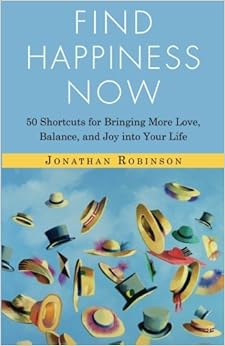
Jonathan Robinson: Finding Happiness Now...and in the Future (Talks at Google)

http://ecx.images-amazon.com/images/I/51prI5wrCML._SY344_BO1,204,203,200_.jpg

Psychologist Jonathan Robinson is the author of Find Happiness Now: 50 Shortcuts for Bringing More Love, Balance, and Joy Into Your Life (March, 2014), as well as several other books, including Communication Miracles for Couples: Easy and Effective Tools to Create More Love and Less Conflict (2012).

Robinson recently stopped by Google to talk about his book on happiness.

Jonathan Robinson: "Finding Happiness Now...and in the Future"

Published on Sept 3, 2014


Jonathan Robinson is a psychotherapist, best-selling author of ten books, and a professional speaker from Northern California. He has reached over 250 million people around the world with his practical methods, and his work has been translated into 47 languages. Articles about Jonathan have appeared in USA TODAY, Newsweek, and the Los Angeles Times, as well as dozens of other publications. In addition, Mr. Robinson has made numerous appearances on the Oprah show and CNN, as well as other national TV talk shows. He has spent over 35 years studying the most practical and powerful methods for personal and professional development.

More about Jonathan

Wednesday, July 23, 2014

RSA - What Kind of Love Do We Need?


This is a video/talk from The RSA's series on reconceptualizing spirituality for the 21st Century. Previously in the series, they have looked at what it might mean to 'take spirituality seriously', the role of the body in spiritual experience, what sense can be made of the soul in a scientific age, and the importance of reflecting on our mortality

In this penultimate event in this series, Simon May, Devorah Baum, Mark Vernon, moderator Jonathan Rowson examine an experience and ideal that many believe has to be at the heart of any reappraisal of the spiritual: Love.

What Kind of Love Do We Need?

17th Jul 2014

Listen to the audio

(full recording including audience Q&A)
Please right-click link and choose "Save Link As..." to download audio file onto your computer.


All you need is love, said the Beatles, but is that right? And if it is, what kind of love do we need? Popular culture is awash with the excitement and drama of romantic love, but psychology, philosophy and other forms of inquiry reveal a much richer, broader, deeper and sometimes challenging notion of love.

For instance, many believe the global reach of Christianity is related to the central importance it places on love, but Simon May has written that we have inverted 'God is Love' to create a world in which 'Love is God'.

Are we now, in what Rowan Williams recently called a Post-Christian Society, still striving for a certain kind of love? And if so, what might it feel like to find it?

In this series on reconceiving spirituality, we have explored what it might mean to 'take spirituality seriously', the role of the body in spiritual experience, what sense we can make of the soul in a scientific age, and the importance of reflecting on our mortality. Join us for the penultimate event in this series, when we examine an experience and ideal that many believe has to be at the heart of any reappraisal of the spiritual: Love.

http://www.markvernon.com/Images/Love%20ATM%20cover.jpg

Speakers:  

Simon May, visiting professor of philosophy, Kings College London and author of 'Love: A History'
Mark Vernon, writer, journalist and author of 'Love: All That Matters'
Dr Devorah Baum, lecturer in English, University of Southampton.

Chair: Jonathan Rowson, director, RSA Social Brain Centre.

Get the latest RSA Audio

Subscribe to RSA Audio iTunes Podcast iTunes | RSA Audio RSS Feed RSS | RSA Mixcloud page Mixcloud
You are welcome to link to, download, save or distribute our audio/video files electronically. Find out more about our open access licence.

Speakers

Thursday, September 26, 2013

Being Human 2013: Free Online Simulcast - Saturday, Sept. 28


Home


With speakers including Robert Sapolsky, Richie Davidson, Paul Ekman, Helen Fisher, and David Eagleman, this looks to be an excellent day-long event. The theme for this year's event is the Science and Mystery of Human Experience.

Preview video:


For this year's event, the sponsors are making it available for free online the day of the event, with a live stream hosted by FORA.tv. The stream will be hosted on their main page on Saturday, September 28, 2013. This is very awesome.

Being Human 2013 to Offer Free Web Simulcast of Cutting-Edge Science & Philosophy Conference

Submitted by Michael Taft on Sun, 09/22/2013 - 10:35

SAN FRANCISCO, CA September 23, 2013 – Organizers announced today that a free online simulcast will be offered of Being Human 2013, the second annual gathering of top neuroscientists and visionaries who will explore what it means to be human from a variety of scientific, evolutionary and philosophical perspectives on Saturday, September 28, 2013 in San Francisco’s newly restored Nourse Theater.

Presented by the Baumann Foundation, and co-sponsored by KQED, Wikimedia Foundation, and Long Now Foundation, the day-long conference will explore four intriguing aspects of the human experience: the biological underpinnings of ethical behavior, the function and evolution of human emotions, the role of love and sex in human relations, and what lies ahead for our species.

Some of the brightest minds in neuroscience, anthropology and behavioral research, including distinguished scholars from Stanford, Princeton, Harvard, Rutgers, Baylor, Yale, and the Kinsey Institute will each share their latest insights, pique curiosities, spur conversations, and provide a sense of connection, clarity and deeper understanding of our common humanity. Thought leaders in diverse fields such as contemporary information design and evolutionary philosophy will also be a part of the interdisciplinary program. The event will be highlighted by a mesmerizing dance performance by YouTube dub step sensation Marquese Scott and a riveting piano performance by the iconoclastic music pioneer ELEW.

“We felt it was very important to make this fascinating and thought provoking content available to people around the world who want to participate in the Being Human experience and learn more about our collective evolution,” said Jeff Klein, Executive Director of the Baumann Foundation.

The free streaming video simulcast will be available at www.beinghuman.org. The webcast will begin at 9 AM Pacific on September 28, and archive video will be available for viewing on the Being Human website following the event.

Tickets to attend Being Human 2013 in person and more information are available at http://www.beinghuman.org/2013.

* * * * *

Here is the excellent program planned for the event.

The Science & Mystery of Human Experience


Being Human 2013: a daylong exploration of human nature in the light of cutting edge science, philosophy, and evolution. At this event we will look at:


The Biology and Psychology of Ethical Behavior

Is morality culturally determined and relative, an evolved social contract that is absolute, or something else? In this session, we examine the biology of caring behavior and social interactions, as well as the dynamics of cooperation, competition, and power.

Presented by Robert Sapolsky, Ph.D., Susan Fiske, Ph.D., and Josh Greene, Ph.D.

***

Human Emotions

In this session we look at emotions as evolved behavioral responses, how well-being can be cultivated, and how our emotions can influence health. We further investigate the nature of compassion and its compatibility with evolutionary theory.

Presented by Richie Davidson, Ph.D., Paul Ekman, Ph.D., and Esther Sternberg, Ph.D.

***

Love and Sex

Sexual behavior, romance, and partnerships are among the strongest human social drives. In this session we delve into the biology of sexual behavior and such topics as love addictions, serial monogamy, clandestine adultery, hookup culture, and how human partnering psychology is reflected in our animal cousins.

Presented by Helen Fisher, Ph.D., Justin Garcia, Ph.D., and Laurie Santos, Ph.D.

***

The Future of Being Human

In this session, we examine how the contemporary journey into massive scales of space, time, and big data irreversibly expands our perspective on ourselves—and how medical innovations which allow us to move past our traditional human bodies will change our cares and our consciousness.

Presented by David Eagleman, Ph.D., Natasha Vita-More, Ph.D., and Jer Thorp.


The experience of being human can be exciting or stressful, fun or depressing, but most often it’s simply confusing. How can we make sense of our world with all its pain and suffering, its delights and disappointments?

For most of human history we’ve been trying to understand our lives based on metaphysical, religious, and supernatural concepts. Then the Age of Enlightenment ushered in science and Darwin’s remarkable theory of evolution—a powerful new way to look at ourselves and the world. Now disciplines such as cognitive neuroscience, evolutionary psychology, genetics, anthropology, and philosophy are delivering fascinating new findings which have the potential to radically remake the way we see ourselves. Based on these scientific insights, a more comprehensive view of human nature is now emerging.

Sunday, June 30, 2013

The Science of Love and Happiness - All in the Mind Podcast

Interesting podcast on the science and psychology of happiness, love, attraction, and well-being - from Radio National's All in the Mind podcast (Australia), hosted by Lynne Malcolm.

The science of love and happiness


Sunday 30 June 2013
Presenter: Lynne Malcolm


What lies beneath the ecstasy and the heartache of love? This question so intrigued anthropologist Helen Fisher that she scanned the brains of the lovestruck and got new insights into why we are attracted to one person rather than another. And the science of happiness—we hear from foremost expert on happiness and well-being Ed Diener about how we can achieve it and why it's really good for us.

Transcript

Guests

  • Helen Fisher, Biological Anthropologist & Research Professor, Department of Anthropology at Rutgers University, New York
  • Ed Diener, Joseph R. Smiley Distinguished Professor of Psychology, University of Illinois, U.S.A.

Publications

  • Happiness: unlocking the mysteries of psychological wealth by Ed Diener, and Robert Biswas-Diener
  • International differences in well-being by Ed Diener, Daniel Kahneman, and John Helliwell 
  • Well-being for public policy, by Ed Diener, Richard Lucas, Ulrich Schimmack, and John Helliwell
  • Why Him? Why Her?: How to Find and Keep Lasting Love by Helen Fisher
  • Why we love - the Nature and Chemistry of Romantic Love by Helen Fisher
  • The first sex: the natural talents of women and how they are changing the world by Helen Fisher 

Further Information


Friday, March 22, 2013

Ross Andersen - The Case for Using Drugs to Enhance Our Relationships (and Our Break-Ups)


Ross Anderson, writing for The Atlantic, interviews Oxford ethicist Brian Earp ans his colleagues (Anders Sandberg and Julian Savulescu), who argue that we should be open to the increases in human well-being that successful "love drugs" could engender.

In a series of several papers, Earp and his colleagues make a convincing case that couples should be free to use "love drugs," and that in some cases, they may be morally obligated to do so. Anderson interviewed them by email and this is a condensed version of that interaction.

Interesting stuff.

Ross Andersen is an Atlantic correspondent based in Washington, D.C. He is also the Science Editor at the Los Angeles Review of Books, and a contributor to The Economist.

The Case for Using Drugs to Enhance Our Relationships (and Our Break-Ups)

By Ross Andersen

A philosopher argues that taking love-altering substances might not just be a good idea, but a moral obligation.


Not actual love drugs (Alexis Madrigal)

George Bernard Shaw once satirized marriage as "two people under the influence of the most violent, most insane, most delusive, and most transient of passions, who are required to swear that they will remain in that excited, abnormal, and exhausting condition continuously until death do them part." 

Yikes. And yet, nearly all human cultures value some version of marriage, as a nurturing emotional foundation for children, but also because marriage can give life an extra dimension of meaning. But marriage is hard, for biochemical reasons that may be beyond our control. What if we could take drugs to get better at love?

Perhaps we could design "love drugs," pharmaceutical cocktails that could boost affection between partners, whisking them back to the exquisite set of pleasures that colored their first years together. The ability to do this kind of fine-tuned emotional engineering is beyond the power of current science, but there is a growing field of research devoted to it. Some have even suggested developing "anti-love drugs" that could dissolve abusive relationships, or reduce someone's attachment to a charismatic cult leader. Others just want a pill to ease the pain of a wrenching breakup.

Evolutionary biologists tell us that we owe the singular bundle of feelings we call "love" to natural selection. As human brains grew larger and larger, the story goes, children needed more and more time to develop into adults that could fend for themselves. A child with two parents around was privy to extra resources and protection, and thus stood a better chance of reaching maturity. The longer parents' chemical reward systems kept them in love, the more children they could shepherd to reproductive age. That's why the neural structures that form love bonds between couples were so strongly selected for. It's also why our relationships seem to come equipped with a set of invisible biochemical handrails: they're meant to support us through the inevitable trials that attend the creation of viable offspring.

The problem for us modern, long-lived humans is that natural selection is only interested in reproductive fitness. Once your kids can make their own kids, natural selection's work is finished. It doesn't care whether your marriage remains emotionally satisfying into your golden years. But if the magic of love resides in the brain, an organ whose mysterious workings we are slowly starting to unravel, there might be a workaround.

At first blush, love may seem like a poor prospect for pharmacological intervention. The reflexive dualist in us wants to say that romantic relationships are matters of the soul, and that souls ought to be free of medical tinkering. Oxford ethicist Brian Earp argues that we should resist these intuitions, and be open to the upswing in human well-being that successful love drugs could bring about. Over a series of several papers, Earp and his colleagues, Anders Sandberg and Julian Savulescu, make a convincing case that couples should be free to use "love drugs," and that in some cases, they may be morally obligated to do so. I recently caught up with Earp and his colleagues by email to ask them about this fascinating ethical frontier. What follows is a condensed version of our exchange.

What is the current thinking among evolutionary biologists as to how love---or adult pair bonding---evolved?

From the perspective of evolutionary biology, love is a complex neurobiological phenomenon that has been wired into us by the forces of evolution. It makes heavy use of the brain's reward systems, and its ability to bring together (and keep together) human beings--from prehistoric times until the present day--has played a major role in the survival of our species.

In terms of natural selection, the working consensus among evolutionary biologists is that the human adult pair bond probably developed out of earlier structures involved in creating and sustaining feelings of attachment between mothers and their infants. Evolution likes to make use of existing systems for new purposes. In this case, the shift might have been driven by the heightened importance of paternal care for offspring with bigger and bigger brains over generations of human evolution. These burgeoning baby brains took longer to reach maturity than their more ancestral counterparts, leaving the infant vulnerable and underdeveloped for extended periods of time. The idea is that if parents fell in love and remained together during this fragile period for their offspring, their own genetic fitness would be enhanced.

The anthropologist Helen Fisher has famously argued that "love" is not a single straightforward emotion, but an emergent suite of motivational states that stem from underlying systems for lust, attraction, and attachment. In her theory--one of a number of "biological" theories of love with quite a bit of overlap between them--the lust system promotes mating with a range of promising partners; the attraction system guides us to choose and prefer a particular partner; and the attachment system fosters long-term bonding, encouraging couples to cooperate and stay together until their parental duties have been discharged. These universal systems are then hypothesized to form a biological foundation on which the cultural and individual variants of sexual, romantic, and longer-term love are built.

What scientific evidence do we have that the difficulties people face in modern relationships can be successfully addressed with pharmaceuticals?

Modern relationships are challenging for a whole range of reasons, and these reasons might be very different from one couple to the next. Drug-based treatments aren't always going to be the best approach, and sometimes they should even be avoided. Putting a chemical band-aid on a violent or abusive relationship, for example, would be an extremely bad idea. But we do know that in at least some cases, states of the brain that are susceptible to being pharmacologically altered may have something to do with the interpersonal difficulties couples face.

To give an obvious example, just think of a marriage in which one partner suffers from severe depression. As anyone who's been in that situation can tell you, chronic depression in one or both members of a committed partnership can drag the whole relationship down. Addressing the root of the problem, in this case through the use of anti-depressant pharmaceuticals if necessary, could make a big difference for some couples.

For another example, consider the widespread use of Viagra to treat male impotence, a problem that prevents some couples, especially older couples, from having sex. Lack of sex reduces oxytocin levels, and reduced oxytocin levels can degrade a couple's romantic bond. If a drug-based treatment could help the couple restore a healthy sex life, this could improve their chances of sustaining a well-functioning relationship.

Beate Ditzen and her colleagues at the University of Zurich have shown that oxytocin nasal spray can facilitate positive communication--and reduce stress levels--in romantic couples engaged in an argument. Oxytocin, sometimes called the "love hormone" for its role in sustaining mother-infant and romantic attachment bonds, increased the ratio of positive to negative communication behaviors and facilitated a drop in cortisol levels after the conflict. These factors have been shown to play a major role in predicting long-term relationship survival. While commentators like Ed Yong have recentlyemphasized that oxytocin can have a "dark side" as well--for example, by promoting in-group favoritism--the key is to figure out which people, which situations, and which ways of administering the hormone will maximize its effectiveness and minimize any troubling side-effects. We're working on some research right now to sort these conditions out.

In earlier decades, MDMA (ecstasy) was sometimes used in couple's therapy to boost empathy and improve emotional communication skills. While this sort of use would be illegal today, there has been a recent resurgence of scientific interest in possible therapeutic uses of MDMA, for example to treat Post Traumatic Stress Disorder. More research is needed, of course, but there is no reason why it should not be carried out, carefully and ethically, with proper social, procedural, and legal safeguards in place.

You argue that "love drugs" can help us address the tension between our moral values and our evolved psychobiological natures. Where does that tension manifest itself most obviously in relationships today? How have things changed since our basic sexual and relational drives evolved?

If you look at this in the context of evolutionary biology, you realize that in order to maximize the survival of their genes, parents need to have emotional systems that keep them together until their children are sufficiently grown--but, what happens after that is of no concern to natural selection. As Donald Symons has written, "in analyzing the psychological underpinnings of marriage [we should] keep in mind that Homo sapiens is the product of evolution ... we are designed to promote gene [survival], not individual survival, and reproductive [success], not marital success." Since we now outlive our ancestors by decades, the evolved pair-bonding instincts upon which modern relationships are built often break down or dissolve long before "death do us part."

We see this in the high divorce rates and long term relationship break up rates in countries where both partners enjoy freedom--especially economic freedom. We are simply not built to pull off decades-long relationships in the modern world. Nature designed us to be together for a while, but not forever--and once we push beyond the natural childrearing boundary, we are, in a sense, living on borrowed time.

Another major tension comes from our non-monogamous impulses. Humans are rare among mammals in that we practice at least some form of social monogamy. But there is a mountain of evidence suggesting that sex outside of the primary parenting bond was common throughout our evolutionary history, and would have been to the reproductive advantage of both males and females of our species. Jealousy seems to have deep roots as well, so there is nothing particularly new about feelings of sexual possessiveness--but the conscious, socially enshrined value-expectation that both husbands and wives should remain 100% sexually exclusive to one another for decades in a row, and that failure to meet this goal should entail the end of the relationship, is certainly a more recent invention. Adultery is one of the leading causes of marriage failure.

You point out that married couples should have the freedom to use love-enhancing drugs if they so wish, but you also go a step further, arguing that there are circumstances where married couples ought to take them. What are the most compelling of those circumstances?

Imagine a couple that is thinking about breaking up or getting a divorce, but they have young children who would likely be harmed by their parents' separation. In this situation, there are vulnerable third parties involved, and we have argued that parents have a responsibility--all else being equal--to preserve and enhance their relationships for the sake of their children, at least until the children have matured and can take care of themselves. One way to do this, of course, would be to attend couple's therapy and see if the relationship problems could be meaningfully resolved through "traditional" methods. But what if this strategy isn't working? If love drugs ever become safely and cheaply available; if they could be shown to improve love, commitment, and marital well-being--and thereby lessen the chance (or the need) for divorce; if other interventions had been tried and failed; and if side-effects or other complications could be minimized, then we think that some couples might have an obligation to give them a try. Of course, we aren't suggesting that anyone should be forced to take love drugs--or any drugs--against their will. But we do think that when children are involved, the stakes become higher for finding a workable solution to relationship difficulties between the parents.

What if "love drugs" only serve to prop up fading cultural institutions? Some might argue that monogamy is outdated, or a bad fit with human nature, and that rather than pharmacologically altering ourselves to accommodate it, we should jettison the whole thing instead. What would you say to them?

Whenever individuals--or societies--experience a mismatch between their values and human nature, they face a choice. They can give up or amend their values, accept a contradiction between their values and their impulses or behaviors, or they can try to modify or manage human nature.

This "management" can happen in different ways. It might involve shaping the physical, social, and legal environment to incentivize value-consistent behavior and disincentivize value-inconsistent behavior. Or it might involve the use of biotechnology (such as love drugs in the case of monogamy) to modify the source of the behavior directly--or some combination of the above. Which course to take for any given mismatch depends upon a huge range of factors, and there are often good arguments for different approaches depending on the details of the given case.

As a baseline, we have argued for something called the "principle of default natural ethics." This just means that, given the choice, we should try to adopt values that are as consistent as possible with human nature, so that we can avoid troubling side-effects that come from unnatural suppression and heavy-handed regulation of basic instincts: just think of the recent sex abuse scandal in the Catholic Church, and consider some obvious reasons why that tragedy might have come about. Sometimes, following the principle of default natural ethics means that we should jettison our social institutions--especially when they are so far out of synch with our human dispositions as to be totally unworkable, or when they end up creating bigger problems than they were designed to solve in the first place. This isprobably part of the reason why we've moved past communism as a model for social and political organization: it seemed, at least to many people, to make a lot of sense on paper, but in the real world it ran up against too many deep facts about the way that people actually work.

But communism was an experiment, both radical and recent. Monogamy, on the other hand, or at least some form of it, has been a part of human societies for a much longer time, so we have to be more careful about how we deal with its problematic features--most notably the gap it creates between the ideal of sexual exclusivity and the reality of human promiscuity.

Some people think that we should give up on monogamy, and there are plausible arguments for this view. In fact, one possibility is that love drugs could be used to eliminate jealousy rather than the impulse to stray--and for individual couples, this might indeed be a worthwhile strategy. For couples who are committed to polyamory, for example, jealousy would seem to be the odd man out: it conflicts with the polyamorists' higher-order goals for sexual openness.

We obviously cannot set the moral priorities for any given relationship. But in making a more general argument, we note that most couples as a matter of fact value sexual fidelity and make an explicit promise to hold to it. And at least when children are involved, we think that this promise may be morally justified, since extramarital sex can lead to extramarital love that would divert time and energy directly away from existing offspring. On the other hand, when children are not an issue, when there are good arguments for non-monogamy for a particular couple, or when non-monogamous social institutions have a good chance of contributing to human welfare in a given culture or community, then we don't see any reason why people should go out of their way to "prop up" problematic social norms through the use of pharmacology.

There are certain environmental features of modernity---like ease of travel and expanded social circles---that make monogamy more difficult. Why shouldn't we focus on limiting the effects of those factors instead of altering ourselves biochemically?

It's a question of trade-offs. Most people think that ease of travel and far-flung social connections are a good thing, and contribute positively to human flourishing in the modern era. On a practical level, too, these things aren't likely to go away. So when they do become a problem--by making it easier to commit adultery, for example--we have to be creative about how we respond. Certainly there are a range of non-biochemical strategies that couples can use to stay faithful to each other despite the pressures and temptations of modern life, and they should be free to pursue these strategies to the best of their abilities. We have simply argued that it may be time to consider a wider range of possibilities, as contemporary relationships need all the help they can get. At the end of the day, anyone who fully appreciates the post-Enlightenment ideals ensconced in present-day Western cultures would be loathe to restrict travel, freedom of socializing, freedom of divorce, or gender equality in the workplace, despite their potential to undermine full-fledged monogamy. The cure would be worse than the disease.

You could see how these drugs could be used in the context of a parent-child relationship---perhaps to boost feelings of love in an otherwise apathetic mother. Are there any special ethical concerns there?

There may be some. But remember our analogy to treating depression in a romantic context, and then just extend this reasoning to a parent-child relationship. So long as it is the parent taking the drug, voluntarily and under conditions of informed consent, and so long as this drug-based treatment had a reasonable chance of improving her ability to care for her own offspring, there would seem to be little to worry about in terms of ethics. Some people might be concerned that this drug-induced "love" would be inauthentic in some way - but it depends on what you take as your baseline. Perhaps the authentic situation is the one in which feelings of love and contentment occur naturally between the parent and the child, and it is only a disordered biochemical state that brought about the apathy actually felt by the mother. Just as when a depressed person finds that a small dose of medication allows him to "be himself" again--finding joy in the old activities he used to love so much, for example--so might some mothers find that taking a love drug allows them to engage with their children in a way that feels more true to their own self-conception than they would feel without it.

It's often said that you don't have an obligation to love someone, usually based on the idea that it is impossible to voluntarily control our emotions. But if love drugs make such control more possible, then there might be some loves that should be felt. It's debatable whether this is true for spouses, but it seems very hard to argue against the idea that we should love our children.

This is an actual wedding ring. It smells like anise now. (Alexis Madrigal)

You've also written about "anti-love drugs," which could be used to dissolve love bonds in abusive relationships, or in cases where someone has fallen under the spell of a cult leader. Are there drugs like this that are currently under development?

With the exception of anti-androgen drugs sometimes used to treat paedophilia--and which work in a rather "low-level" way by targeting the bodily sex drive--very few chemical substances are currently available that have been explicitly designed with the goal of diminishing feelings of love or sexuality. But that doesn't mean that anti-love drugs don't exist in certain forms. Some Orthodox Jewish groups use "off label" anti-depressant medication to suppress libido, so that young yeshiva students can comply with strict religious norms concerning human love and sexuality. These selective serotonin re-uptake inhibitors (SSRIs) can also lead to "emotional blunting" of higher-order feelings involved in romantic attraction. Some people report finding it harder to cry, worry, get angry, or care about other people's feelings while taking anti-depressants. The overall lack of emotional stimulation produced by SSRIs has been described as producing a "blandness" that can overwhelm certain romantic relationships. As one author has put it: "aside from ruining your sex life, antidepressants could also be responsible for breaking your heart."

Other substances that can reduce libido--usually considered a "side effect"--include tobacco and alcohol, almost all blood pressure pills, certain pain relievers, statin cholesterol drugs, some acid blockers used to treat heartburn, the hair loss drug finasteride, and seizure medications including gabapentin and phenytoin.

There is some work showing that scientists can block a pair-bond from forming in certain vole species--those cute little rodents than are one of the few socially monogamous creatures on the planet--but this involves injecting dopamine- or oxytocin-blockers directly into the nucleus accumbens, and so similar experiments have not been carried out in humans.

In some cases---as with someone under the spell of a cult leader---the drugs would conceivably be administered against the wishes of the smitten person. How do we justify an invasion of autonomy that goes to something as personal as love?

This is a tricky situation. On the one hand, if love really can make a person "lose her mind" then at least in theory there could be an argument for saying that a person has been compromised mentally and thus some form of intervention could be justified. You would have to provide very strong evidence that the person was genuinely incompetent to make a decision on her own behalf, and you would have to be sure that she was at risk of suffering serious and unambiguous harm if left to her own devices. But the potential for paternalistic overreach here is huge, and we should be very cautious about assuming that we know better than someone else what is in her own best interests, all things considered. In general, individuals should be protected from any form of coercion by ensuring there are robust laws protecting independence of the mind. Interestingly, small children can be indoctrinated into fundamentalist religious cults without any restriction. That is a lot more worrying and occurs for thousands, or perhaps millions of children.

What's the threshold for the use of anti-love drugs? Should people use them in cases where they aren't in any particular danger, like in the case of a tough break-up? Some might argue that you can't learn from a break-up without experiencing it in full. Do you buy that?

In a forthcoming paper, we argue for four conditions for the use of anti-love biotechnology: (1) the love in question is clearly harmful and needs to dissolve one way or another; (2) the person would conceivably want to use the technology, so there would be no problematic violations of consent; (3) the technology would help the person follow her higher-order goals instead of her lower-order feelings; and (4) it might not be psychologically possible to overcome the relevant feelings without the help of anti-love biotechnology. But the question here seems to be, what if it were possible to overcome the attachment, only it would involve a lot of protracted pain and difficulty, and the person would rather just move on with the business of living?

Philosophers will disagree about what should be allowed in a case like this. So-called "bioconservatives" would probably remind us that even great and seemingly unbearable suffering can impart unforeseeably important lessons, and that people should be very careful about turning to drugs to solve their problems or dull their pains. They tend to say things like: "With suffering comes understanding" - and of course, there is a kernel of truth to that. Bioliberals, on the other hand, would be likelier to point out that "traditional" methods of getting over heartache aim at changing our brain chemistry just as much as drugs would, only indirectly and sometimes less effectively. "Sometimes suffering is just suffering," they would add, and then they might go on to suggest that such fruitless pain should be eliminated by whatever means the individual judges for himself are best.

For our part, we certainly don't deny that there can be great value in experiencing the world "as it really is" - in its heartbreak and agony as much as in its joys. But we think that even if it could be shown that human beings had some sort of existential duty to experience pain along with happiness, this duty would not absolute: it could be trumped by the debilitating effects of certain traumas, and sometimes a broken heart might qualify in just this sense.

What if these drugs enabled romantic sabotage? You could envision a scenario where someone uses a discreetly delivered anti-love drug to ruin someone else's relationship---in order to get rid of a romantic rival.
This would clearly be unethical, and would be analogous to (and perhaps no worse than) telling a scurrilous lie about the mutual object of affection in order to cause the rival-in-love to lose his interest. It also calls to mind the use of "date-rape" drugs to manipulate a person into having non-consensual sex. In general, if the love- or sex-related action would be considered morally impermissible if undertaken by "traditional" means, then it should be considered morally impermissible if undertaken by means of anti-love biotechnology. We need robust laws to prevent anyone's giving a drug or other intervention to another person that could alter their minds or change their behavior without their consent. This will be a big area in the future. Love drugs are just one part of it.

One worry with "anti-love drugs," is that they could be used by fundamentalist groups to "cure" homosexuals, or by traditionalist groups in India that disapprove of "inter-caste love." Do these risks negate the potential social utility of anti-love drugs.
This is an important consideration. As is well known, the very disturbing practice of conversion therapy in the United States (designed to "cure" gay and lesbian individuals of their sexual and romantic feelings) carried on until at least the 1970s with the full-throated endorsement of the mainstream profession of mental health. And as late as 2012, a U.S. federal judge ruled that such therapy cannot be outlawed, even when conducted on minors, since it constitutes a protected form of religious "speech"-- indeed it is still being performed in a number of fundamentalist Christian communities to this day.

While there is very little evidence that existing interventions actually work in the way intended--and quite a bit of evidence that they can cause trauma and other serious harms--future technologies might indeed be more effective. So if we were to grant that religious fundamentalists (for example) might try to use these future technologies in ways that progressive-minded people would object to, one tempting conclusion is that we should try to prevent their coming-into-being at whatever cost.

But jumping to this conclusion would be premature. In the first place, we have to remember that any new technology poses risks - whether it is an anti-love pill, a powerful military weapon, or something more mundane. So the possibility that a new technology might be used for ill can never constitute, by itself, sufficient reason to reject it. Instead, the potential harms that might accrue from misuse of the technology have to be weighed against the potential benefits that might accrue from its responsible use. Second, even if it could be shown that the development of various anti-love interventions would be too risky to be worth pursuing, it still might not be possible to avoid having to deal with their eventual existence. This is because advances in other areas - i.e., in treatments for debilitating mental disorders such as autism - might leave us with the very same neuroscientific knowledge and technological capabilities that we would have ended up with had we sought them out for love-diminishing purposes directly. In such a scenario, we would still have to ask ourselves whether or when to use the powers we had (inadvertently) created.

What this question highlights, though, is that ethical dilemmas concerning emerging biotechnological innovations cannot be resolved in an "enlightened" academic vacuum. Instead, there is a much wider debate taking place in society over what sorts of values we should hold in the first place with respect to things like love, sex, and relationships (and nearly everything else as well). And plainly this broader conversation--between the insights of progressivism and the insights of conservatism, as well as between the forces of secularism and the forces of religion--will continue to shape the moral ends toward which human beings collectively and individually strive, regardless of what technology is actually in hand, and regardless of what pontificating bioethicists may argue in their papers. So we have argued that at most fundamental level, the relevant question--what we call the basic technology-value question--becomes:
How can we use new technologies for good rather than for ill, while simultaneously trying to reach a functional consensus on what sorts of things should be considered good, and what sorts of things should not be considered ill?
'Progressive-minded people' clearly have their work cut out for them in terms of this longer-term project.