Showing posts with label homo sapiens. Show all posts

Tuesday, August 12, 2014

Nova - Evolution: The Minds Big Bang

tree background


This video is Part 6 of a 7-Part NOVA series on evolution, narrated by Liam Neeson. In this episode, they look at the emergence of mind that may have given early homo sapiens the edge over neanderthals.

Evolution: The Minds Big Bang

2001 original air date

Anatomically modern humans existed more than 100,000 years ago, but with crude technology, no art, and primitive social interaction. By 50,000 years ago, something happened which triggered a creative, technological, and social explosion—and humans came to dominate the planet. This was a pivotal point in our evolution, the time when the human mind truly emerged. This program examines forces that may have contributed to the breakthrough, allowing us to prevail over other hominids, the Neanderthals, who co-existed with us for tens of thousands of years. The film then explores where this power of mind may lead us, as the culture we create overtakes our own biological evolution.

Monday, July 07, 2014

Ability to Adapt Gave Early Humans the Edge Over Other Hominins (Smithsonian)

Looking at the evolution of the homo genus, it may be that the whole lineage is renamed homo adaptus, in that our own defining characteristic seems to be our ability to adapt to our environment. This article from the Smithsonian magazine looks at this adaptive quality in the homo genus.

Ability to Adapt Gave Early Humans the Edge Over Other Hominins

Features thought to be characteristic of early Homo lineages actually evolved before Homo arose. Rather, our flexible nature defines us

By Mohi Kumar
smithsonian.com | July 4, 2014

Skulls of the genus Homo, including two from Homo erectus on the right (Chip Clark, Smithsonian Human Origins Program/Guram Bumbiashvili, Georgian National Museum)
From the cold Arctic to the sweltering Sahara, from the high Himalayas to the deep reaches of the Amazon, humans are everywhere. Our ability to adapt and even thrive in a variety of environments is one of the hallmarks of our species.

In fact, adaptability might be THE defining characteristic of our broader genus, Homo. According to new research published in Science, the ability of early humans to adjust to wild climate fluctuations likely enabled them to diversify, differentiate, and spread out of Africa 1.85 million years ago.

Before this study, prevailing scientific thought generally held that several traits—large brains, long legs, the ability to make tools, a prolonged time before juveniles mature into adults—all evolved together as a package between 2.4 and 1.8 million years ago. This collection of traits, scientists thought, separated the Homo genus from other hominins, such as Australopithecus or Ardipithecus, and arose when the Earth’s climate became cooler and drier and the African grasslands expanded in range.

However, a close examination of how early hominin fossils correlate with the emergence of certain behaviors seems to show otherwise. Many of the traits thought to make up this Homo package evolved independently, and some not even in Homo species at all. For example, “the origin of stone tool making doesn’t correlate to anything regarding the origins of the genus Homo,” says coauthor Richard Potts, a paleoanthropologist and director of Smithsonian’s Human Origins Program.

Further, some features once considered characteristic to members of early Homo lineages, such as long hind limbs, can be found in Australopithecus species—hominins that existed before the earliest Homo walked the earth. Australopithecus died out around 2 million years ago.

Hominin evolution from 3.0 million to 1.5 million years ago. Green: Australopithecus, Yellow: Paranthropus, Red: Homo. The icons indicate from the bottom the first appearance of stone tools at ~2.6 million years ago, the dispersal of Homo to Eurasia at ~1.85 million years ago, and the appearance of stone axes at ~1.76 million years ago. The cultural milestones do not correlate with the known first appearances of any of the currently recognized Homo specimens. (Courtesy of Antón, Potts and Aiello/Science)
Tracking the origins of Homo's supposedly defining traits involved a thorough review of fossils from three hominin groups—Paranthropus, Australopithecus, and Homo. Researchers paid careful attention to when these groups and the species within them emerged and died out.

Scientists can tell different species apart “based on differences in the shape of their skulls, especially their face and jaws,” explains Susan Antón, a professor of anthropology at New York University and the paper’s lead author. These differences persist over hundreds of thousands of years in the fossil record, defining distinct species.

With the fossil record for hominins divvied up into genera and species, the next step was to date when the species had lived. In the East African Rift Valley, determining the age of a fossil can be done rather reliably. Sediments surrounding fossil finds contain ash and pumice from volcanic eruptions—minerals in this ash and pumice can be dated using radioisotopes.

With the dates of the fossils established, what’s left was to pinpoint the age of the emergence of different behaviors. Figuring out when Homo migrated out of Africa is easy enough and can be done by dating fossils found in Eurasia. Early stone tools and hand axes found in East Africa can also be dated according to the minerals in the sediments that surround them.

Some traits, however, are more difficult to date. The ability to walk upright over long distances required the scientists to look at the fossils themselves. “We know where the muscles attached based on fossil bones; we can measure the cross-sectional area of the thigh bones and look at the mechanical properties of the pelvises that occur in the fossil records,” Potts explains.

Matching those findings to the fact that, as Potts notes, “animals that have elongated legs have greater strides and greater efficiency in locomotion,” allowed the scientists to estimate when long-distance walking emerged.

What results from these analyses is the realization that there is no simple, clear picture; no obvious mechanism as to why the genus we know as Homo came to arise and dominate. What we've long thought of as a coherent picture—the package of traits that make Homo species special—actually formed slowly over time. Stone tools first started appearing around 2.6 million years ago. Homo species left Africa 1.85 million years ago. Stone axes started to be used around 1.76 million years ago. And by at least 3 million years ago, Australopithecus developed elongated limbs and the ability to traverse long distances.

In fact, a similarly close look at other traits thought to be associated with the origin of Homo shows that they are similarly scattered through time, and not necessarily unique to early humans.


Evolutionary timeline of important anatomical, behavioral and life history characteristics that were once thought to be associated with the origin of the genus Homo or earliest H. erectus. (Antón et al., Science/AAAS 2014)

So what could have propelled our earliest ancestors to change? According to a detailed climate model of the past that was refined by the authors, the Homo lineage did not originate during a calm, cool, stable climate period as previously thought. Rather, East Africa at the time was dynamic, with “fluctuating moisture and aridity, [and] shifting resource regimes,” the authors write.

That early Homo species would have had to cope with this constantly-changing climate fits with the idea that it was not our hands, nor our gait, nor our tools that made us special. Rather, it was our adaptability.

Unstable climate conditions not only “favored the evolution of the roots of human flexibility in our ancestors,” explains Potts. “The origin of our human genus is characterized by early forms of adaptability. There’s a phasing of evolutionary innovations over time, and many evolved traits are not unique to the genus Homo even if the entire package is unique to Homo sapiens.”

Related Content

Saturday, December 07, 2013

Cavemen Did Not Live in Caves (from Nautilus)

The new issue of Nautilus has two interesting articles on the origins of human habitations. As recently as 400,000 years ago, we began to build crude structures, but it was not until about 15,000 years ago that humans began to build houses and villages.

Contrary to the popular narrative, human evolution likely did not center around life in caves.

For the past 20 years, Margaret Conkey and her team have been conducting open-air field research in the Ariège region, in the Central Pyrénées foothills of France. Her project, titled “Between the Caves,” concentrated on the Paleolithic era, also known as the Stone Age, before humans became sedentary. Challenging the status quo, she found that the Paleolithic people were much more than cavemen.
Both interesting articles are posted below.

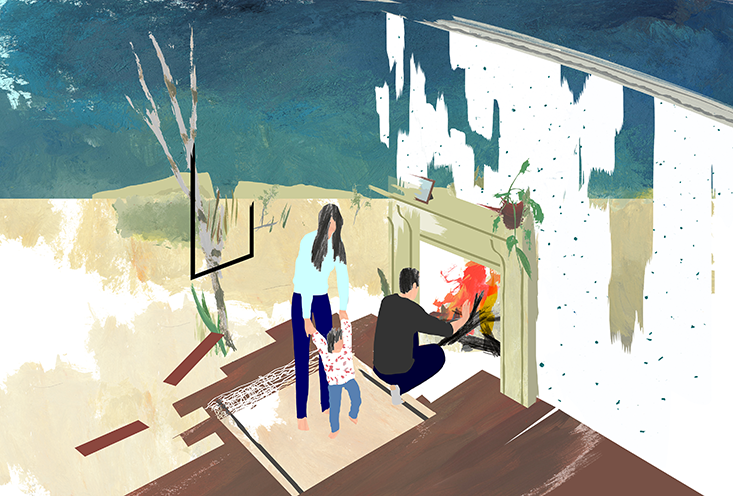
In Search of the First Human Home

When did the savanna give way to the crash pad?

By Ian Tattersall | Illustration by Jon Han December 5, 2013

What is home? This is a deceptively simple question. Is it the place where you were born? Is it where you happen to live right now? Does it have to be a dwelling, or can it be a spot on the landscape, or even a state of mind?

For archaeologists tracing human origins, these are challenging questions. Yet answering them provides key insights into our evolution from hominids at the mercy of our surroundings to humans in control of them. Having a sense of home, as we understand it today, is a product of symbolic thinking, a capacity that makes us unique among animals, including our own ancestors.

Intimations of home likely began in early hominids’ need for shelter. Australopithecus species, to which the famous 3-million-year-old Lucy belonged, often sheltered in trees, where they may have sought cover under dense clumps of leaves in the way in which great apes do today when it rains. Much later, about 400,000 years ago, hunter-gatherers, probably belonging to the species Homo heidelbergensis, constructed a camp on a beach at Terra Amata, now a suburb of the French city Nice. One large hut was about 30 feet long, and consisted of an oval palisade of saplings stuck in the ground, reinforced with a ring of stones, and presumably brought together to form a roof. Just inside a break in the ring where the doorway was, a campfire had burned in a hearth.

It is hard to not think that these early humans felt at home in this basic structure. Some might even argue that the crucial element was not the shelter itself but the hearth, where the flames would have formed a center of attention and social activity. In this limited sense, feelings of home were evidently there from the very beginning.

Archaeologists begin to see proto-houses during the Ice Age, some 15,000 years ago. Hunter-gatherers at the Ukrainian site of Mezhirich built four oval-to-circular huts that ranged from 120 to 240 square feet in area, and were clad in tons of mammoth bones. Out there on the treeless tundra, their occupants would have cooperated in hunting reindeer and other grazers that migrated seasonally through the area. The Mezhirich people dug pits in the permafrost that acted as natural “freezers” to preserve their meat and let them spend several months at a time in the “village.” With so much labor invested in the construction of their houses, it is hard to imagine that the Mezhirich folk did not somehow feel “at home” there.

But if an archaeologist had to pick an example of the earliest structures that most resembled our modern idea of home, it would probably be the round houses built by the semi-sedentary Natufians, an ancient people who lived around the eastern end of the Mediterranean Sea (Israel, Syria, and environs) at the end of the last Ice Age, some 12,000 years ago. A typical Natufian village consisted of several circular huts each measuring about 10 to 20 feet in diameter; these villages testify to a revolutionary change in human living arrangements. Finally, people were regularly living in semi-permanent settlements, in which the houses were clearly much more than simple shelters against the elements. The Natufians were almost certainly witness to a dramatic change in society.

The end of the Ice Age was a time of transition from a hunter-gatherer mode of subsistence to an agricultural way of life. But it also involved a Faustian bargain. Adopting a fixed residence went hand-in-hand with cultivating fields and domesticating animals. It allowed families to grow, providing additional labor to till the fields. But becoming dependent on the crops they grew meant that people found themselves in opposition to the environment: The rain didn’t fall and the sun didn’t shine at the farmers’ convenience. They locked themselves into a lifestyle, and to make the field continuously productive to feed their growing families, they had to modify their landscape. Today, we carry out such modifications on a huge scale, and nature occasionally bites back, sometimes with a vengeance. Back in Natufian times, we catch a glimpse of this process in its embryonic stage.


The decision to stay in one place, at least part of the year, entailed a transfer of individual loyalty from the mobile social group to a particular place. The Natufians lived by foraging and hunting in the oak-and-pistachio woodlands in the region and probably tended wild stands of the wheat and rye that grew naturally there. They harvested these cereals with sickles made out of sharp flint blades embedded into animal bones, and stored them in pits dug into the floors of their round, single-room houses. The houses themselves were sunk into the ground, and often had central fire pits for cooking. Archaeologists have also found a scattering of domestic paraphernalia within, including stone mortars for grinding grain, and devices to straighten arrow shafts for use in the hunt.

Archeologists can tell a lot about lifestyles from these artifacts. The Natufians were biologically modern people. Interments of the dead with grave goods, both in presumably abandoned houses and nearby caves, hint at ritual and spiritual beliefs. Pendants and beads made of shell, bone, and deer teeth additionally testify to a Natufian love of personal adornment.

We don’t know if the single-room houses were occupied by nuclear families or some other kind of kin group, or whether size disparities among the houses reflected varying social status or family sizes. What we do know is that dwellings of this kind were generally grouped into “villages” that would have housed about 150 inhabitants. They would almost certainly have felt like “home” to those who occupied them. It is clear that these people were pioneering a successful transition between the nomadic hunting-and-gathering lifestyles of their predecessors and the permanently settled existences of the Neolithic peoples who succeeded them around 10 thousand years ago.

So even before early people settled down to permanent agriculture and animal husbandry, the Natufians had laid a huge amount of the physical and social groundwork necessary for a fateful economic development that literally changed the world. And in a busy Natufian village, buzzing with life, we can readily imagine that everyone had a sense of belonging, both to the village itself, and to the individual homes that sheltered them. It seems that the formation of a community was an important turning point in the evolution of human society.

The famed lexicographer Samuel Johnson, a master of verbal precision, defined the word “home” in his great Dictionary of the English Language of 1755 very concretely as “his own house … the private dwelling,” but he also included an adjectival phrase: “close to one’s own breast or affairs.” In doing so, he was reflecting what we can see as the many-layered meanings of the Natufian village, which tied the notion of place to the more abstract feeling of belonging to a social group that had anchored individual human identities in earlier times.

This abstract sense of place is part of the cognitive equipment that we bring to bear on our notions of home. Modern human beings are cognitively peculiar. Uniquely, we resolve our surroundings into a vocabulary of mental symbols. We can then reshuffle the symbols to produce abstractions that we add to the concrete world around us. We are blessed with manipulative hands that enable us to put these ideas into action. But our powers of symbolic reasoning are a newly acquired capacity, dating back to no more than about 100,000 years ago. By this reckoning, the Natufians and the inhabitants of Mezhirich would have been able to nurture complex notions of home that Lucy and the Terra Amata folks could not. However deep in human history their emotional or economic underpinnings may run, the complex and nuanced ideas about home that we cherish today are the invention of our Homo sapiens species alone.

~ Ian Tattersall is a curator emeritus at the American Museum of Natural History in New York City. An acknowledged leader in the study of the human fossil record and the lemurs of Madagascar, Tattersall is the author of many books about human evolution, including, most recently, Masters of the Planet and (with Rob DeSalle) The Brain: Big Bangs, Behaviors, and Beliefs.

* * * * *

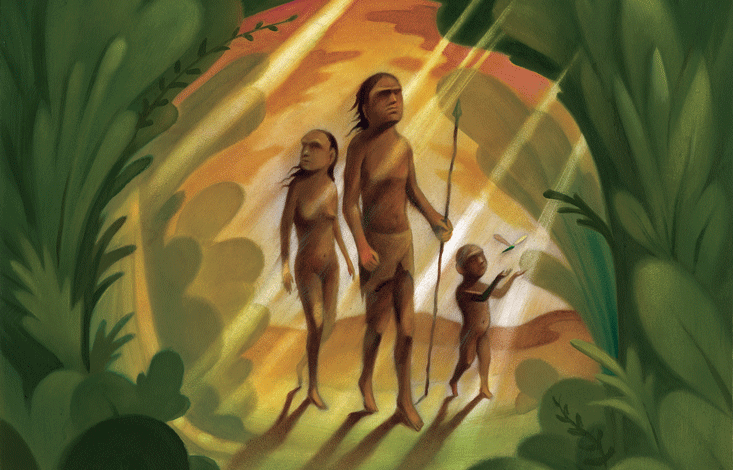
The Caveman’s Home Was Not a Cave

Our picture of man’s early home has been skewed by modern preconceptions.

By Jude Isabella | Illustration by Chris Buzelli December 5, 2013

It was the 18th-century scientist Carolus Linnaeus that laid the foundations for modern biological taxonomy. It was also Linnaeus who argued for the existence of Homo troglodytes, a primitive people said to inhabit the caves of an Indonesian archipelago. Although troglodyte has since been proven to be an invalid taxon, archaeological doctrine continued to describe our ancestors as cavemen. The idea fits with a particular narrative of human evolution, one that describes a steady march from the primitive to the complex: Humans descended from the trees, stumbled about the land, made homes in caves, and finally found glory in high-rises. In this narrative, progress includes living inside confined physical spaces. This thinking was especially prevalent in Western Europe, where caves yielded so much in the way of art and artifacts that archaeologists became convinced that a cave was also a home, in the modern sense of the word.

By the 1980s, archaeologists understood that this picture was incomplete: Our ancestors were not confined to dark cavernous spaces, and their activity outside of the cave was an important part of their life. But archaeologists continued excavating caves, both because it was habitual and the techniques involved were well understood.

Then along came the American anthropological archaeologist, Margaret Conkey. Today a professor emerita at the University of California, Berkeley, she had asked a simple question: What did cave people do all day? What if she looked at the archaeological record from the perspective of a mobile culture, like the Inuit? She decided to look outside of caves.

For the past 20 years, Conkey and her team have been conducting open-air field research in the Ariège region, in the Central Pyrénées foothills of France. Her project, titled “Between the Caves,” concentrated on the Paleolithic era, also known as the Stone Age, before humans became sedentary. Challenging the status quo, she found that the Paleolithic people were much more than cavemen.

The California-based Conkey spoke to Nautilus from Seattle, where she was, coincidently, helping her daughter re-organize her home.


Why did you launch the “Between the Caves” project? Were cave sites too crowded with other archaeologists?

Well, one might say that! In the early 1970s I was thinking about a new project. At the time, American archaeologists were developing an open-air survey methodology, where we’re out on the landscape looking for archaeological artifacts. The method wasn’t yet used in France or Spain, or other European countries. So I proposed to my French colleagues a project looking for materials out on the landscape. For Paleolithic research, those materials would be stone tools. They said, “You won’t find anything.” I said, “Why won’t I find anything?” They said, “Nobody’s really found anything or reported anything.” I said, “Has anybody looked systematically?” They said, “Well, no.” They thought I was nuts.

I don’t blame anyone for focusing on caves. Caves are constrained spatially, preservation is excellent because they’re usually limestone and very alkaline, which helps preserve bone and other materials that don’t often preserve in the open air. But caves are an unrepresentative sample of where people were and what they did. People were clearly inside caves—painting, drawing, and doing other kinds of artistic and cultural activities. But they weren’t hunting in a cave, they weren’t collecting raw materials in a cave, they weren’t collecting firewood or other things. So where were they the rest of the time, and what were they doing?

What tells an archaeologist that Paleolithic people spent less time in caves than we imagined in the past?


One big clue is seasonal occupation evidence, something archaeologists infer based on things like animal bones. For example, by looking at found animal teeth, we can tell you at what season of the year the animals were killed. Also, certain animals are only available at certain times—fish that spawn at certain seasons of the year, for example. Almost all caves are described by archaeologists as seasonal, namely as autumn or winter occupations. It’s clear that people were in caves for maybe a couple of months a year at the most.

How did you look for evidence on the landscape and what did you find?

We looked at plowed fields, because when plows churn up dirt, they expose artifacts. We surveyed 360 plowed fields—cornfields, vineyards, sunflower, soybean, sorghum, and other crops in the Central Pyrenees, Ariège region in France. We walked between rows of crops in a systematic way, looking for flint artifacts. Ideally a crop is low enough that you can walk down one row and look to the left and to the right at the same time. Right away we started finding a lot of artifacts.

Then we discovered what we think is an open-air habitation site in Peyre Blanque, also in the Ariège region, on a ridge that’s never been plowed. We found artifacts eroding out of a muddy horseback-riding trail in the woods. The horses had stirred up the mud, and exposed some stone tools; now the site has yielded hundreds of them. We started excavating and found stone slabs, which we believe is a habitation structure in the open-air, probably from the Upper Paleolithic, about 17,000 years ago. We also found yellow, black, and red pigments, meaning ochre—powdered hydrated iron oxide—that early humans used for art and body art.

We also found pieces of flint that came from sometimes 200 or more kilometers away. In some fields there were no flint sources anywhere nearby, so finding pieces of flint that are flakes, or otherwise worked, suggested that people carried flint from somewhere, used it for tools, and left it. That means that people were on the move; they were making long treks, or passing these materials to each other as they met somewhere on the landscape. The number of artifacts we found suggests a long-time use of the landscape—people were coming to this area probably 80,000 years ago and even into the Neolithic.

We found many Paleolithic sites, but we can’t determine exactly what period because we just don’t have any datable, organic materials. We’re using a typological classification system that the French perfected—we look at how the people made their tools. Neanderthals, for example, have a very distinctive technique of removing a flake from a core, called the Levallois technique.[1] We found more Neanderthal tools than anybody ever imagined were in this area!

How would you define home?

Home is a place or places on the landscape that you are somehow connected to. It’s also a conceptual and symbolic notion as to where people are from, where they relate to, and where certain important aspects of their lives take place. Home is a place where you reconnect with people or memories. We found that some of our sites were revisited for thousands of years, again and again. On the same sites, we found artifacts that are characteristic of Neanderthal populations of the Middle Paleolithic era, and artifacts that are characteristic of modern humans from the later, Upper Paleolithic era. We call these sites “Places of Many Generations.”

Interestingly, not all these locations are next to a source of flint, so people intentionally chose to use, and re-use, a location with clear evidence of previous generations, previous peoples, and maybe even previous kinds of peoples. People would recognize the stone tools of other groups, similarly to how we’d recognize this funny thing from the 1800s. We see some tools that were possibly made earlier and then reworked much later with different techniques. I think people of the landscape had social memories of the uses of the landscape, and they understood that people before them used those places too. These Places of Many Generations actually could be places of memory and memory-making. So people of the landscape created memories and, in doing so, created a home.

Would an archaeologist from a mobile culture have a different view of what home is compared to an archaeologist from a sedentary culture?

I think so. Archaeologists are influenced by their culture, not surprisingly. We can’t be totally neutral—we’d be like a blob—but it’s important to recognize what biases we bring to our work. My colleagues and I are suggesting that we have certain biases about what constitutes a “home” and that mobile people didn’t think of home as a stationary physical structure. A “homeless” archaeologist would have a different perspective. Only instead of using the term “homeless,” which in our culture has a negative connotation, I use the term “spatially ambitious.” Clearly, based on what we found, our ancestors were way more spatially ambitious than the cavemen we had thought them to be. Accepting that fact can help us recognize our modern spatially ambitious behavior—immigration, emigration, globalization—and understand what the concept of home means for modern humans
Note:

1. The Levallois technique is a distinctive type of stone knapping developed during the Palaeolithic period. It was more sophisticated than earlier methods and involving shaping a tool by flaking off pieces. Using this technique, early humans made different kinds of tools, such as blade-like flakes and triangular points. Archaeologists first discovered such tools in the Paris suburb of Levallois-Perret.
~ Jude Isabella is a science writer based in Victoria, British Columbia. Her new book, Salmon, A Scientific Memoir, will be released next year.

Wednesday, September 25, 2013

Linking brains and brawn: Exercise and the evolution of human neurobiology

Near the end of 2012 (electronic online first, Nov. 12), David Raichlen, an anthropologist at the University of Arizona, and John Polk, an anthropologist and surgeon at the University of Illinois, published a review article suggesting that human brain size increased commensurate with a more aerobic lifestyle, including more long-distance running.

One of the contributing factors they mention in the introduction is that long-distance running (more than 5K or 3.6M) had become a part of the hominid hunting technique.

Our ancestors, beginning with H. erectus, shifted to a hunting and gathering lifestyle that required higher levels of aerobic activity [21–24], with morphological evidence showing adaptations for increased long-distance trekking and the adoption of endurance running (ER; aerobic running for distances of more than 5 km) as a new hunting method [17,18].
While there is some support for this position, there is equal, if not more, support for the notion that a higher protein diet is directly responsible for human brain growth during this evolutionary period.

Importantly, the human brain (adult) uses about 25% of total calorie intake just for brain function (this number approaches 60% in newborns, which is why breast feeding [milk protein and lipids] is so important). In order to support that much energy consumption (consider that the average ape brain uses only 8% of its caloric intake for brain function), proto-humans needed to change their diets from mostly plant material to the higher calorie animal meat and bone marrow. This evolutionary step likely allowed proto-humans to maintain smaller and shorter digestive systems than more plant based apes.  

According to Katharine Milton [The Critical Role Played by Animal Source Foods in Human (Homo) Evolution, 2003]:
Without routine access to ASF, it is highly unlikely that evolving humans could have achieved their unusually large and complex brain while simultaneously continuing their evolutionary trajectory as large, active and highly social primates. As human evolution progressed, young children in particular, with their rapidly expanding large brain and high metabolic and nutritional demands relative to adults would have benefited from volumetrically concentrated, high quality foods such as meat. 
Richard Wrangham has added to this idea that cooking meat (and other foods) made many foods more bioavailable, which allowed hominids to digest more calories from the foods they consumed, again providing much needed energy to maintain the larger brains we were growing.
What spurred this dramatic growth in the H. erectus skull? Meat, according to a long-standing body of evidence. The first stone tools appear at Gona in Ethiopia about 2.7 million years ago, along with evidence that hominids were using them to butcher scavenged carasses and extract marrow from bones. But big changes don’t appear in human anatomy until more than 1 million years later, when a 1.6-million-year-old skull of  H. erectus shows it was twice the size of an australopithecine’s skull, says paleoanthropologist Alan Walker of Pennsylvania State University in State College. At about that time, archaeological sites show that H. erectus was moving carcasses to campsites for further butchering and sharing; its teeth, jaws, and guts all got smaller. The traditional explanation is that H. erectus was a better hunter and scavenger and ate more raw meat than its small-brained ancestors. (Ann Gibbons, Food for Thought, Science Magazine, June 15, 2007)
Finally, Mary Nassar and her team (Language Skills and Intelligence Quotient of Protein Energy Malnutrition Survivors, 2011) looked at the effects of protein energy malnutrition (PEM is the most common and the most debilitating form of malnutrition) on the physical and cognitive ability of children:
The study was conducted on 33 children aged 3–6 years who suffered from protein energy malnutrition (PEM) during infancy in comparison to 30 matching children to assess the long-term deficits in cognition and language skills. The patients’ files were revised to record their admission and follow-up data and history, clinical examination, intelligence quotient and language assessment were done. The study revealed that 2–5 years from the acute attack the PEM patients were still shorter than the controls and their cognitive abilities were poorer.
All of this is to say that there are other and better arguments for increased brain size in human evolution. More importantly, the likelihood is that several factors - increased aerobic exercise, increased protein intake, decreased digestive system - all contributed to the increase in brain size.

Full Citation:
Raichlen DA, Polk JD. (2013). Linking brains and brawn: Exercise and the evolution of human neurobiology. Proc R Soc B, 280: 20122250. doi: 10.1098/rspb.2012.2250


Linking brains and brawn: exercise and the evolution of human neurobiology

David A. Raichlen [1] and John D. Polk [2,3]
1. School of Anthropology, University of Arizona, Tucson, AZ 85721
2. Department of Anthropology, University of Illinois Urbana–Champaign, Urbana, IL 61801
3. Department of Surgery, University of Illinois Urbana–Champaign, Urbana, IL 61801
The hunting and gathering lifestyle adopted by human ancestors around 2 Ma [editor's note: Ma = millions of years before the present] required a large increase in aerobic activity. High levels of physical activity altered the shape of the human body, enabling access to new food resources (e.g. animal protein) in a changing environment. Recent experimental work provides strong evidence that both acute bouts of exercise and long-term exercise training increase the size of brain components and improve cognitive performance in humans and other taxa. However, to date, researchers have not explored the possibility that the increases in aerobic capacity and physical activity that occurred during human evolution directly influenced the human brain. Here, we hypothesize that proximate mechanisms linking physical activity and neurobiology in living species may help to explain changes in brain size and cognitive function during human evolution. We review evidence that selection acting on endurance increased baseline neurotrophin and growth factor signalling (compounds responsible for both brain growth and for metabolic regulation during exercise) in some mammals, which in turn led to increased overall brain growth and development. This hypothesis suggests that a significant portion of human neurobiology evolved due to selection acting on features unrelated to cognitive performance.
Here is the beginning of the article, which lays out some compelling evidence for why they have developed this model.

1. Introduction


A wealth of recent studies detail connections between physical activity and neurobiology [1,2]. In particular, aerobic physical activity (APA) generates, and protects new neurons, increases the volume of brain structures and improves cognition in humans and other mammals [2–8]. These neurobiological effects accrue during an individual’s lifetime, and a great deal of research has begun to explore the implications of APA for cognitive health [5]. However, recent data also suggest that there is an evolutionary relationship between APA and the brain, including a positive correlation between aerobic capacity and brain size across a wide range of mammals [6]. Here, we review this growing body of evidence suggesting that the relationship between APA and neurobiology exists across evolutionary timescales, and that selection acting on endurance capacity in mammals may have had important effects on the evolution of brain size in these taxa.


In addition to neurobiological effects on mammals in general, this recent work has profound implications for human brain evolution. The human brain is approximately three times larger than expected for our body size, due to increases in several brain components, including the frontal lobe, temporal lobe and cerebellum [9,10]. This major increase in both absolute brain size and brain size relative to body mass occurred during the early evolution of the genus Homo, becoming especially pronounced during the evolution of Homo erectus [9,11–13] (figure 1). Because brain size changes in human evolution are often interpreted in the context of cognition [11], previous hypotheses for increased brain size in hominins have focused on greater social complexity [14] or enhanced ecological demands on cognition [15,16]. However, at the same time as brain size began to increase in the human lineage, aerobic activity levels appear to have changed dramatically [17–20]. Our ancestors, beginning with H. erectus, shifted to a hunting and gathering lifestyle that required higher levels of aerobic activity [21–24], with morphological evidence showing adaptations for increased long-distance trekking and the adoption of endurance running (ER; aerobic running for distances of more than 5 km) as a new hunting method [17,18]. Thus, in addition to reviewing patterns of brain evolution in non-human mammals, we propose the novel hypothesis that selection acting
on human locomotor endurance had a measurable effect on the evolution of human brain structure and cognition.

To explore hypotheses linking physical activity and brain evolution, we begin by reviewing proximate mechanisms that allow APA to alter the adult mammalian brain. We then examine intra- and interspecific studies (as well as artificial selection experiments) that suggest selection acting to improve endurance capacity alters these proximate mechanisms and, in the end, affects neurobiological evolution in mammals that have an evolutionary history of endurance activity (athletic species). Finally, we explore correlations between APA and neurobiology across evolutionary time-scales in the human lineage. The purpose of this review is not to suggest that aerobic activity alone is responsible for all aspects of human brain size or cognitive evolution. However, our review suggests that aerobic activity represents a previously unrecognized factor in mammalian neurobiological evolution, and highlights the possibility that noncognitive selection pressures may have played an important role in the development of the human brain.

2. Effects of aerobic physical activity on the brain: proximate mechanisms


Many studies suggest that APA leads to the formation of new neurons (neurogenesis) in some portions of the adult brain [2–4,7,25–27]. In rodents, voluntary wheel-running produces a three- to fourfold increase in neurons in the dentate gyrus of the hippocampus [2,8]. There is also some limited evidence that neurobiological changes associated with APA occur in other brain regions [2]. For example, there is a trend towards increased neurogenesis, and evidence of gliogenesis (generation of new glia that support neuronal activity) with APA in the frontal cortex of rats [28,29], and neurogenerative activity induced by APA was found in superficial cortical layers and in the motor cortex of rodents [29].

Activity-induced neurogenesis has a major impact on cognitive function and on the size of brain components. For example, performance in memory and spatial learning tasks improves following APA in non-human taxa such as monkeys [30] and rodents [8,31,32]. In humans, aerobic fitness is positively correlated with hippocampal and basal ganglia volume in children and older adults [25,33,34], with grey matter density in the insula of young adults [35], as well as with the amount of grey and white matter in the frontal lobe and other brain areas of older adults [27]. These structural changes across many brain regions appear to have significant functional effects. In school-aged children, fitness levels and participation in higher amounts of physical activity are correlated with improved cognitive function [5,26,36]. In healthy young adults (approx. 22 years of age), both acute and long-term APA improves performance on memory tasks, suggesting enhanced hippocampal function [37]. Finally, several studies have linked APA with either improved cognitive performance (especially executive functions and spatial memory) or a reduction in cognitive decline in older populations [3,38,39]

Read the whole article.

Friday, November 16, 2012

Bookforum Omnivore - State of the Human Species

From Bookforum's Omnivore, here is an interesting collection of links on human beings, our history, and our long-time neighbors, the neanderthals.


Saturday, June 02, 2012

Origins Of Us (3-Part BBC Documentary)


This is a cool three-documentary on the origins of homo sapiens (Origins of Us, 2011) told in terms of bones, guts, and brains, brought to us by Dr. Alice Roberts and the BBC.
Origins of Us tells the story of our species, homo sapiens. In every one of our bodies is the evidence of how we evolved away from our ape cousins to become the adaptable, successful species we are today.

Anatomist and physical anthropologist Dr Alice Roberts reveals the key adaptations in our body that has contributed to our extra-ordinary success. Far from being inevitable, the evolution of our species is a product of pure chance. And with each anatomical advantage comes a cost, which many of us are still paying today. Bad backs, painful childbirth, impacted wisdom teeth are all a by-product of our evolutionary success.

This is a journey through your own body, 6 million years and 300 000 generations of our family, from a tree dwelling ape in the forests of Africa, to you and the six billion other humans on Earth today.

Part 1 - Origins Of Us: Bones


Part 2 - Origins Of Us: Guts


Part 3 - Origins Of Us: Brains


Saturday, April 14, 2012

Bookforum Omnivore - How We View Human Evolution

Bookforum's Omnivore posted a nice collection of links on human evolution and how we assemble the family tree of our ancestors. Enjoy!


Saturday, April 07, 2012

NPR - How Homo Sapiens Became 'Masters Of The Planet'


This was an interesting segment from yesterday's Talk of the Nation Science Friday. Paleoanthropologist Ian Tattersall discusses human origins in this interview supporting his new book, Masters of the Planet; The Search for Our Human Origins. It's an informative discussion.

One nit to pick - a woman asks about the paleo diet craze and whether he has thought about its accuracy. Rather than address the real issue (eating unnatural processed foods) that paleo attempts to "cure," he makes a more abstract comment about how primates, including humans, are generalists in what we can eat, i.e., omnivores, which is true.

But there is an overwhelming pile of evidence now that the closer to nature we eat, the healthier we are. This means no processed foods (or as little as humanly possible - some days a protein bar or shake is better than not eating), but eating fresh, grass-fed meats, free-range eggs, fruits and vegetables, and nuts - and if we eat grains at all they should be whole grains (wild rice, quinoa, whole oats, etc).

OK, I now step down from my soapbox and return you to the regularly scheduled post.

How Homo Sapiens Became 'Masters Of The Planet'

April 6, 2012

The first Homo sapiens appeared on the planet some 200,000 years ago. But even though they looked fully human, they didn't act fully human until they began creating symbolic art, some 100,000 years later. Paleoanthropologist Ian Tattersall discusses those human origins in his book Masters of the Planet.


This is SCIENCE FRIDAY. I'm Ira Flatow. We're broadcasting from the Milstein Hall of Ocean Life at the American Museum of Natural History in New York. That's the one with the big, blue whale hanging from the ceiling. And besides the oceans, one of the main themes of the museum is human origins. Where did we all come from? And it may not be what you think.

For example, did you know that homo sapiens, you and me, first appeared on Earth about 200,000 years ago? Those early humans would have looked almost exactly like us, but they didn't act fully human at that time or think like we do, and even though we are, and we were, are the same species.
So what happened? What is it that clicked to make us the language-speaking, artistic, world-dominating species we are today? My next guest talks our beginnings in his new book "Masters of the Planet: The Search for our Human Origins." Ian Tattersall is also curator of the Spitzer Hall of Human Origins here at the American Museum of Natural History in New York. Welcome back to SCIENCE FRIDAY.

IAN TATTERSALL: Thank you, Ira.

FLATOW: Tell us, you know, tell us why - I was really shocked that we are still the same homo sapiens. Well, how does that work?

TATTERSALL: Well, species normally have quite a substantial longevity. I mean, 200,000 years is not a long time for a species to be in existence. But the earliest evidence we have of people who look just like us comes from sites in Africa that date to about 200,000 years ago.

FLATOW: And so what does it mean that they were not fully human that we would think of today?

TATTERSALL: Interestingly enough the archeological record that goes along with these early fossils that we can recognize as homo sapiens is pretty much the same as the fossil record that was left by the - the archeological record that was left by their contemporaries. Two hundred thousand years ago, there were several different kinds of hominid in the world, and in fact there had been several different kinds of hominid living simultaneously in the world really all the way back to the very beginning of the human family, something like seven million years ago.

The human family tree, it turns out, has been very bushy. Every couple of years, I've had to redo my family tree of the human group, and I think I'm up to 23 species now that most people would agree are recognizable. And three or four of them at least have been in simultaneous occupation in the world at any one time.

FLATOW: And so why did one succeed while the other 22 did not?

TATTERSALL: I think it has to do with the fact that, at some point in its existence, Homo sapiens became an insuperable competitor. It became very intolerant of competition and able to sort of enforce that intolerance. And that involves a major behavioral change. And I think it was a change, basically, in cognition - the change in the way in which human beings process information about the world in their minds.

FLATOW: And what was that? What was the advantage that they got?

TATTERSALL: I think...

FLATOW: Was it a brain - the brain changed different, or what happened?

TATTERSALL: It wasn't simply a matter of brain size. Thirty thousand years ago, there were Neanderthals still existing in the world, a separate species of human that came into existence about the same time as Homo sapiens, but separately. We were - we evolved in Africa. The Neanderthals evolved in Europe, and they had brains just as big as ours. But they didn't behave in the same way that we behave today, and they behaved more like the early Homo sapiens that we find in Africa and...

FLATOW: How do you figure out how a human who lived 150,000 years ago thought or behaved? How do you know that?

TATTERSALL: Well, that's the key question, of course. And all we have to judge from - if we can't judge from raw brain size, what we can judge from is the archeological leavings of these early hominids. The material evidence they left of their behavior, which is mostly in the form of stone artifacts and of campsites and so forth, which give us some idea of the complexity of what they were doing. And the Neanderthals were great stone craftsmen. No question about it.
But they were kind of stereotyped, in a way, in which they made tools. They didn't make tools with a kind of creativity and the inventiveness that was characteristics of the human beings who came along later.

FLATOW: We've heard so many times that, you know, if a Neanderthal were next to you on the subway, you wouldn't know the difference. Is that true, or is that folk - urban folklore?

TATTERSALL: To an extent. I think I would recognize a Neanderthal...
(SOUNDBITE OF LAUGHTER)
TATTERSALL: ...if it was next to me in the subway.

FLATOW: And you have every day, on the - right.

TATTERSALL: But, you know, we have considerable experience here in making reconstructions of ancient hominids - reconstructing how they looked in life. And it's very true, that when you sculpt a face onto a skull, you layer on the underlying tissues, the muscles and so forth and then the superficial tissues, and you've got this bold creature with no hair on its head or on its face. The look is very distinctive. It looks very, very different from Homo sapiens. Then when you put the wig on, it's much harder to tell apart.

So that, in fact, we can make this kind of reconstruction and show it in a way in which it stands out from the rest. But if it sat next to you on the subway, you might not have too much of a notion.

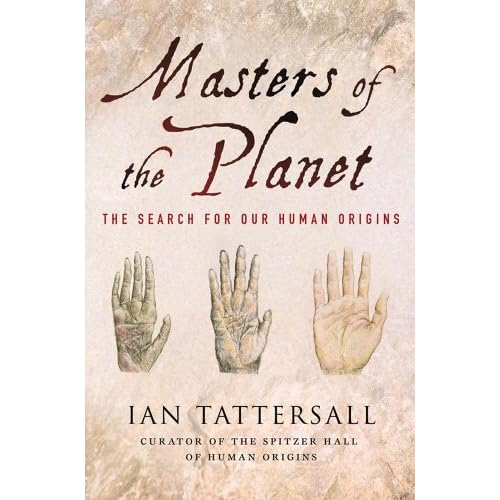
FLATOW: I'm Ira Flatow, and this is SCIENCE FRIDAY from NPR. If you'd like to ask a question, you can step up to the microphones we have there. We'd be very happy to talk with Ian Tattersall whose new book is "Masters of the Planet: The Search for Our Human Origins." And on the cover, you show three different hands. What are you trying to illustrate with that three different hands?

TATTERSALL: Well, the cover came as a bit of a surprise to me. As a matter of fact...

FLATOW: I hate it when that happens.

TATTERSALL: But...
(SOUNDBITE OF LAUGHTER)
TATTERSALL: But I think it's a very dramatic cover. In fact, what it shows is the hand of, I think, a gibbon or a siamang, and a hand of a chimpanzee, and the hand of a modern human. You can see the hand proportions are very different. And what you have there is two higher primates, two apes with very long, slender hands. So they're very good for grasping branches in the trees. And you'll notice that our own hand is much, much shorter. In fact, it's much broader, The axis of the hand is across, rather than long. And that is what makes it possible for us to manipulate items in the precise way in which we can do and make those stone tools that our predecessors made.

FLATOW: You write that one important factor that is totally unique to hominids and is paradoxical is the possession of complex culture, especially as it's expressed in technology. Can you explain a little bit more about that?

TATTERSALL: Yeah. Obviously, culture is in the strictest sense is not confined to human beings. Chimpanzees, for example, in different parts of Africa pass along, from one generation to another - they pass along particular ways of doing things. But no other creature has a culture of the depth and the richness that human beings have. And human beings have taken culture to a whole new level. And we have come - biologically, we've come a very long way in a very short time.

And I think it's culture that has allowed us to do that because having culture as a buffer against the environment that's allowed different kinds of hominid to spread out over the world and occupy some very marginal environments, which they very often have had to abandoned. There's been this history of fragmenting of the human population which is exactly the circumstances under which you'd expect a lot of evolutionary change to happen.

FLATOW: You also write in your book, that one of the great modifying - or catalysts for change, has been climate change over the years. Can you tell us about that?

TATTERSALL: Yes, indeed. The last several million years have been a time of increasingly unsettled climates. The climate has gotten cold and warm on a larger timescale, as well on smaller timescales too, changing the environment. Any hominid groups staying in the same place would successively encounter lots and lots of different environments and it's ability to accommodate to environmental change which is one of the ingredients for our success in the world. But you have this effect of climate change and fragmentation of populations - human populations couldn't remain in one place forever.

If an ice sheet comes and covers the place where you're living, you're not going to be staying there. You're going to be moving somewhere else more congenial. It's this effect of environmental, climatic and environment change on populations that really has provided the circumstances under which evolutionary innovations could be fixed in populations.

FLATOW: After the break, lots more on human origins with my guest Ian Tattersall, author of the new book "Masters of the Planet." Stay with us.
(SOUNDBITE OF MUSIC)
FLATOW: I'm Ira Flatow, and this is SCIENCE FRIDAY from NPR.
Welcome back. We're here at the American Museum of Natural History in New York, talking about the new book "Masters of the Planet: The Search for Our Human Origins" with my guest Ian Tattersall. He's also curator of the Spitzer Hall of Human Origins here at the American Museum of Natural History in New York. Yes, ma'am?

UNIDENTIFIED WOMAN #1: You have to excuse the simplicity of my question, but it's coming from a sixth-grade student of mine who asked me once: If we evolved from primates, how come there's no evidence of that evolution in primates currently?

TATTERSALL: Well, you know, currently, we're looking at one slice in time. So there's just a sampling of a particular time point.

FLATOW: Can I just interrupt for a second?

TATTERSALL: Yeah.

FLATOW: Point of reference is everybody thinks we came from monkeys.

UNIDENTIFIED WOMAN #1: Right.

FLATOW: Could you clear that up for us? Did we come from monkeys?

TATTERSALL: No. We are not descended from monkeys. But monkeys and we are descended from the same common ancestor.

FLATOW: Thank you. I just want to get that out of the way.

TATTERSALL: Right.

UNIDENTIFIED WOMAN #1: I'll let him know.

TATTERSALL: And the reason why, I think, for example, people say, well, why aren't chimpanzees - if it's such a good idea to get a big brain and to become human-like, why aren't chimpanzees doing the same thing? And I think, quite frankly, that the chimpanzees are already too committed to a particular kind of quadrupedal locomotion on the ground to become upright. Our ancestor was a much more generalized ancestor. It seems that upright walking was the original adaptation of the hominid group - of the general hominid group.

And I suspect that hominids didn't start walking upright on the ground at a time when the forest cover in Africa was shrinking, simply because it was a good idea to do that. I think they've probably - the hominid ancestors probably already moved around in the trees, holding their trunks upright so that when they came down to the ground they would have been most comfortable moving upright. And clearly, that's not true for a chimpanzee today. A chimpanzee, if he wants to move over the ground, effectively, drops to all fours and moves off quadrupedally.

FLATOW: Let's go to a question in the audience. Yes, sir.

UNIDENTIFIED MAN: Hi. I was reading an article a while ago that was talking about whether humans will no longer have to evolve because we don't need to adjust to nature anymore because we are adjusting nature ourselves. I was wondering, what's your take on that?

TATTERSALL: Well, I think, first of all, that the human ability to accommodate to the environment culturally meant we could go to many more different areas of the world than we would otherwise have been able to do. And therefore, we're more subject to fragmentation of our population by environmental change. That's one thing. And we evolved in this kind of, sort of, unsettled environmental picture. And human beings for the - or human precursors for the - virtually all of hominid history, have been thinly spread over the landscape.

They have lived in very small densities, in very small groups, moving over large swaths of territory, which again, gives you good circumstances for isolation and evolutionary innovation. Since 10,000 years ago when our species became sedentary, settled down, first started living in villages, then towns and now in urban settings, our population has become huge. Our population is seven billion and increasing, and we're packed, cheek by jowl, over the surface of the Earth.

And these are circumstances in which you could not imagine that significant new genetic innovations could become fixed. Population, the size of ours, is simply - has simply too much genetic inertia to change. So I think as long as demographic circumstances remain the same as they are today, Homo sapiens is going nowhere.

FLATOW: Well, what is the mechanism that's preventing that exactly? You say we're bunched together. There are too many people together. Why is the - why does that stop evolution?

TATTERSALL: It's extremely difficult to get the fixation of any genetic novelty arising in a very, very big population. To get the fixation of genetic novelties which arise spontaneously in populations, you really need to have a small unstable gene pool that can react to this kind of circumstance.

FLATOW: Thank you for that question. Yes, ma'am.

UNIDENTIFIED WOMAN #2: I was wondering if you could talk about how technology is being applied in your field, and maybe how you're using at the museum - to keep things modern, talking about a very old topic.

TATTERSALL: Well, the world is constantly changing, and this is true of paleoanthropology too. The human fossil record is expanding enormously. There are new discoveries that's being announced practically every week. There are new techniques of looking at all data that are becoming available online. So this is a very exciting thing to be involved in, and the problem is more a problem of keeping up with the change rather than thinking of ways to reflect that change.

FLATOW: Mm-hmm. Talking with Ian Tattersall, author of "Masters of the Planet: The Search for Our Human Origins." What are some of the big gaps that you think we need to fill in? Or are there gaps in our history that...

TATTERSALL: Well, I think with every new fossil that's found, the probability decreases that anybody will come up with a new fossil, will force everybody to rewrite the textbooks. They used to be obligatory. Every time a new fossil - a human fossil was announced, that the journalist would say, oh, this is going to...

FLATOW: Rewrite the textbooks.

TATTERSALL: ...rewrite the textbooks, yeah. Now, we have a really good human fossil record, and we, I think, are perceiving the general outlines as this sort of very bushy experimental tree. What's really interesting, though, is what we can do with that data we have.

A couple of years ago, I would never have been able to imagine that people would be in a position to reconstitute the diet of the Neanderthals from the little phytoliths, the little grains of mineral material that are gained from plants that are imbedded in the calculus that forms on the Neanderthal teeth. Who would've imagine this? A dentist's nightmare has sort of become a really good source of information about what our relatives did and ate in the past. This kind of thing is happening all the time. And so I'm not seeing huge gaps to be filled, but what I'm saying is a story that is being fleshed out enormously and in ways that are really impossible to anticipate.

FLATOW: Do you think - people always talk about, you know, as we get better technology, maybe we'll be able to reconstruct the DNA of something...

TATTERSALL: Mm-hmm.

FLATOW: ...either, you know, the DNA of a wooly mammoth or maybe the Neanderthal.

TATTERSALL: Mm-hmm.

FLATOW: Do you think that's going to be possible some time?

TATTERSALL: Well, hopefully, it won't be possible in my lifetime. I think it would raise too many ethical questions. Homo sapiens has had a very bad, you know, history in the way in which it has dealt with its close relatives in the fossil and the living records. I mean, Neanderthals are gone now. We're working on the chimpanzees and the orangutans and the gorillas, and after that, that was - it will be the monkeys. I...

FLATOW: You mean losing them all.

TATTERSALL: Losing them. Well...

FLATOW: Losing them, yeah.

TATTERSALL: ...we really are. And my gosh, if we recreated the Neanderthal by some miracle, what would we do with it?
(SOUNDBITE OF LAUGHTER)
TATTERSALL: You know, it would raise some really extraordinary ethical issues that we haven't even began to grapple with.

FLATOW: Yeah. Question in the audience?

UNIDENTIFIED WOMAN #3: The word paleo has been a big word on book covers these years, "The Paleo Diets," et cetera, where these folks discussed that the best way for humans to eat is to eat pre-agricultural, in other words no grains, no rice, go back to the meats, go back to the protein and the fruits and the vegetables and the tubers, et cetera. Are you familiar with these books and them discussing how early people ate and how, our digestive system involved and how we should eat? Have you given that any thoughts?

TATTERSALL: Yeah. There's always, you know, there's the Neanderthal diet, "The Caveman Diet," the recommendation that you should eat this and that and the other, but what is quite extraordinary about our hominid family in general is how generalist we are. It's very interesting that there are some chimpanzee groups that live in an environments that are not too different from the kind of environment that our very early bipedal relatives lived in, and they live in a very, very different way. Chimpanzees coming out of the forest into tree-savanna surroundings eat exactly the same things that their relatives in the forest did.

Our precursors coming out of the forest started exploiting a much wider range of foodstuffs from very early on, including, apparently, animal carcasses, at least regionally. And what this tells me is that we are incredibly generalist in terms of what we eat. So I can't imagine what you would describe a natural diet as being.

FLATOW: And in your book you say that tapeworms can actually tell us something about our past diets. How does that work?

TATTERSALL: You know, the tapeworm question is a very interesting one. We - and the idea is that we had to acquire the tapeworm from somewhere, and apparently the tapeworm that infects the human beings is related to a carnivore tapeworm. And probably, the easiest way of transmitting tapeworm cysts or whatever would have been for human beings at a very early stage to be feeding on the same carcasses that had been attacked by carnivores, again pointing towards a propensity for carnivory in early stage.

FLATOW: Do you find yourself still having to defend the idea of human evolution?

TATTERSALL: I think less often than I might fear. We have had very - we've had exhibitions on human evolution looked at by millions of people every year. We have brought original human fossils in to display to the general public to give people an idea of the richness of the record that we're dealing with, and we have run into really rather little objection from the quarter that you're suggesting.

FLATOW: Yeah. Yeah. I'm Ira Flatow, and this is SCIENCE FRIDAY from NPR. Let's go to the, yes, the mic there.

BETH ANN FREED: Hi, Beth Ann Freed(ph). Back to the food, I've heard few things recently about how cooking has affected our evolution and how we - I mean, I work with teeth and I see that our teeth aren't good for much but cooked food. Talking about all of these human ancestral cousins, how many of us had fire? And talking about the generalist nature of diet, which came first, being a generalists or cooking, and how did those come together?

TATTERSALL: You know, that's an excellent question. I think the generalist tendency probably came first because we know our ancestors of three and a half, 4 million years were, presumably now, pursuing a generalist diet. The cooking argument is a very compelling one though, but it's entirely circumstantial. We know that about 2 million years ago, human or hominid brain sizes began to expand. For the first two or 3 million, maybe 4 million years of hominid evolution, brain size relative to body size had flatlined and remained basically in the ape range. And then suddenly, about 2 million years ago, the curve turned sharply upwards, and the human brain sizes, on average, start getting bigger very fast.

Now, there's a penalty to developing a big brain. We may think we have big brains, and so it's got to be a good idea, but, actually, a big brain is a very costly organ to have. Our brains are about 2 percent of our body weight, but they can use up to 25 percent of all the energy...

FLATOW: No kidding.

TATTERSALL: ...that we consume. And so there is a cost to be paid. And there is an argument that you could not have started to increase brain size without increasing the quality of the diet, and the most obvious way to increase the quality of the diet is actually to use cooking to make the nutrients in the diet much more available than they are in the raw state, and this is a very compelling argument. The only problem is that we have no physical evidence...

FLATOW: It's just a theory.

TATTERSALL: ...to support it.

FLATOW: Yeah. It's a theory about how you can get more...

TATTERSALL: Yeah. It's a theory and it's a very beguiling theory, and it could even be true, but we don't have the physical evidence that we would want to substantiate it. In fact, there are people who argue that regular cooking came in quite late. We only begin to find campfires routinely as part of human occupation sites about 400,000 years ago. There is one instance in - from Israel reported of a succession of hearths dating from about 800,000 years ago, but it's an outlier until about 400,000 years ago. So between 2 million years ago when brains started to expand and 400,000 years ago, there's not a lot of really compelling evidence that people were cooking. Inferentially, it's a great story, but we're still looking for the hard evidence.

FLATOW: But in science, a theory is not good enough. You need to have the evidence for it.

TATTERSALL: Well, you know, in science, you know, we make a big thing out of science dealing with testable hypotheses and information, and yet there's a lot that we believe in science that we can't directly test. All we ask is that it be - that what we believe is consistent with what we can't test. And in that perspective, the circumstantial argument for cooking, it still retains a certain amount of attraction.

FLATOW: Yeah. Ian Tattersall, thank you very much for taking time to be with us today.

TATTERSALL: It's been a pleasure.
(SOUNDBITE OF APPLAUSE)

FLATOW: Author of "Masters of the Planet: The Search for Our Human Origins." You can see the - you can hear the rest of our conversation with Ian Tattersall in our podcast.

Monday, February 06, 2012

Dr Alice Roberts - The Origin of Us (Documentary)

This is an interesting documentary on the evolution of us - human beings.


Watch the full documentary now (playlist – 3 hours)

Origins of Us

Origins of UsDr Alice Roberts reveals how your body tells the story of human evolution. The way you look, think and behave is a product of a 6 million year struggle for survival.

We have uncovered the secrets of the atom and traveled to the moon. But how did humans come to be so successful? This series explores the anatomical changes that have given us, and our ancestors, the edge.

Everything from the way that we walk, to the shape of our jaw and even the way our thumbs move connects us intimately to the struggles and triumphs of our ancestors.

Yet many of those changes have come at a surprising cost and the problems we face now are a direct consequence of our evolutionary journey.

As much about our bodies today as about our bodies 6 million years ago, Origins of Us will change the way you see yourself.

Bones. In the first episode, Dr Alice Roberts looks at how our skeleton reveals our incredible evolutionary journey.

Guts. In this second episode Dr Alice Roberts charts how our ancestors’ hunt for food has driven the way we look and behave today – from the shape of our face, to the way we see and even the way we attract the opposite sex.

Brains. In the final episode Dr Alice Roberts explores how our species, homo sapiens, developed our large brain; and asks why we are the only one of our kind left on the planet today?