Showing posts with label expectations. Show all posts

Monday, May 06, 2013

Tara Brach - It's Not What's Happening, It's How You Respond


Tara Brach is a clinical psychologist and Buddhist teacher. She is the author of Radical Acceptance: Embracing Your Life with the Heart of a Buddha (2004) and True Refuge: Finding Peace and Freedom in Your Own Awakened Heart (2013). This short article is adapted from Radical Acceptance, a book that I found quite useful when I first read it.

It's Not What's Happening, It's How You Respond

Posted: 05/03/2013


By Tara Brach, Clinical Psychologist, Author, Teacher of Buddhist Mindfulness

One of my favorite stories took place a number of decades ago when the English had colonized India and they wanted to set up a golf course in Calcutta. Besides the fact that the English shouldn't have been there in the first place, the golf course was not a particularly good idea. The biggest challenge was that the area was populated with monkeys.
The monkeys apparently were interested in golf too, and their way of joining the game was to go onto the course and take the balls that the golfers were hitting and toss them around in all directions. Of course the golfers didn't like this at all, so they tried to control the monkeys. First they built high fences around the fairway; they went to a lot of trouble to do this. Now, monkeys climb -- so, they would climb over the fences and onto the course... That solution just didn't work at all.
The next thing they tried was to lure them away from the course. I don't know how they tried to lure them -- maybe waving bananas or something -- but for every monkey that would go for the bananas, all their relatives would come into the golf course to join the fun. In desperation, they started trapping them and relocating them, but that didn't work, either. The monkeys just had too many relatives who liked to play with golf balls! Finally, they established a novel rule for this particular golf course: The golfers in Calcutta had to play the ball wherever the monkey dropped it. Those golfers were onto something!
We all want life to be a certain way. We want the conditions to be just so, and life doesn't always cooperate. Maybe it does for awhile, which makes us want to hold on tight to how things are, but then things change. So sometimes it's like the monkeys are dropping the balls where we don't want them, and what can we do?
Often we react by blaming -- ourselves, or others or the situation. We might become aggressive. Or perhaps we feel victimized and resign. Or sometimes we soothe ourselves with extra food or drink. But clearly, none of these reactions are helpful.
If we are to find any peace, if we are to find freedom, what we need to do is learn to pause and say, "Okay. This is where the monkeys dropped the ball. I'll play it from here, as well as I'm able." So, how do we do that?
What if you pause right now, and take a moment to be quiet. Can you think of a place in your life where things are not cooperating with how you would like them to be? Whatever unfortunate place the monkeys have dropped a ball in your life, bring your focus to that. It could be something that happens in a relationship with another person, where you get reactive. What would it mean to "play the ball" here? If you could tap into your deepest wisdom, your true compassion, how would you like to respond to these circumstances?
One of the great teachings in spiritual life is this: It doesn't matter what is happening. What matters is how we respond. How we respond is what determines our happiness and peace of mind.
So how might you respond with presence, when you find the monkeys have dropped the ball in a difficult spot?
Enjoy this talk on: Surrender to the Monkeys
Adapted from my book Radical Acceptance (2003)
For more information visit: www.tarabrach.com
For more by Tara Brach, click here.
Friday, January 06, 2012

The Optimism Bias: An Interview with Tali Sharot

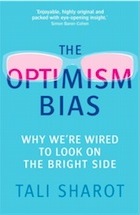
This interview with Tali Sharot comes from the blog for Being Human 2012, a one-day conference this spring in San Francisco - and they lifted it from The Guardian UK. The book was released last summer in the U.S. as The Optimism Bias: A Tour of the Irrationally Positive Brain.

The optimism bias: reasons to be cheerful

Carole Cadwalladr
The Observer, Saturday 31 December 2011


Tali Sharot
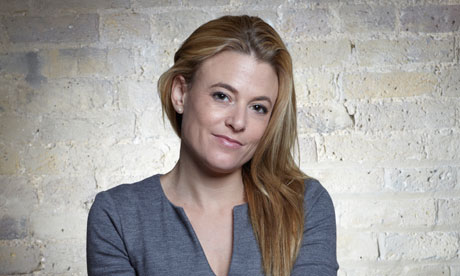
Tali Sharot: 'There’s a saying that you have expect the gold in order to get the silver.' Photograph: Andy Hall for the Observer
What exactly is the optimism bias?

The Optimism Bias: Why we're wired to look on the bright side
by Tali Sharot

Expecting the future to be slightly better than it ends up being. People tend to overestimate positive events – having a long-lasting relationship, or a certain salary, professional success – and underestimate the likelihood of negative events such as cancer, being in an accident, getting divorced. So it's this difference between your expectations and the outcome, where the former are slightly better than the latter.

How did you stumble across it?
I was looking at whether the neural mechanisms involved in remembering the past are involved in imagining the future. My work on memory is mostly about traumatic negative events, so I was interested in imagining negative traumatic events, but had to compare that with people just imagining everyday boring events. But when I asked people to imagine boring events, they usually imagined some kind of magnificent scenario, which I found very surprising.

Were you so surprised because you're actually a pessimist? You hadn't expected such surprising results.
Not at all. And you might say I was optimistic because I was looking for something specific. It wasn't because I was or am a pessimist. But neither do I think people can classify themselves accurately as pessimistic or optimistic.

How optimistic would you say you are?
I don't think people can know their own level of optimism. The only way to do it is to be tested; I know all of these experiments so I can't test myself. My guess is I would probably be average. That's the best statistical guess you can always make, right? The average person is mildly optimistic; 80% of the population will be on the optimistic side.

In some countries – for example, Britain –it is more culturally acceptable to be pessimistic. In the US, being optimistic is considered a good thing, so I suspect people there would usually say they are optimistic; here, people might say not. But there is no actual difference.

People who are pessimists actually seem to have a more realistic vision of the future, but this does them no good.
In general, you have to have positive expectation to reach your goals.

Does that mean Olympic athletes are victims of false cognitive biases? They can't all win gold, but they have to believe they can to propel them through years of training.
I don't know if athletes are more optimistic – maybe because you can say that about many professions. Look at mine. People always think that their next paper will be the one that changes everything. But they can't all be. And I actually encourage my students to think like that because it could be true and it motivates them to do things.

You give the example of the law students who are told there is a divorce rate of 50% but still believe their relationships will last for ever. Has it made you take a more realistic view of human relationships?
Yes, I suspect I do.

Does that mean you are less of a romantic than you were before?
Possibly. But it may be because I am older.

But in the book you say that being older doesn't necessarily make you wiser.
That's true, though research shows that happiness goes down to middle age, then starts going back up. So when you get to your 70s and 80s, you seem to be in quite a good place. We are looking at the optimism bias across the lifespan. It seems like there is not much difference but there hasn't been a very good investigation.

You talk about the introspection illusion. It seems that the harder you try to think about yourself, the less self-knowledge you seem to accrue.
It's not the harder you try, but that you end up attending to the wrong kind of things, not those that will matter. I give an example where people try to decide between two paintings to put on the wall. They try to think about which one will make them happier, but attend to elements which are not actually important for an emotional reaction.

Why are we are so bad at predicting what will make us happy?
First, because when we think about the future we rely on our memories – and they are biased as well. So we don't remember everything and don't remember everything accurately. Emotion changes how we remember things and that is really where I started my research, looking at memories from 9/11, which are vivid but not necessarily accurate. If you try to predict how you are going to feel on your next vacation, for example, what you remember from your previous vacations are the highlights so you don't remember all of the boring bits.

Second, we focus on specific elements rather than look at the whole. So you think how you are going to feel when you are sitting on the beach but not how you are going to feel while getting there.

You say that the financial crisis in 2008 is essentially a result of optimism bias.
Yes. It's a simple example, where most people, from individuals to financial analysts to government officials, all thought that the market would go up and up and up and ignored evidence to the contrary. Research we have done lately shows that people take into account more about information that indicates things will be positive in the future.

You studied at Tel Aviv University. Do you think that Israel is an example of a nation with an optimism bias?
I definitely think Israelis are. I make the point that a lot of times in very difficult circumstances people are actually more optimistic. Such as in the financial crisis of 2008 and the Great Depression in the 1930s, because in those instances you need it even more. And I think that's quite often true of Israel.

You seem to say we are all engaged in making predictions, but the only people who seem to be any good at it are the ones who are a bit depressed.
It's not they are good at it, just that their prediction is more like the outcome.

So they're more accurate at it?
They are more accurate at predicting, but also their prediction is affecting the outcome so there's a circular thing.

Does this mean fortune favours the deluded?
Definitely. It's not only when you predict the future, it's also when you think about yourself. Most people have a positive illusion about themselves. It doesn't mean we think we are extremely good-looking and intelligent, but we think we're a little bit more than what some objective measure would show. It's good that we have this bias. It keeps us happier.

One of the most wonderful tricks you talk about is how we believe we've always made the best choice.
That's true. Depressed individuals don't do that, so they ruminate. One of the symptoms of depression is ruminating. People go back and say: "Why did I do that? I could have done this" rather than say: "This was the best decision at the time" and move on. It's the same with decisions. I often tell people who are having problems making a decision: "You know, it doesn't matter what you choose. You're probably going to think it's the right decision."

What are you researching next?
We're looking at altering optimism using biological measures and ways to try and enhance or reduce it.