Showing posts with label elections. Show all posts

Wednesday, October 30, 2013

"Dollarocracy" - US Elections Are Controlled, Predictable Enterprises - John Nichols & Robert W. McChesney | Authors at Google


Political journalist John Nichols and media critic Robert W. McChesney are the authors of Dollarocracy: How the Money and Media Election Complex is Destroying America, a book that outlines the many and varied ways that unregulated spending on elections are the end of democracy.
The unprecedented tidal wave of unaccountable money flooding the electoral system makes a mockery of political equality in the voting booth. The determination of media companies to cash in on that mockery, especially by selling ad time at a premium to the campaigns—when they should instead be exposing and opposing it—completes a vicious circle. What has emerged, argue Nichols and McChesney, is a “money-and-media election complex.” This complex is built on a set of commercial and institutional relationships connecting wealthy donors, corporations, lobbyists, politicians, coin-operated “think tanks,” beltway pundits, and now super-PACS. These relationships are not just eviscerating democratic elections, they are benefitting by that evisceration.

With groundbreaking new research and reporting, Dollarocracy concludes that the money-and-media election complex does not just endanger electoral politics; it poses a challenge to the DNA of American democracy itself.
Sadly true . . . and not likely to change any time soon.

"Dollarocracy" - John Nichols & Robert W. McChesney | Authors at Google


Published on Oct 29, 2013


Fresh from the first $10 billion election campaign, two award-winning authors show how unbridled campaign spending defines our politics and, failing a dramatic intervention, signals the end of our democracy.

Blending vivid reporting from the 2012 campaign trail and deep perspective from decades covering American and international media and politics, political journalist John Nichols and media critic Robert W. McChesney explain how US elections are becoming controlled, predictable enterprises that are managed by a new class of consultants who wield millions of dollars and define our politics as never before. As the money gets bigger—especially after the Citizens United ruling—and journalism, a core check and balance on the government, declines, American citizens are in danger of becoming less informed and more open to manipulation. With groundbreaking behind-the-scenes reporting and staggering new research on "the money power," Dollarocracy shows that this new power does not just endanger electoral politics; it is a challenge to the DNA of American democracy itself.
 View full size

Saturday, October 20, 2012

Parsing the 2012 Presidential Race - The Most Pivotal Election of Our Time and the Role of Progressives


Here are two video talks on the 2012 election, one from Jonathan Alter on the critical importance of the 2012 presidential election, and a panel discussion of authors from The Nation on the role of progressives in this election cycle.

This is interesting and important stuff. I agree with Alter that this presidential election will determine where we head as a nation for the next couple of decades - the renegotiation of the American Social Contract.

Jonathan Alter - Why the 2012 Election Is the Most Pivotal of Our Lifetime

Author and columnist Jonathan Alter argues that the question in the 2012 presidential election is whether the country will stay on a centrist course with Obama or make a sharp turn to the right with Romney. He says that because few votes may be won by discussing the poor, the American social contract is rarely discussed but he feels it is on the line. Series: "Walter H. Capps Center Series" [10/2012]

* * * * *

The Nation at The New School: Progressives and Election 2012

A conversation about the role of progressives in the next election. How do we balance support for the Democrats with the need to mobilize grassroots support for social and economic causes? How do we determine priorities for strained resources? What should we be seeking from a second term Obama administration? Audience questions to follow conversation.

Featuring Nation contributors:
  • Katrina vanden Heuvel, Editor, publisher, The Nation
  • John Nichols, Washington correspondent, The Nation
  • Chris Hayes, MSNBC host
  • Ilyse Hogue, political strategist
  • Patricia J. Williams, Professor of Law, Columbia University
Moderated by Richard Kim, Executive Editor, The Nation

THE NEW SCHOOL FOR PUBLIC ENGAGEMENT

Sponsored by The New School and The Nation.

Location: Tishman Auditorium, Alvin Johnson/J. M. Kaplan Hall
Wednesday, October 17, 2012 7:00 p.m.


Saturday, January 21, 2012

Bookforum - What Has Happened to Occupy Wall Street?


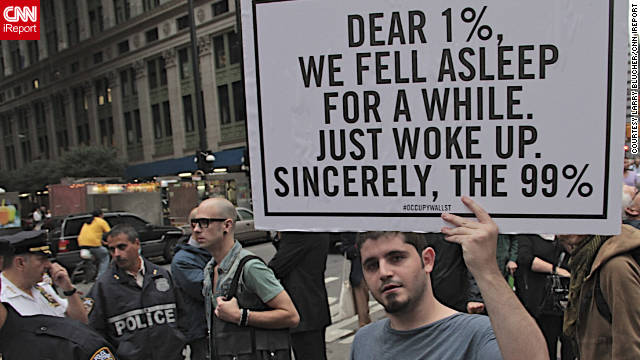
Occupy Wall Street, and all its local manifestations, has fallen off the media radar in recent weeks and months. America's short attention span is partly to blame (or at least the media's encouragement of it), but there was also the movement's own tendency toward hippie extravagance (hacky sack, Frisbee, drugs, and other nonsense).

But the people who really care about change, who want to make a more equitable system, have been continuing the work behind the scenes. This collection of articles - assembled by Bookforum - checks in with where the movement is now.

What has happened to Occupy Wall Street?

JAN 19 2012 9:00AM


Monday, October 03, 2011

Raw Story - New GOP laws could suppress five million Democratic voters

ivoted-commons1

According to new research reviewed by David Edwards at Raw Story, the GOP has been systematically passing laws that disenfranchise five million "young, minority, low-income, and disabled voters, all groups that tend to vote for Democrats." In other words, business as usual for the GOP.
The report found that states that have already curtailed voting rights represent 171 of the 270 electoral votes necessary for winning the presidency. Five of the 12 likely battleground states have already cut back rights. Across the nation, 19 new voting restrictions have passed, 68 have failed and 42 more are still pending.
New Photo ID restrictions in Kansas, South Carolina, Tennessee, Texas and Wisconsin could disenfranchise up to 3.2 million voters, the study found. Another 2.6 million voters could be suppressed by proof of citizenship laws, laws restricting voter registration drives, election day registration restrictions, reduced early voting and restrictions on when convicted felons may have their voting rights restored.
Read more about this issue.

Read even more, from the original documents: