Showing posts with label dogs. Show all posts

Wednesday, March 05, 2014

The Tragedy of America’s Dog - A Brief History of the Vilification of the Pit Bull


This is for all the pit bull lovers out there. I have had the pleasure of having two different Pit Bulls as canine buddies in my life, and both of them have been the most gentle, loving, loyal, affectionate dogs I have known. The picture above is Mogli, a Pit Bull and Dalmatian mix - the sweetest dog I have ever known (he's not so skinny now).

The Tragedy of America’s Dog

A brief history of the vilification of the pit bull.

By Jake Flanagin • February 28, 2014

pit-bull
(Photo: dogboxstudio/Shutterstock)

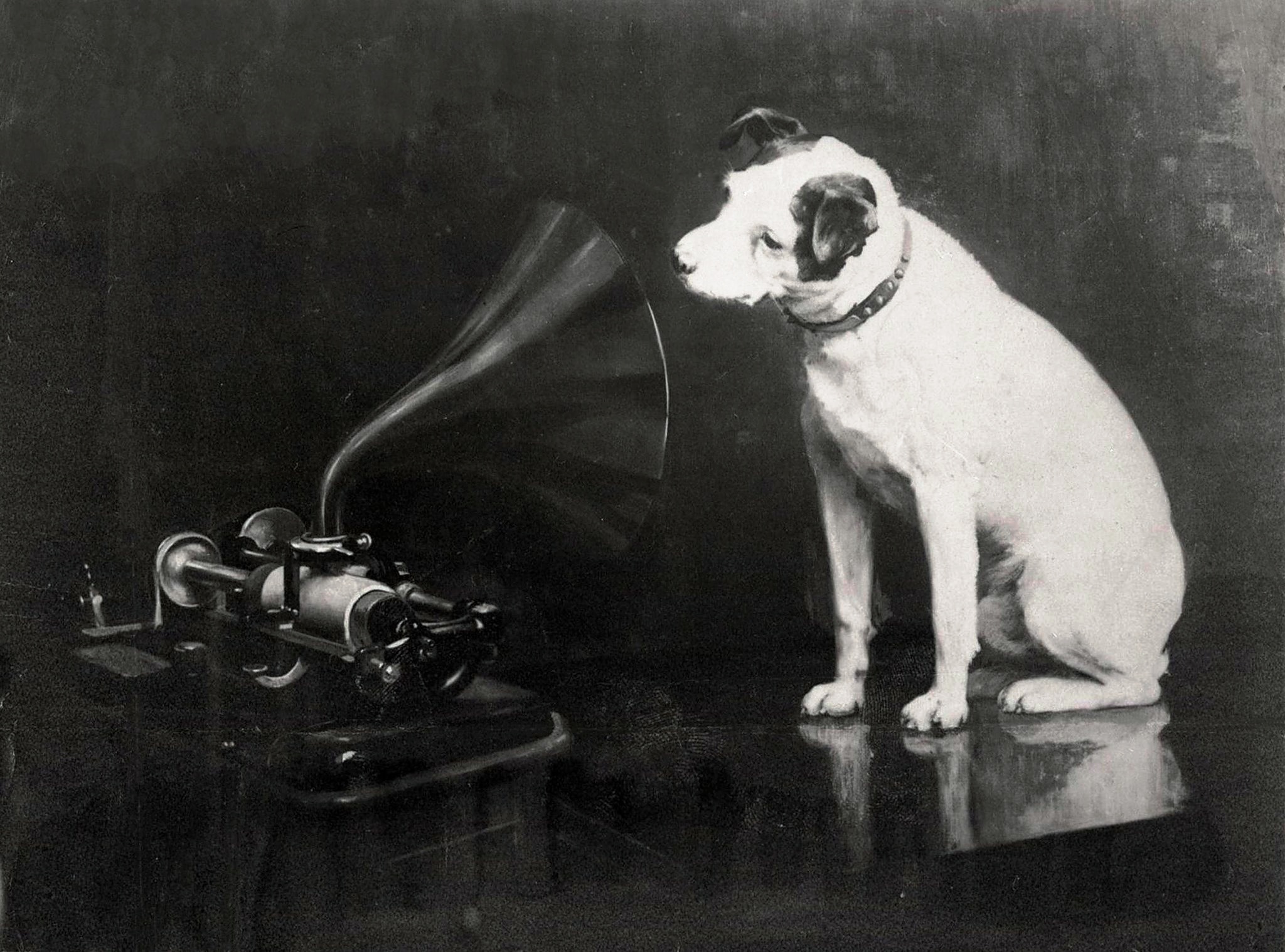
In decades past, the American pit bull was a canine icon. Nicknamed “America’s dog,” and favored for its remarkable loyalty and affability, images of the breed were everywhere. A pit bull named Sergeant Stubby won 13 decorations for his service in the trenches of the First World War. Nipper, the dog from the classic RCA Victor advertisements, was a pit bull. So was Pete the Pup, canine companion to The Little Rascals. Their affinity and gentleness toward children was so widely known and appreciated it inspired a second nickname: “the nanny dog.”

That perception profoundly changed in the 1980s. Dogfighting enjoyed a major resurgence in America in that decade, says John Goodwin, director of animal cruelty policy at the Humane Society of the United States. “In that time there were people who took an interest in romanticizing the horrors of dogfighting … living through the accomplishments of the dog.”

The pit bull’s trademark loyalty combined with its muscular physique made it a prime candidate for exploitation. The breed quickly came to represent aggression and a perverse idea of machismo, thus becoming the preferred guard dog cum status symbol for drug dealers and gangsters.

Popularity for the breed in low-income, urban areas exploded. Consequently, there were (and still are) a large number of un-spayed and un-neutered pit bulls living in extremely close proximity to one another. It was the perfect recipe for an epic puppy-boom. According to Mid-American Bully Breed Rescue, a non-profit that takes pit bull breeds out of high-kill animal shelters around the Midwest, there are approximately five million registered pit bulls in the United States today: a combination of breeds which includes Staffordshire bull terriers, American pit bull terriers, American Staffordshire terriers, or any mix thereof. This figure does not include the substantial number of pit bulls circulating the shelter system and living on the streets. The ASPCA reports that 35 percent of American shelters receive at least one pit bull a day. And in Detroit, where the stray problem borders on epidemical, pit bulls and pit mixes compose 90 percent of the homeless dog population.

Where pit bulls were once ubiquitous in American pop culture, they are now ubiquitous in actuality. And because the overpopulation centers predominantly on low-income areas, the pit bull is arguably one of the least-responsibly cared for breeds in the country.

THE RESULT IS A documented number of pit bull attacks that, upon superficial inspection, appears quite sizable. MABBR reports that, between 1965 and 2001, there have been 60 lethal dog-attacks in the United States involving a pit bull. Compared to most breeds, that figure is indeed quite high. There were only 14 lethal attacks involving Dobermans, for instance. But taking into account the overall populations of each breed measured, the rate of aggression among pit bulls is comparatively quite normal. Even low. During that 36-year period, only 0.0012 percent of the estimated pit bull population was involved in a fatal attack. Compare that to the purebred Chow Chow, which has a fatal-attack rate of 0.005 percent, and consistently ranks as the least child-friendly dog breed on the market. Why don’t media reports of attacks involving Chows eclipse those involving pit bulls? Because there are only 240,000 registered Chow Chows currently residing in the United States. And frankly, the broad-skulled, wide-mouthed pit bull makes for a more convincing monster than the comically puffy Chow.

Also worth noting is the pit’s comparatively large and potentially intimidating physiology. “I don’t think pits bite more than other breeds,” says Dr. Sandi Sawchuk, a small-animal veterinarian and clinical instructor at the University of Wisconsin Veterinary Medical Teaching Center in Madison. “It’s just that when they do, they cause more damage. If someone did the same research on Chihuahuas, they would probably find that there are more bites, but they’re less reported due to insignificant damage.”

A study carried out by veterinary researchers at the University of Pennsylvania confirms as much. Dr. James Serpell and his colleagues found that smaller breeds, such as Chihuahuas, Dachshunds, and Jack Russell terriers, generally exhibit higher tendencies for indiscriminate aggression (toward humans and other dogs). They also found that breeds often vilified in the media as being “inherently aggressive,” such as pit bulls and Akitas, are generally more aggressive toward other dogs, but don’t necessarily exhibit abnormally high aggression toward humans.

This widespread mischaracterization of pit bulls, coupled with the understandably strong emotions of bite victims and their loved ones, has resulted in a number of local ordinances categorized as “breed-specific legislation.” BSL is the banning or restricting of ownership of certain breeds deemed especially dangerous or unpredictable. And it almost always targets pits.

As a strategy for decreasing dog attacks, BSL has been largely debunked. The Journal of the American Veterinary Medical Association released a special report in September of 2000, republished by the CDC, which read, “Breed-specific legislation does not address the fact that a dog of any breed can become dangerous when bred or trained to be aggressive. … An alternative to breed-specific legislation is to regulate individual dogs and owners on the basis of their behavior.” The National Canine Research Council claims, “There is no scientific evidence that one kind of dog is more likely than any other to injure a human being. In fact, there is evidence to the contrary.” They point to a 2008 study by animal behaviorists at the University of Veterinary Medicine in Hanover, Germany. It compares the general temperament of golden retrievers (frequently cited as a behaviorally ideal breed) to that of breeds typically targeted by BSL (read: pit bulls). It concludes: “No significant difference was found.”

“BSL is not the panacea that communities hope it will be,” says KC Theisen, director of pet care issues at HSUS. “It fails to address the root causes of dog bites: spay-neutering, whether a dog is chained up or properly contained.”

In 1989, Denver was one of the first major metropolitan areas to enact BSL specifically banning the ownership of pit bulls. The NCRC reported that, following the law’s passage, Denver County hospital workers indeed saw a decrease in admitted injuries caused by the breed. Yet, to this day, as the law still stands, Denver “continues to have significantly higher dog bite-related hospitalization rates than other counties.”


Further problematic is BSL’s dependence on sight identification. Dogs that simply “look” like a pit bull can be detained or euthanized based on little more than a law enforcement officer’s perception of “pit bullishness.” A 2012 article in JAVMA indicated that a heretofore unprecedented 44 percent of American dogs are of mixed-breed ancestry, and there are few surefire ways of determining exact pedigree, even with advanced DNA testing techniques. “The discrepancy between breed identifications based on opinion and DNA analysis, as well as concerns about the reliability of data collected based on media reports, draws into question the validity and enforcement of public and private policies pertaining to dog breeds,” writes Dr. Victoria Lea Voith, a professor of animal behavior at Western University of Health Sciences’ College of Veterinary Medicine.

Evidently, the pit bull problem isn’t really a pit bull problem. It’s a human problem—like most “animal problems” upon closer inspection. And BSL is a cop-out. It shifts culpability from the truly responsible parties—irresponsible owners—and unfairly manipulates the image of an already exploited breed. The Dodo’s Jenny Kutner reports that 93 percent of sheltered pit bulls are euthanized before being put up for adoption. These dogs, which experts have proven to be essentially no different than any other breed, are in dire need of caring, stable homes. BSL stands in the way of that.

THANKFULLY, IT APPEARS THE tide against pit bulls may be turning. Seventeen states now prohibit BSL in any form. Six more (Maryland, Vermont, South Dakota, Missouri, Utah, and Washington) may be heading in the same direction. Even the White House has come out in opposition to BSL. An official response to an anti-BSL petition posted to WhiteHouse.gov reads:
We don’t support breed-specific legislation—research shows that bans on certain types of dogs are largely ineffective and often a waste of public resources…. As an alternative to breed-specific policies, the CDC recommends a community approach to prevent dog bites. And ultimately, we think it’s a much more promising way to build stronger communities of pets and pet owners.
The Obamas have it right: the solution to curtailing dog attacks, and simultaneously controlling the pit bull population, is a combination of community and owner education. Spreading awareness about the importance and wide accessibility of spaying and neutering is especially necessary. (The ASPCA offers special, low-cost surgical packages at facilities across the country.)

Besides the surgery’s obvious necessity to population control, it can actually have a distinct effect on the disposition of individual dogs. According to the American Humane Association, 94 percent of reported pit bull attacks involve an un-neutered male canine. It’s simple biology. High testosterone levels in mammals produce heightened aggression (evidence: bar fights, the NHL). Fix your pit bull, and the benefits are dual: decreased aggression in individual dogs, and a smaller, healthier overall population. Other benefits? An eliminated risk of testicular cancer (duh), less territorial “urine-marking,” and, ahem, a decreased libido. (No more “inappropriate mounting.”)


At this point, I should probably admit some journalistic bias. My family rescued a dog we believe to be a pit bull, at least partially, in the spring of 2012. No doubt, in the eyes of BSL proponents, this disqualifies me from writing anything of substance on the condition and temperament of the breed—but I maintain what the facts support: Pit bulls are no different than any other dog. Other than having the deck stacked overwhelmingly against them.

In any case, does this look like the face of a monster?


To comment on this post, or anything else on Pacific Standard, visit our Facebook or Google+ page, or send a message to us on Twitter.

****

Jake Flanagin is a researcher at The Atlantic. Follow him on Twitter @jakeflanagin.

More From Jake Flanagin

Sunday, October 20, 2013

Alva Noë - MRI Scans Can't Show Us Consciousness or Personhood (Dogs Are People, Too)

In his recent column for NPR's 13.7 Cosmos and Culture, philosopher Alva Noë argues in favor of animal intelligence and consciousness - that we don't see the dog's consciousness or personhood when you look at its brain in MRI scans. Their subjective states are best experienced when we spend time with them, not as scientists or observers but as companions.

So first up is the New York Times column by Gregory Berns that inspired Noë's column, and then Noë's column from NPR.

Dogs Are People, Too

By GREGORY BERNS
Published: October 5, 2013 


Jane Evelyn Atwood/Contact Press Images 

FOR the past two years, my colleagues and I have been training dogs to go in an M.R.I. scanner — completely awake and unrestrained. Our goal has been to determine how dogs’ brains work and, even more important, what they think of us humans.
Multimedia
Video: How Dogs Love Us (YouTube)
Now, after training and scanning a dozen dogs, my one inescapable conclusion is this: dogs are people, too.

Because dogs can’t speak, scientists have relied on behavioral observations to infer what dogs are thinking. It is a tricky business. You can’t ask a dog why he does something. And you certainly can’t ask him how he feels. The prospect of ferreting out animal emotions scares many scientists. After all, animal research is big business. It has been easy to sidestep the difficult questions about animal sentience and emotions because they have been unanswerable.

Until now.

By looking directly at their brains and bypassing the constraints of behaviorism, M.R.I.’s can tell us about dogs’ internal states. M.R.I.’s are conducted in loud, confined spaces. People don’t like them, and you have to hold absolutely still during the procedure. Conventional veterinary practice says you have to anesthetize animals so they don’t move during a scan. But you can’t study brain function in an anesthetized animal. At least not anything interesting like perception or emotion.

From the beginning, we treated the dogs as persons. We had a consent form, which was modeled after a child’s consent form but signed by the dog’s owner. We emphasized that participation was voluntary, and that the dog had the right to quit the study. We used only positive training methods. No sedation. No restraints. If the dogs didn’t want to be in the M.R.I. scanner, they could leave. Same as any human volunteer.

My dog Callie was the first. Rescued from a shelter, Callie was a skinny black terrier mix, what is called a feist in the southern Appalachians, from where she came. True to her roots, she preferred hunting squirrels and rabbits in the backyard to curling up in my lap. She had a natural inquisitiveness, which probably landed her in the shelter in the first place, but also made training a breeze.

With the help of my friend Mark Spivak, a dog trainer, we started teaching Callie to go into an M.R.I. simulator that I built in my living room. She learned to walk up steps into a tube, place her head in a custom-fitted chin rest, and hold rock-still for periods of up to 30 seconds. Oh, and she had to learn to wear earmuffs to protect her sensitive hearing from the 95 decibels of noise the scanner makes.

After months of training and some trial-and-error at the real M.R.I. scanner, we were rewarded with the first maps of brain activity. For our first tests, we measured Callie’s brain response to two hand signals in the scanner. In later experiments, not yet published, we determined which parts of her brain distinguished the scents of familiar and unfamiliar dogs and humans.

Soon, the local dog community learned of our quest to determine what dogs are thinking. Within a year, we had assembled a team of a dozen dogs who were all “M.R.I.-certified.”

Although we are just beginning to answer basic questions about the canine brain, we cannot ignore the striking similarity between dogs and humans in both the structure and function of a key brain region: the caudate nucleus.

Rich in dopamine receptors, the caudate sits between the brainstem and the cortex. In humans, the caudate plays a key role in the anticipation of things we enjoy, like food, love and money. But can we flip this association around and infer what a person is thinking just by measuring caudate activity? Because of the overwhelming complexity of how different parts of the brain are connected to one another, it is not usually possible to pin a single cognitive function or emotion to a single brain region.

But the caudate may be an exception. Specific parts of the caudate stand out for their consistent activation to many things that humans enjoy. Caudate activation is so consistent that under the right circumstances, it can predict our preferences for food, music and even beauty.

In dogs, we found that activity in the caudate increased in response to hand signals indicating food. The caudate also activated to the smells of familiar humans. And in preliminary tests, it activated to the return of an owner who had momentarily stepped out of view. Do these findings prove that dogs love us? Not quite. But many of the same things that activate the human caudate, which are associated with positive emotions, also activate the dog caudate. Neuroscientists call this a functional homology, and it may be an indication of canine emotions.

The ability to experience positive emotions, like love and attachment, would mean that dogs have a level of sentience comparable to that of a human child. And this ability suggests a rethinking of how we treat dogs.

DOGS have long been considered property. Though the Animal Welfare Act of 1966 and state laws raised the bar for the treatment of animals, they solidified the view that animals are things — objects that can be disposed of as long as reasonable care is taken to minimize their suffering.

But now, by using the M.R.I. to push away the limitations of behaviorism, we can no longer hide from the evidence. Dogs, and probably many other animals (especially our closest primate relatives), seem to have emotions just like us. And this means we must reconsider their treatment as property.

One alternative is a sort of limited personhood for animals that show neurobiological evidence of positive emotions. Many rescue groups already use the label of “guardian” to describe human caregivers, binding the human to his ward with an implicit responsibility to care for her. Failure to act as a good guardian runs the risk of having the dog placed elsewhere. But there are no laws that cover animals as wards, so the patchwork of rescue groups that operate under a guardianship model have little legal foundation to protect the animals’ interest.

If we went a step further and granted dogs rights of personhood, they would be afforded additional protection against exploitation. Puppy mills, laboratory dogs and dog racing would be banned for violating the basic right of self-determination of a person.

I suspect that society is many years away from considering dogs as persons. However, recent rulings by the Supreme Court have included neuroscientific findings that open the door to such a possibility. In two cases, the court ruled that juvenile offenders could not be sentenced to life imprisonment without the possibility of parole. As part of the rulings, the court cited brain-imaging evidence that the human brain was not mature in adolescence. Although this case has nothing to do with dog sentience, the justices opened the door for neuroscience in the courtroom.

Perhaps someday we may see a case arguing for a dog’s rights based on brain-imaging findings.


~ Gregory Berns is a professor of neuroeconomics at Emory University and the author of How Dogs Love Us: A Neuroscientist and His Adopted Dog Decode the Canine Brain.
* * * * *

If You Have To Ask, You'll Never Know


by Alva Noë
October 11, 2013


If you need empirical information about what is happening in the brain of a dog to know that dogs think, then either you've never met a dog or your own humanity is in doubt.
Sometimes it is our questions that get in the way.

Suppose two ships are sinking and you can save only one. How should you decide which ship to save? Should you save the one with the most people in it?

When this question was put by her teacher to Sissy Jupe, a young character in Charles Dickens' Hard Times, she could only weep and run away. She was unable to to take up the standpoint from which this could even be asked. For Sissy, the very question was repugnant, perhaps because it presupposed that the value of a person is the sort of thing that can be chalked up, counted and weighed. Her caring, her engagement with others, precluded that sort of calculating detachment.

I had to think of Sissy Jupe when I read Gregory Berns' essay in The New York Times about his research on the dog brain and his startling (to some) conclusion that dogs are people, too.

If you need information about what is happening in the brain of a dog to know that dogs think and have feelings and emotions, then either you've never met a dog or your own humanity is in doubt.

You can no more seriously entertain the possibility that a dog is a mere automaton than you can entertain such a hypothesis about your human loved ones. To do so would require you to stand back and look at what a dog (or a person) does (and says) as devoid of meaning and expressive power. And to do that would be disrespectful. This is the Sissy Jupe point.

It is certainly true that no amount of information about the movements and behaviors (including linguistic behaviors) of animals, human or otherwise, can suffice to establish, beyond any possible doubt, that they think and feel and have emotions, that they are conscious.

So, I ask, can it be seriously maintained that information about brain activity can settle such skeptical worries decisively? How do we know that what happens in me when my brain fires neurons is the same as what happens in you? How could we ever know that for sure?

Should prospective husbands and wives do due diligence and check MRIs before tying the knot, just to make sure they are both really people?

My own suggestion — I develop this in Out of Our Heads — is that we should not think of our appreciation of the consciousness of people (and dogs) as the sort of thing we discover on the basis of empirical investigation of their brains or their behavior. It is, rather, a presupposition of the kinds of lives we lead together.

You could not love someone (dog, or person), if you took seriously the possibility that he or she (or it) might, appearances to the contrary, turn out to be a robot. And, as the writer and professional animal trainer Vicky Hearne has argued persuasively, you can't actually work with dogs if you don't take them seriously as, well, responsible agents. A search-and-rescue dog, for example, or a seeing-eye dog, is a collaborator, not a tool.

Berns writes in his piece:
"By looking directly at their brains and bypassing the constraints of behaviorism, M.R.I.'s can tell us about dogs' internal states."
Yes, indeed. I'm all for studying dog brains and for using such studies to inform our understanding of dog psychology. But you don't see the dog's consciousness or personhood when you look at its brain. Those internal states come into focus only when we appreciate, with Sissy Jupe, that we are not detached observers, not even when we are scientists.


~ You can keep up with more of what Alva Noë is thinking on Facebook and on Twitter: @alvanoe

Friday, June 08, 2012

Canine Empathy: Your Dog Really Does Care If You Are Unhappy


From Psychology Today . . . was there ever any doubt? Anyone who has lived a dog for any length of time knows that they can feel when we are don't doing well. often, they will stay close and be extra affectionate.

Canine Empathy: Your Dog Really Does Care if You Are Unhappy


New research shows that dogs respond to their owner's unhappiness. Published onJune 7, 2012 by Stanley Coren, Ph.D., F.R.S.C. in Canine Corner

People often report that it seems as if their dogs are reading their emotional state and responding in much the same way that a human would, providing sympathy and comfort, or joining in their joy. For example an acquaintance named Deborah told me that she had just gotten off of the phone after learning that her sister's husband had died and was sitting on the sofa wiping tears from her eyes and trying to deal with her sadness. She said, "At that moment Angus [her Golden retriever] came over to me and laid his head on my knee and began to whimper. A moment later he quietly walked away, and then returned with one of his favorite toys and gently put it in my lap, and gently licked my hand. I knew he was trying to comfort me. I believe that he was feeling my pain and hoping that the toy which made him happy might also help me to feel better.."

Such incidents involving pet dogs appear to be quite common and at face value they seem to show that dogs are showing empathy for their owners. Generally speaking empathy can be defined as the ability to put oneself into the mental shoes of another person to understand and even share their emotions and feelings. Although dog owners seem to be quite sure that their dogs have empathy for their feelings, if you make that suggestion to a group of psychologists are behavioral biologists it is more apt to start an argument rather than to bring out nods of agreement.

Read the whole post.