Showing posts with label cannabis. Show all posts

Saturday, May 24, 2014

Vape Pens and Budder - Marijuana's Drift from Plant to Ultra-Potent Drug

Users of marijuana have long known and sometimes favored a marijuana extract called hashish (hash for short). It tends to be cleaner and more potent than the plant - the best marijuana buds are averaging 25-30% THC, while hash can be in the neighborhood of 45-55%. [1]

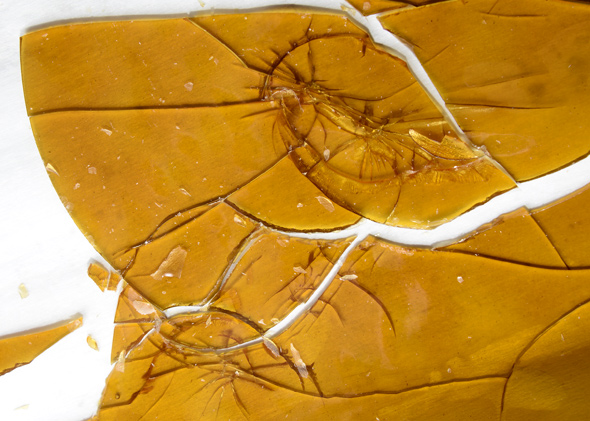
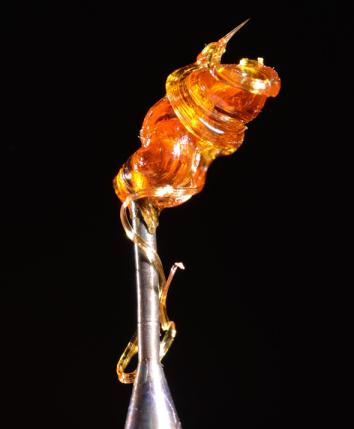
Apparently these already highly potent options are not enough (for reference, the best marijuana in the 1960s and 1970s averaged around 3-8% THC). New butane extraction methods are creating a drug that can be as high as 99% cannabinoids (of which 80-90% is THC), often known as budder.
"The top Budder sample was 99.6% pure," Dr Paul Hornby [a chemist and plant analyst] explained, "which means if you had an ounce of it, only a tiny fraction of a gram would be anything other than cannabinoids. We also tested Budder for toxins, solvents, molds, diseases, heavy metals and other contaminants. There were none. It's essentially just pure cannabinoids. I've tested a lot of cannabis materials, but this is the most impressive."
Hornby's tests also found Budder contains 80 to 90% of its cannabinoids as THC. It contains much smaller percentages of two other cannabinoids: cannabidiol and cannabinol. Of these two, cannabidiol (CBD) is most important because it has medicinal effects and moderates the stimulative effects of THC. [1]
This seems to create a drug with much higher chance of adverse effects. Cannabidiol (CBD), which has no psychotropic effects by itself [2], attenuates, or reduces [3] the higher anxiety levels caused by THC alone [4]. Consequently, the plant material used to create budder (or other extract forms, including the more mainstream use of "dab" with vape pens), will greatly impact the type of high the extract creates. Cannabis sativa has a much higher THC:CBD ration, and causes more of a "high, including the stimulation of hunger and a more energetic feeling. On the other hand, Cannabis indica has a higher CBD:THC ratio, producing more of a "stoned" or meditative feeling [5].

The mainstream media seems not to be aware of "budder" at this point, but the lower quality extracts (often produced at home by amateur chemists - two words which should never go together) are beginning to register with the media over the last year or two.

In December, 2013, The Daily Beast ran an article called "Hey Buddy, Wanna Dab? Inside The Mainstream Explosion of Cannabis Concentrates," which examined the rise of dab and the lack of purity in most street products (along with info on how to know if it's a clean product or not).

In March, 2014, Mother Jones ran a more in-depth article (produced below) on how these new extracts may impact legalization efforts around the country. Below that article is another from Slate, from February, 2014.

References
  1. Brady, P. (5005, Jan 19). "Beautiful budder". Cannabis Culture Magazine.
  2. Ahrens, J., Demir, R., Leuwer, M., et al. (2009). The nonpsychotropic cannabinoid cannabidiol modulates and directly activates alpha-1 and alpha-1-Beta glycine receptor function. Pharmacology 83 (4): 217–222. doi:10.1159/000201556. PMID 19204413.
  3. Zuardi, A.W., Shirakawa, I., Finkelfarb, E., Karniol, I.G. (1982). Action of cannabidiol on the anxiety and other effects produced by ?9-THC in normal subjects. Psychopharmacology 76 (3): 245–50. doi:10.1007/BF00432554. PMID 6285406.
  4. Fusar-Poli, P., Crippa, J.A., Bhattacharyya, S., Borgwardt, S,J., Allen, P., Martin-Santos, R., et al. (2009). Distinct Effects of Δ9-Tetrahydrocannabinol and Cannabidiol on Neural Activation During Emotional Processing. Archives of General Psychiatry 66 (1): 95–105. doi:10.1001/archgenpsychiatry.2008.519. PMID 19124693.
  5. Holtzman, A.L. (2011, Mar 28). Cannabis Indica vs Sativa: A response to Continued cannabis use and risk of incidence and persistence of psychotic symptoms: 10 year follow-up cohort study. British Medical Journal, 342:d738. doi: http://dx.doi.org/10.1136/bmj.d738
* * * * * 

How Vape Pens Could Threaten the Pot Legalization Movement

Not everyone is going to welcome an innovation that facilitates getting high in public places—like high school hallways.

—By Josh Harkinson | Thu Mar. 20, 2014


One of many models of vape pens that can be used to discretely smoke marijuana concentrates. [SIK-photo]/Flickr
Last year, I joined some parents from my son's preschool for their semiregular "Dad's Night Out." We were at a crowded bar in Oakland, and somehow it emerged that I'd done some stories about marijuana. A dad immediately asked if I'd written about hash oil. Within a few minutes (for the sake of journalism, of course), I was trying a hit of nearly odorless vapor from what looked like a miniature flashlight. A single puff, and I was too high to order a second beer.

It might be an understatement to say that marijuana concentrates smoked from so-called vape pens—the pot version of e-cigarettes—accomplish for stoners what flasks full of moonshine do for lushes: Portable, discreet, and fantastically potent, they're revolutionizing the logistics of getting high, and minimizing the risk of discovery. Stories abound of people using vape pens to blaze away undetected at baseball games, city council meetings, kids' soccer matches, and, of most concern to parents and educators, high schools. Even if pot brownies have been around forever, this is probably not what your average Colorado or Washington voter had in mind when they cast a ballot to legalize recreational marijuana.

The concentrates typically used in vape pens are made by extracting THC from pot with water ("bubble hash"), transferring it into butter ("budder"), or refining it into what's known as butane hash oil (BHO, or "errrl," since stoners need a slang term for everything pot-related). From there, it can be refined further into a wax or an amber-like solid ("shatter"). These products are up to three times stronger than the most mind-bending buds. In short, it ain't your father's schwag, and its snowballing popularity among young people is reshaping the culture of the pot scene: One customarily smokes (or "dabs") BHO from specially designed bongs known as "oil rigs," and not at the designated hour of 4:20, but rather at 7:10—which, in case you're wondering, is "OIL" upside down and backwards.

"Baking Bad," the headline of a recent Slate piece on the concentrates scene, aptly sums up how the trend could become a PR nightmare for the legalization movement. As the name implies, making butane hash oil involves extracting THC from cannabis using butane—you know, lighter fluid. The growing rash of butane lab fires and explosions could suggest that potheads are going the way of meth tweakers. And when BHO is improperly made, it can be tainted with toxins.

But perhaps the biggest emerging concern with concentrates is how they may enable minors to abuse pot. Though many high schoolers use vape pens to inhale candy-flavored oils that don't contain psychoactive substances, a study by the Centers for Disease Control and Prevention found that 10 percent had used the devices in 2012 to consume nicotine concentrates (i.e., they'd tried "e-cigarettes"), double the number from the previous year—and that number is likely an underestimate. Emily Anne McDonald, an anthropologist at the University of California-San Francisco, told me her interviews with teens and young adults in New York suggest that the use of vape pens for pot is gaining steam—"especially for getting around the rules and smoking marijuana in places that are more public." She's currently applying for a grant to study the use of pot-concentrate vape pens by young people in Colorado.

Not surprisingly, some cities and states that allow medical marijuana don't look kindly on concentrates. In July, an appeals court in Michigan, where pot is legal for medical use and decriminalized for recreational use in many cities, ruled that concentrates aren't allowed under the state's medical marijuana law. In 2012, the Department of Public Health in pot-friendly San Francisco asked the city's dispensaries to stop carrying concentrates. (It later reversed itself in the face of a backlash.) A recently introduced California bill supported by law enforcement interests would revise its medical pot rules to ban pot concentrates statewide.

The rising popularity of BHO "certainly is a safety issue," acknowledges Bill Panzer, a member of the board of directors of the California chapter of the National Organization for the Reform of Marijuana Laws (NORML). Yet Panzer doesn't see prohibition as the solution. "You can either tell people to stop using concentrates, which they won't," he says, "or you can say, 'Let's regulate it and make sure it's done safely."

After some fierce debates, lawmakers in Colorado and Washington have ultimately decided to permit and regulate concentrates. Colorado requires anyone who makes BHO to operate out of a facility that is separate from a grow operation and that has been certified by an industrial hygienist or professional engineer. Washington state's Legislature last week passed a bill allowing state-licensed pot shops to sell concentrates, as long as the amount sold to any one customer doesn't exceed seven grams. But there are plenty of do-it-yourself recipes online.

Although more states may decide to regulate the production and sale of concentrates (see our maps of the pot regulation landscape), they'll have a much harder time preventing people from toking from vape pens on the sly. NORML's Panzer isn't worried. He brings up the example of an obnoxiously drunk baseball fan who sat next to his son at a recent Oakland A's game. "I have never seen anybody on weed doing that," he says. "Anytime you are replacing alcohol with cannabis, that's positive."

* * * * *

Here is another article, this one from Slate:

Baking Bad

How dabbing—smoking potent, highly processed hash oil—could blow up Colorado’s legalization experiment.

By Sam Kamin and Joel Warner
February 5, 2014


Darkside shatter dab, made by TC Labs for Natural Remedies in Denver. Courtesy of Ry Prichard/CannabisEncyclopedia.com

Brad Melshenker, owner of the Boulder, Colo.-based 710 Labs, knows his operation, with its extensive ventilation systems, industrial hygienist–approved extraction machine, vacuum ovens, and workers wearing respirator masks looks like something out of a marijuana version of Breaking Bad. It’s why he calls his lab manager, Wade Sanders, “Walter,” after the show’s protagonist, Walter White.

And like the famously pure and powerful blue meth White cooked up on Breaking Bad, the product produced by 710 Labs’ fancy equipment is extremely concentrated, powerful, and coveted: butane-extracted hash oil (BHO). The lab’s finished BHO might not look like much—a thin, hard, and shiny brown slab, like peanut brittle without the peanuts—but when a piece of this “shatter,” as it’s called, is placed on the nail of a specially designed pipe that’s been superheated by a blowtorch, it vaporizes and delivers a direct hit of 70 to 90 percent THC, three times the potency of the strongest marijuana strains. As Melshenker puts it, if smoking regular pot is like drinking a beer, “dabbing,” as this process is known, is a shot of hard liquor. Vice calls the result, “The smoothest slow-motion smack in the face of clean, serene stonedness that you’ve ever experienced.” Rolling Stone reports, “Your head spins, your eyes get fluttery, a few beads of sweat surface on your forehead and, suddenly, you're cosmically baked.” Some pot aficionados vow to never smoke the old way again.


Gucci Earwax, a butane extraction, made by Mahatma Extreme Concentrates for Karmaceuticals in Denver. It won the first-place medical concentrate trophy at the High Times 2013 Denver U.S. Cannabis Cup. Courtesy of Ry Prichard / CannabisEncyclopedia.com

Hash, in other words, is no longer just a way to make use of leftover marijuana trim. It’s now becoming the main attraction. (Butane isn’t the only way to extract hash oil from marijuana, either; some concentrate-makers use carbon dioxide– or water-based extraction methods.) At Greenest Green, Melshenker’s Boulder dispensary, the inventory used to be 60 percent marijuana flower, 30 percent BHO, and 10 percent edibles. Now it’s the opposite: 60 percent BHO, 30 percent flower, and 10 percent edibles. And roughly 40 dispensaries statewide contract with 710 Labs to turn their marijuana into shatter or “budder,” a gloopier version. (Because of delays in Boulder’s regulation process, 710 Labs won’t be able to produce recreational BHO until Feb. 17.)

Hash oil is even fueling its own subculture. Forget 4:20; “dab heads” or “oil kids” light up at 7:10. (Turn the digits upside down and you have “OIL.”) Connoisseurs sport specially designed blowtorches and incredibly pricey “oil rig” pipes; a top-of-the-line rig from Melshenker’s Faulty Pelican glass company sets you back $14,000. There’s even dab gear, made by companies like Grassroots.

“There’s a whole industry here,” says Melshenker, whose business card doubles as a stainless-steel dabber, the tool used to apply BHO to an oil rig’s superheated nail.

Colorado’s thriving dabbing scene could just be one more bit of proof that the state is becoming a global mecca for marijuana. After all, the state’s legalized marijuana experiment has so far been an unqualified success. Despite the surprisingly limited number of recreational pot shops that opened their doors on Jan. 1—and the hefty crowds waiting in line to patronize them—the state hasn’t experienced widespread product shortages or weed prices high enough to trigger an Uber-style backlash. Yes, there was that story about 37 deadly marijuana overdoses on the first day of sales, but it turned out to be an obvious hoax. The few pundits who’ve complained about Colorado’s legalized pot, like David Brooks and Nancy Grace, have found their arguments blasted full of holes, not to mention lambasted on Saturday Night Live. The Justice Department is looking into ways to help banks play nice with marijuana businessesa very serious problem—and even President Obama in a recent New Yorker profile conceded it’s important for the experiment to go forward.

Soon enough, then, Colorado’s small-scale experiment should spread far and wide, with controversial drug laws getting the boot, millions of clandestine tokers coming out of the closet, and governments reaping the benefits in taxes and fees. That is unless something goes terribly wrong, derailing the whole legalization movement.

Such a gloomy outcome isn’t out of the question. The only reason that Colorado is enjoying fame as the first place to legalize pot is thanks to a combination of fortunate timing, plucky advocates, forward-thinking lawmakers, and a remarkable lack of snafus. Colorado’s 2012 legalization attempt very well could have floundered if the effort hadn’t enjoyed remarkably positive media coverage. Considering the precipitous rise of the state’s medical marijuana industry and lawmakers’ keen efforts to moderate it, all it could have taken was the right bad headline—a high-profile crime or a boneheaded political move—to set the endeavor back considerably. Recall that alcohol prohibition was built on the temperance movement’s carefully crafted tales of woe and violence. As Salvation Army Commander Evangeline Booth once put it:
Drink has drained more blood …
Dishonored more womanhood,
Broken more hearts,
Blasted more lives,
Driven more to suicide, and
Dug more graves than any other poisoned scourge that ever swept its death-dealing waves across the world.

Mixed shatter slab by TC Labs. The product is broken prior to packaging to fit into the 1 gram or less packaging requirements. Courtesy of Ry Prichard / CannabisEncyclopedia.com

In Colorado, however, there have been very few sordid marijuana tales that could be used to demonize the drug—so far. Weed-fueled horror stories could still emerge in the state—and with the world watching, such calamities could have an international impact. So what are the biggest potential risks? A major concern is diversion, taking Colorado’s legal pot and offloading it to the black market or selling it out of state. While Colorado has established an extensive tracking system to prevent this from happening, there will always be tourists trying to take home a pot-infused souvenir. Beyond diversion, there’s the menace of crime—not just the threat of burglaries and organized crime in a largely cash-based industry, but also the distant possibility of banks or other financial institutions getting slapped with federal money laundering charges if they accept any of that free-flowing marijuana cash. Finally, there’s the prospective collateral damage, such as kids accidentally eating pot brownies—something that’s already in the news—or a violent pot-related car crash.

If any of these calamities do occur, Colorado’s red-hot dabbing scene could in fact be the source of the problem. Dabbing certainly appears on the surface to be dangerous: Kids are freebasing marijuana! It looks like they’re smoking crack! But it’s important to remember that there’s no evidence that it’s possible to overdose on pot. (Compared to say, acetaminophen, overdoses of which killed more than 1,500 Americans during the past decade.) So you can smoke the strongest dab imaginable—or even, if you’re a showboat, smoke 50 dabs in a row—and science says it won’t kill you. It will just get you really, really high.


Mars OG ISO dab, an isopropyl alcohol extraction made by Pink House Labs in Denver. Courtesy of Ry Prichard/CannabisEncyclopedia.com

But just because something won’t poison you the way alcohol can doesn’t mean it can’t lead you to do something stupid enough that will kill you. And there seem to be enough disconcerting variables associated with dabbing culture—a production process laden with volatile chemicals; a highly concentrated, easily transportable final product; and incredibly stoned kids with blowtorches—it seems only a matter of time until somebody in the scene does something very stupid and possibly fatal.

Yes, dabbing might not be as inherently dangerous as, say, a bar full of binge-drinkers. But it’s important to remember that recreational marijuana isn’t necessarily replacing alcohol use—it’s just adding a new legal vice to the options people already have. While some researchers predict legalized marijuana will decrease alcohol use, others predict it could lead to “heavy drinking” and “carnage on our highways.” So will folks really reach for a dabbing pipe instead of a shot glass—or will they reach for both?

Questions like this have led California and Washington to outlaw the production of smokeable marijuana concentrates. Colorado, however, has gone the opposite route: In November it released a draft of proposed concentrate production rules, positioning itself to become the only place in the world where marijuana concentrate production is both legal and regulated. The idea is to police the blooming subculture, to stay on top of it, so it ends up more akin to tattooing than meth. “If we outlaw concentrates, people will make them in their basements and blow themselves up,” says Norton Arbelaez, co-owner of the Denver dispensary RiverRock Wellness, which operates a concentrate production facility. But just because a concentrate extraction system is certified by a third-party industrial hygienist, as will likely be required by Colorado’s concentrate rules, doesn’t mean that system can’t still accidentally blow up.

It makes sense that Colorado is at the vanguard of legalized dabbing. It’s made a habit of taking risks when it comes to marijuana. Colorado can’t regulate away the chance that dabbing or some other marijuana-related endeavor will lead to a spectacular accident, either industrial or personal. But so far its legalization effort has taken pains to thoughtfully minimize such risks—and so far, it’s working.

~ Sam Kamin is professor and director of the Constitutional Rights and Remedies program at the University of Denver Sturm College of Law.

~ Joel Warner is a former Westword staff writer.
Wednesday, February 19, 2014

Jerome Groopman - Marijuana: The High and the Low


From The New York Review of Books, Jerome Groopman reviews A New Leaf: The End of Cannabis Prohibition, and he also adds a pretty solid background on the use of cannabis in history. This is an excellent overview and review of the book and the issues around making medical marijuana more accessible.

Marijuana: The High and the Low

Jerome Groopman
February 20, 2014 Issue

A New Leaf: The End of Cannabis Prohibition
by Alyson Martin and Nushin Rashidian
New Press, 264 pp., $17.95 (paper)

Jeff Chiu/AP Images Medical marijuana patient Kevin Brown at the Apothecarium, a medical cannabis dispensary in San Francisco, December 2011

In the summer of 2006, a young scientist from Israel joined my laboratory. He came to learn how viruses attack cells, a major focus of my research program. And I looked forward to drawing on his expertise in an emerging area of science that intrigued me: the biological effects of cannabinoids, the active chemical compounds in the marijuana plant. The Israeli researcher had trained at Jerusalem’s Hebrew University with Professor Raphael Mechoulam, a chemist credited with the discovery in 1964 of delta-9-tetrahydrocannabinol (THC), the primary psychoactive compound in marijuana. Mechoulam later characterized cannabidiol (CBD), a related substance plentiful in the plant, as distinct from THC in that it had no discernible effects on mood, perception, wakefulness, or appetite.1

The work of the young scientist proved productive. In short order, he tested the effects of several cannabinoids on a herpes virus that promotes the development of Kaposi’s sarcoma, a disfiguring and sometimes fatal tumor among people with impaired immunity, like those with AIDS. It turned out that CBD, the plentiful, nonpsychoactive compound, could switch off the malignant effects of the virus.2 Scientists in my department also found that cannabinoids could alter how white blood cells migrated in response to physiological stimuli, a key aspect of immune defense; other research teams found that THC inhibited the growth and spread of lung cancer and CBD of breast cancer in laboratory models.3 Clearly, chemicals in the plant could have diverse and potent effects on normal and malignant cells.

But what I found most fascinating was that we have a natural or “endogenous” cannabinoid system. In 1988, researchers identified a specific docking site, or receptor, on the surface of cells in the brain that bound THC. This first receptor was termed cannabinoid receptor 1, or CB1.4 Five years later, a second receptor for cannabinoids, CB2, was found.5 This latter docking protein was less plentiful in the central nervous system but richly present on white blood cells. Again, it was Raphael Mechoulam who discovered the first endogenous cannabinoid, a fatty acid in the brain, which he termed “anandamide.” (The name is derived from the Sanskrit word ananda, which means “bliss.”) When anandamide attached to CB1 it triggered a cascade of biochemical changes within our neurons.6

Other endogenous cannabinoids were later identified. This makes evolutionary sense, since the CB1 and CB2 receptors would not be present on our cells if we did not normally make molecules to dock on them. The physiological ramifications of endogenous cannabinoids appeared quite broad; their most impressive effects were related to perception of and response to pain.

CANNABIS is one of the oldest psychotropic drugs in continuous use. Archaeologists have discovered it in digs in Asia that date to the Neolithic period, around 4000 BCE. The most common species of the plant is Cannabis sativa, found in both tropical and temperate climates. Marijuana is a Mexican term that first referred to cheap tobacco and now denotes the dried leaves and flowers of the hemp plant. Hashish is Arabic for Indian hemp and refers to its viscous resin. An emperor of China, Shen Nung, also the discoverer of tea and ephedrine, is held to be among the first to report on therapeutic uses of cannabis in a medicinal compendium that dates to 2737 BCE. In 1839, William O’Shaughnessy, a British doctor working in India, published a paper on cannabis as an analgesic and appetite stimulant that also tempered nausea, relaxed muscles, and might ameliorate epileptic seizures. His observations led to widespread medical use of cannabis in the United Kingdom; it was prescribed to Queen Victoria for relief of menstrual discomfort.7

The cannabis plant contains some 460 compounds, including more than 60 cannabinoids. THC, the key psychoactive substance in marijuana, has increased from about 1–5 percent to as much as 10–15 percent in cultivated plants since the 1960s. When herbal cannabis is smoked, some 20 to 50 percent of the THC is absorbed via the lungs. When herbal cannabis is eaten, less THC reaches the brain because it is metabolized as it passes from the gut through the liver. THC accumulates in fatty tissues, from which it is slowly released, and acts primarily on CB1 receptors in the brain’s mesolimbic dopamine system, which is believed to contribute to the positive reinforcing and rewarding effects of the drug.8

While smoking or eating cannabis typically results in the user’s feeling “high,” with a relaxed, euphoric sense as anxiety and alertness decrease, some first-time users, as well as individuals who have psychological problems, can experience dysphoria, fear, and panic. Typically, when high on marijuana, there is an increased sense of sociability, although among those who have a dysphoric reaction, there can be sharp social withdrawal. Perception of time is altered, generally with perceived time faster than clock time; spatial perception also may change, and colors may seem brighter and music more resonant. High doses of cannabis can result in hallucinations, which may account for its religious use in some cultures. Yet unlike opioids, there are no reported cases of death due to a THC overdose, probably because cannabinoids do not inhibit our respiratory drive, which would result in asphyxiation. Among regular users, abstinence from marijuana can cause an uncomfortable or distressing withdrawal syndrome.

In 2008 the World Health Organization published a Mental Health Survey of 54,068 persons age sixteen and older in seventeen nations. On the basis of this survey, cannabis was found to have been used at least once by some 160 million people between the ages of fifteen and sixty-five; reported use was lowest in the People’s Republic of China, 0.3 percent, and highest in the United States, 42.4 percent, with New Zealand close behind.9

Despite such widespread use, cannabis is illegal in most countries. Harry J. Anslinger, a prominent prohibitionist, successfully lobbied Congress to pass the Marihuana Tax Act in 1937, making access to the plant costly. Anslinger was the head of the Federal Bureau of Narcotics and presented cannabis use to the public as an unalloyed danger, resulting in “reefer madness.” The American Medical Association opposed the Marihuana Tax Act, fearing that it would limit medicinal study and potential prescription of the plant. Long a part of the United States Pharmacopeia, a compendium that set standards for medicines and foods, cannabis was removed in 1942.

In 1970, Congress enacted the Controlled Substances Act, classifying marijuana along with heroin as a Schedule I drug. Drugs in this category have a proven potential for abuse and no medical value. (Opium, the source of morphine, and amphetamines are Schedule II drugs, classified as less dangerous despite their potent addictive properties.) Soon thereafter, President Nixon launched the “war on drugs,” and in 1986, President Reagan signed the Anti-Drug Abuse Act, which mandated prison sentences without parole for offenders convicted of possession and sale of all illegal drugs, including marijuana.

THE STUDY of cannabinoids, both those derived from plant sources as well as the endocannabinoids that exist naturally within our body, is now an extensive enterprise that spans the globe and links numerous scientists in both academic centers and pharmaceutical companies.

Mitch Earleywine, a prominent researcher on drugs and addiction at SUNY Albany, observed how results from current studies on marijuana are akin to Rorschach blots. “People purportedly see these ambiguous pictures in a way that reveals more about them than the ink.” Many who make public policy or are associated with interest groups, he contends, may respond to marijuana research according to the views of these groups: their interpretations say more about their own biases than about the actual data. For example, prohibitionists contend that THC often appears in the blood of people involved in auto accidents; yet they omit the fact that most of these people also had been drinking alcohol. Antiprohibitionists cite research that showed no sign of memory problems in chronic marijuana smokers; but they do not mention that the cognitive tests were so easy that even an impaired person could perform them.

Two recent reviews avoid such biases and critically examine data from more than a hundred randomized placebo-controlled clinical trials involving some 6,100 patients with a variety of medical conditions.10 Marijuana appears useful in treating anorexia, nausea and vomiting, glaucoma, irritable bowel disease, muscle spasticity, multiple sclerosis, symptoms of amyotropic lateral sclerosis (Lou Gehrig’s disease), epilepsy, and Tourette’s syndrome. (Recent clinical trials confirm many of the claims of Emperor Shen Nung and Dr. O’Shaughnessy.) Despite findings from experiments in my laboratory and others, its anticancer effects in patients are more uncertain and neither THC nor CBD is a proven antineoplastic agent, i.e., effective in treating abnormal growth of tissue.

Judy Foreman, an accomplished medical journalist, devotes a chapter to marijuana in her recent book A Nation in Pain: Healing Our Biggest Health Problem.11 She judiciously reviews the data on the risks and benefits of marijuana as a therapy for medical conditions marked by pain, highlighting where it appears ameliorative, where it falls short, and where there is lack of clarity about its value. Foreman writes:
To put it bluntly, marijuana works. Not dazzlingly, but about as well as opioids. That is, it can reduce chronic pain by more than 30 percent. And with fewer serious side effects. To be sure, some researchers think it’s too soon to declare marijuana and synthetic cannabinoids a first-line treatment for pain, arguing that other drugs should be tried first. But that may be too cautious a view.
Ultimately, marijuana may be used in conjunction with opioids like morphine to allow for lower doses and fewer of the side effects of the opioid family of analgesics. While chronic pain seems amenable to amelioration by marijuana, its impact on reducing acute pain, such as after surgery, is minimal.

How do cannabinoids reduce pain? Some of the benefit appears to result from cognitive dissociation: you realize that pain is present, but don’t respond to it emotionally. If you are able to detach yourself from pain in that way, there is less suffering.

EVERY therapy, whether a drug or a procedure, involves a tradeoff of benefits versus risks. Perhaps the most controversial and important concern around cannabinoids is whether they increase the risk of psychoses like schizophrenia. This question is most germane for adolescents and young adults. A number of studies reviewed the health records of young people in Sweden, New Zealand, and Holland who reported cannabis use, as compared to the records of those who did not. A combined or metaanalysis of results from nearly three dozen such studies linked cannabis use to later development of schizophrenia and other psychosis.12

The limitation of such observational studies is that they may suggest an association but in no way prove a causal link. Indeed, the medical literature is littered with observational studies that were taken as meaningful but later overturned when randomized placebo-controlled trials were conducted. Here the Women’s Health Initiative comes to mind. This was a randomized study, using placebos as controls, that reversed some four decades of thinking about the alleged benefits of hormonal replacement therapy among postmenopausal women in preventing dementia and heart disease. No one is likely to conduct a randomized controlled trial of thousands of teenagers, assigning one group to smoke or ingest cannabis and the other group to receive placebos. The issue of marijuana as a cofactor in the development of schizophrenia and other psychosis will therefore remain unresolved.

What is clear is that cannabis impairs cognition and psychomotor responses. Numerous studies show that it lengthens a person’s reaction time and impairs his or her attention, concentration, short-term memory, and assessment of risks. These changes in psychomotor performance can last longer than the feeling of being high. Trials with licensed pilots found that marijuana impaired performance on a flight simulator for up to twenty-four hours.13 Further, most of the pilots were unaware that their performance was still impaired a day later. Several studies demonstrate associations between cannabis and collisions: drivers who use it are estimated to be some two to seven times more likely to be responsible for accidents compared to drivers not using drugs or alcohol.14

The American Psychiatric Association, in the new DSM-5, has defined a diagnosis of “cannabis use disorder.” These people had a repeated pattern of use with harmful consequences, such as inability to fulfill major responsibilities at work and persistent social problems at home. Both the DSM-5 and the World Health Organization’s International Classification of Diseases 10th edition (ICD-10) also include a list of possible symptoms of withdrawal from using cannabis: significant fatigue, sleepiness, psychomotor retardation, anxiety, and depression.15 Yet there is fierce argument about whether marijuana is addictive. Proponents of cannabis doubt that it can cause true addiction, a physiological condition with compulsive craving and use despite harm; they argue that any dependence is less significant than that seen with alcohol. Opponents of cannabis use, particularly those from the National Institutes of Health, affirm both dependence and addiction as real risks, although at a much lower percentage than that seen with cocaine or heroin.16

A New Leaf is a detailed account of the history of the regulation of cannabis, presenting in a blow-by-blow manner the legal and political battles around its prohibition. It opens on a celebratory note, with the legalization of marijuana for recreational use in two states:
Another prohibition is ending. On November 6, 2012, voters in Colorado and Washington were the first in the world to successfully challenge nearly a century of bad policy and misconceptions about cannabis.
In downtown Seattle, the Hotel Ändra was dressed white and blue, the team colors of Washington State’s…campaign….
Around 7 p.m., the owner of one of the largest and most successful medical cannabis dispensaries in the country arrived. Steve DeAngelo was unmistakable even in a crowd, with his signature long, tight pigtail braids and dark fedora…. Earlier that year, he was the star of his own Discovery Channel show, Weed Wars. His two Harborside Health Centers are in the Bay Area, but he had a soft spot for Seattle. Just a few months before, he had spoken at Seattle’s well-known Hempfest, attended by tens of thousands each year. “I’ve been working on this issue for my entire life…. And I know tonight…that there’s going to be a whole lot of angels dancing in heaven,” DeAngelo said, his eyes flooding.
The authors describe a similar scene in Denver:
Brian Vincente, a lawyer who advocated for medical cannabis in Colorado for nearly a decade,… took the stage. “Tonight we made history. This is something you’re going to tell your kids about,” Vincente said. “Marijuana prohibition started in 1937. The first person arrested was in Colorado.” The crowd booed. “Colorado fucking turned this thing around tonight.” And with the f-word came gaiety.
These successes resulted from a unique effort joining groups from the ends of the political spectrum:
The support of conservative Republicans and Libertarians was as important to the Colorado…campaign as that of Democrats and liberals…. The swing state of Colorado, birthplace of the Libertarian party, is decidedly purple. The Libertarian Party of Colorado emphatically endorsed Amendment 64 in May, for example, while the Colorado Democratic Party offered support but stopped short of an endorsement. The Republican Liberty Caucus of Colorado also endorsed the amendment because prohibition is “inconsistent with Republican values,” which call for more “personal responsibility” and less “federal overreach.”
RECENT articles in The New Yorker17 and The Nation18 describe in a succinct and focused way the political terrain around cannabis legalization for medicinal or recreational use in the United States. The New Yorker article features Professor Mark Kleiman, a drug policy expert at the University of California, Los Angeles, who sees legalization through the perspective of a scientist, who regards it as a kind of ongoing experiment. Legalization will test a group of hypotheses about public policy, and he suspends conclusions until more data are available.

As with every social initiative, there could be negative effects and Kleiman advocates close monitoring of excessive use among adolescents and of driving under the influence when cannabis is legal for recreational use. He “appears,” according to the New Yorker article, “to derive grim pleasure from informing politicians that they have underestimated the complexity of a problem.” One major concern is that when legal marijuana goes on sale in Washington State this spring, the current black market will not disappear; rather, legal over-the-counter marijuana will be competing with illicit sources. Kleiman argues that to support the legal market, there should be even greater law enforcement pressure on those who do not respect the rules. In Washington, few in government wanted to hear such a proposal.

Similarly, Kleiman is not confident that alcohol will become less appealing as marijuana is made available. While he acknowledges that alcohol is the greater danger of the two, he raises the possibility that cannabis will be used to complement drinking. Finally, he says that in the “Manichaean world of politics,” the pendulum may swing from marijuana as illegal—with sale or use of it causing imprisonment—to “going all the way to ‘We should sell it like cornflakes.’”

Unlike the cautious New Yorker piece, the articles in The Nation offer a robust endorsement of legalization. The cover of the magazine displays a photograph of a young Barack Obama flashing the V for victory sign with friends in high school clustered around the logo of the “Choom Gang.” An accompanying editorial by Katrina vanden Heuvel notes that recent presidents, including Bill Clinton, George W. Bush, and Barack Obama, all “have more or less owned up to breaking America’s drug laws” through possession or use of cannabis; if they had been observed by the police, they might well have been incarcerated, with no hope of a career leading to the White House. A New Leaf emphasizes the risks of arrest for possession. Racial discrimination, with disproportionate numbers of African-Americans arrested, is one ugly reality of prohibition:
While cannabis users who are arrested are not often sent to prison, there are still more than twenty thousand people incarcerated for mere possession. According to a comprehensive 2013 report released by the ACLU, between 2001 and 2010 more than 8 million cannabis arrests were made in the United States (88 percent for possession), and the possession enforcement alone cost more than $3.6 million in 2010.  
Across the country, blacks are nearly four times more likely than whites to be arrested for cannabis possession, despite comparable rates of use; in some counties that number increases from four to thirty. Finally, 62 percent of those arrested are twenty-four or younger, which means their arrest records will follow them throughout adulthood.
All of these wasted hours, dollars, and arrests are a distraction from hard drug use and trafficking:
Again, when cannabis—which accounts for 80 percent of all illegal substance use in the United States—is removed from the drug war picture, the country can more effectively discuss and implement a new and more fitting public health approach for the remaining hard drugs.
SEVERAL years ago, I consulted on the case of a young woman with anemia. Her internist had made an exhaustive evaluation of her condition but had found no cause for it. The patient had been under a great deal of stress at work, and when I asked how she dealt with this, she said she had been smoking marijuana every night. A bone marrow examination showed reduced numbers of cells, not severe enough to be classified as aplastic anemia, but certainly abnormal in a woman in her twenties. The numerous components of cannabis are not known to be toxic to blood cells; marijuana smoking has not been reported as a cause of anemia. But I recalled that some of the illicit crops had been sprayed with toxins that might have deleterious effects on blood cell development.

So together we decided that she would suspend smoking, and over a period of months her anemia was resolved. A subsequent bone marrow examination showed full restoration of normal blood cell numbers. This was not definitive proof, but it certainly suggested that something in the grass she got from a dealer was the potential culprit. If there is not adequate oversight of the marijuana on sale, those seeking street cannabis could be exposed to dangerous contaminants.

In a forthcoming book, Weed Land, Peter Hecht, a journalist at The Sacramento Bee, charts the evolution of California’s medical marijuana law, the first in the nation.19 Much of the momentum behind its passage came from a joining of forces between AIDS activists and academic physicians like Donald Abrams at San Francisco General Hospital, who demonstrated the clinical benefits of augmented appetite and relief of pain in patients with cachexia from HIV. Medical marijuana, now legal in twenty states and the District of Columbia, is regulated like a supplement rather than a drug. There is no standardization of optimal amounts of psychoactive THC and nonpsychoactive CBD, although they must be free of toxins. (A British company, GW Pharmaceuticals, makes Sativex, an oral spray containing extracts of two standardized cannabis strains that are mixed to give exact doses of THC and CBD. Sativex was approved in several countries, but not in the United States.)

For a physician like myself prescribing a therapy, this is an uncomfortable situation, because a prescription should be exact in specifying how much drug is delivered. Further, side effects may occur in patients taking multiple other medications, due to so-called “drug-drug interactions.” Such interactions have not been well studied with THC and CBD, in part because of the restriction of access to the plant for the clinical research community. Scientists in my laboratory studied pure chemicals, THC and CBD, under strict federal oversight; we purchased the cannabinoids from chemical companies that used quality control. As Martin and Rashidian note, clinical study of the plant itself, with its scores of active chemicals, is another matter:
The federal government has imposed additional and unique restrictions on cannabis research, with little rationale—beyond politics. The federal government has enabled only one institution, the University of Mississippi, to legally grow cannabis for research on its behalf, although it is free to award additional and alternative contracts. And cannabis is the only research substance for which the government is the sole supplier. For a scientist to receive cannabis from the federal farm at the University of Mississippi, a trifecta of approvals…must be obtained from the FDA, DEA, and a Public Health Service panel.
Perhaps as states legalize marijuana, this barrier to research will be lowered, as it was for stem cell research, once restricted by federal law. And as more studies are conducted on marijuana for medical or recreational uses, opponents and enthusiasts may both discover that they were neither entirely right nor entirely wrong.


Notes


1. Mohamed Ben Amar, “Cannabinoids in Medicine: A Review of Their Therapeutic Potential,” Journal of Ethno-pharmacology, Vol. 105 (2006); Arno Hazekamp and Franjo Grotenhermen, “Review on Clinical Studies with Cannabis and Cannabinoids 2005–2009,” Cannabinoids, Vol. 5 (2010).

2. Y. Maor, J. Yu, P.M. Kuzontkoski, B.J. Dezube, X. Zhang, and J.E. Groopman, “Cannabidiol Inhibits Growth and Induces Programmed Cell Death in Kaposi Sarcoma–Associated Herpesvirus-Infected Endothelium,” Genes & Cancer, Vol. 3, No. 7–8 (2012); X. Zhang, J.F. Wang, G. Kunos, and J.E. Groopman, “Cannabinoid Modulation of Kaposi’s Sarcoma–Associated Herpesvirus Infection and Transformation,” Cancer Research, Vol. 67, No. 15 (August 1, 2007).

3. S. Ghosh, A. Preet, J.E. Groopman, and R.K. Gaju, “Cannabinoid Receptor CB 2 Modulates the CXCL 12/ CXCR 4-Mediated Chemotaxis of T Lymphocytes,” Molecular Immunology, Vol. 43 (2006); A. Preet, R.K. Ganju, and J.E. Groopman, “∆ 9 -Tetrahydrocannabinol Inhibits Epithelial Growth Factor–Induced Lung Cancer Cell Migration in Vitro as Well as Its Growth and Metastasis in Vivo,” Oncogene, Vol. 27 (2008); X. Zhang, Y. Maor, J.F. Wang, G. Kunos, and J.E. Groopman, “Endocannabinoid-like N-arachidonoyl Serine Is a Novel Pro-angiogenic Mediator,” British Journal of Pharmacology, Vol. 160 (2010); A. Preet, Z. Qamri, M. Nasser, A. Prasad, K. Shilo, X. Zou, J.E. Groopman, and R. Ganju, “Cannabinoid Receptors, CB 1 and CB 2, as Novel Targets for Inhibition of Non-Small Cell Lung Cancer Growth and Metastasis,” Cancer Prevention Research, Vol. 4 (2011); A. Shrivastava, P.M. Kuzontkoski, J.E. Groopman, and A. Prasad, “Cannabidiol Induces Programmed Cell Death in Breast Cancer Cells by Coordinating the Cross-Talk Between Apoptosis and Autophagy,” Molecular Cancer Therapeutics, Vol. 10 (2011).

4. W.A. Devane, F.A. Dysarz III, M.R. Johnson, L.S. Melvin, and A.C. Howlett, “Determination and Characterization of a Cannabinoid Receptor in Rat Brain,” Molecular Pharmacology, Vol. 34 (November 1, 1988).

5. S. Munro, K.L. Thomas, and M. Abu-Shaar, “Molecular Characterization of a Peripheral Receptor for Cannabinoids,” Nature, Vol. 365 (1993).

6. W.A. Devane, L. Hanus, A. Breuer, R.G. Pertwee, L.A. Stevenson, and G. Griffin, “Isolation and Structure of a Brain Constituent That Binds to the Cannabinoid Receptor,” Science, Vol. 258 (December 18, 1992).

7. D. Baker, G. Pryce, G. Giovannoni, and A.J. Thompson, “The Therapeutic Potential of Cannabis,” Lancet Neurology, Vol. 2 (May 2003).

8. Mitch Earleywine, Understanding Marijuana: A New Look at the Scientific Evidence (Oxford University Press, 2002).

9. L. Degenhardt, W.T. Chiu, N. Sampson, et al., “Toward a Global View of Alcohol, Tobacco, Cannabis, and Cocaine Use: Findings from the WHO World Mental Health Surveys,” PLoS Medicine, Vol. 5 (July 2008).

10. See Amar, “Cannabinoids in Medicine: A Review of Their Therapeutic Potential,” and Hazekamp and Grotenhermen, “Review on Clinical Studies with Cannabis and Cannabinoids 2005–2009.”

11. Oxford University Press, 2014

12. M. Large, S. Sharma, M.T. Compton, T. Slade, O. Nielssen, “Cannabis Use and Earlier Onset of Psychosis,” Archives of General Psychiatry, Vol. 68, No. 6 (2011).

13. V.O. Leirer, J.A. Yesavage, and D.G. Morrow, “Marijuana Carry-Over Effects on Aircraft Pilot Performance,” Aviation, Space, and Environmental Medicine, Vol. 62, No. 3 (1991); D.G. Newman (Australian Government, Australian Transport Safety Bureau), “Cannabis and Its Effects on Pilot Performance and Flight Safety: A Review” (2004).

14. M. Asbridge, J.A. Hayden, and J.L. Cartwright, “Acute Cannabis Consumption and Motor Vehicle Collision Risk: Systematic Review of Observational Studies,” BMJ, Vol. 344, No. 14 (2012).

15. D.S. Hasin, K.M. Keyes, D. Alderson et al., “Cannabis Withdrawal in the United States: Results from NESARC,” Journal of Clinical Psychiatry, Vol. 69, No. 9 (2008).

16. See Baker et al., “The Therapeutic Potential of Cannabis,” and Foreman, A Nation in Pain.

17. Patrick Radden Keefe, “Buzzkill,” The New Yorker, November 18, 2013.

18. Katrina vanden Heuvel, “Why It’s Always Been Time to Legalize Pot,” and other articles in The Nation ’s “Special Issue: Marijuana Wars,” November 18, 2013.

19. Peter Hecht, Weed Land: Inside America’s Marijuana Epicenter and How Pot Went Legit (University of California Press, May 2014).