Showing posts with label book reviews. Show all posts

Monday, August 17, 2015

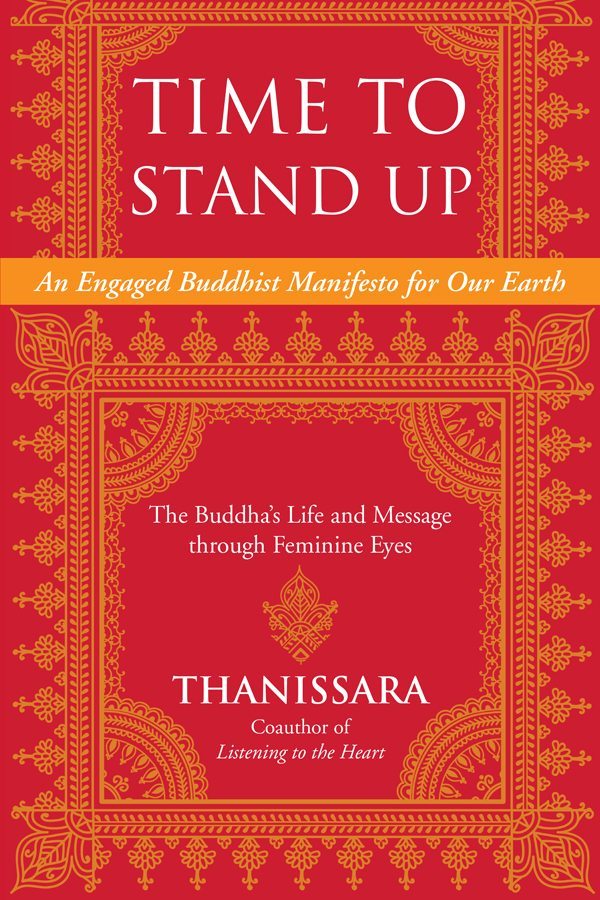
Thanissara - Time to Stand Up: An Engaged Buddhist Manifesto for Our Earth (A Review)

https://www.northatlanticbooks.com/wp-content/uploads/2015/08/TimeToStandUp_cover.jpg

Thanissara - Time to Stand Up: An Engaged Buddhist Manifesto for Our Earth -- The Buddha's Life and Message through Feminine Eyes

(To be published on August 18, 2015 - Pre-order at the Amazon link above for $7.47)

About the Author
Thanissara and her husband Kittisaro (Harry Randolph Weinberg) are the founders of Dharmagiri Hermitage in South Africa, from where they support several HIV/AIDS Outreach Programs and help guide and fund-raise for Kulungile Care Center for orphaned and vulnerable children and teenagers.  Thanisarra and Kittisaro are authors of Listening to the Heart: A Contemplative Journey to Engaged Buddhism (2014).

Thanissara grew up in an extended Anglo-Irish family in London, attending Southampton College of Art and traveling extensively in Asia in the 1970s. Also inspired by Ajahn Chah, she spent 12 years as a Buddhist nun in Thailand. She holds an MA in Mindfulness-Based Psychotherapy Practice from Middlesex University and the Karuna Institute in the U.K. and co-facilitates the Community Dharma Leader Program at Spirit Rock Meditation Center in California.
[NOTE: This book was sent to me by the publisher (free) with the hope that I would review it, favorably. I never make any promises in that regard. When I do review a book sent to me, it's because I think it is a good book.]

The life of the Buddha has been told so many times by so many people, and in so many different ways, from mythic and magical versions to a very secular version (from Stephen Batchelor), but never has it been told in the context of environmental change and from a feminine perspective.

In the Buddha's time, women were included among his followers and students, but in the following centuries, women were often excluded from those schools erected to perpetuate the Buddha's teachings.

From the Introduction:
This is a book I would have preferred not to write. I would have liked to write something lighter, happier, and more innocent. I would have liked to walk you through a serene wooded landscape, but instead I ask you to look with me at a burnt and tortured Earth and its polluted rivers, dying oceans, razed forests, devastated wastelands, and its litany of extinct species.
This is a book about awakening to the reality of the planet we live on, the pain, the suffering, the devastation, and not blinking, not looking away, not putting it off for the next generation to deal with. It is a book about reality.
The journey of awakening is not an incense-scented walk through a bed of roses--it wasn't for the Buddha, and it's not for us. It's a demanding look at reality. The reality we now face is climate chaos and devastation, an edge that is increasingly hard to move back from. (p. 45)
Buddhism has long had a reputation of being little more than navel gazing. Perhaps that has been fair, perhaps it has not been fully accurate. After all, the Bodhisattva Vow promises to save all beings.
Beings are numberless, I vow to save them
Desires are inexhaustible, I vow to end them
Dharma gates are boundless, I vow to enter them
Buddha's way is unsurpassable, I vow to become it.
In our time, we know that animals are also sentient beings, however great or small. For this reason, most Buddhists are vegetarian. In Seven Years in Tibet, we see Tibetan Buddhist Monks breaking ground for a building and they worry about harming the worms. They too are beings.

An engaged Buddhist approach to saving our planet may rightfully claim that vegetarianism is a necessary part of that agenda. Approximately 36 football fields worth of forest is cut down every minute, and we have lost 17% of the Amazonian Rainforest over the last 50 years, primarily to convert the land to cattle farming.

The meat industry, according to a 2006 report by the United Nations Food and Agriculture Organization (FAO), causes more greenhouse gases - carbon dioxide (CO2), methane, nitrous oxide, and the like - to spew into the atmosphere than either transportation or industry. According to the Environmental Protection Agency (EPA),
livestock burping, flatulence and manure was the source of more than 13 million tons of methane gas in 2004, compared with the EPA’s estimate of 9.7 million tons, according to a study published last month in the Journal of Geophysical Research: Atmospheres

SCIMACHY measurements showed oil and gas industries released 7 million tons of methane gas into the atmosphere, compared to the EPA’s estimate of 9.9 million tons.
Methane gas is the second most common gas that is associated with global warming, after CO2.

Not only does the meat industry destroy our environment but, as mentioned above, animals are sentient creatures. Buddhists vow to cause no suffering and, in fact, to alleviate suffering as much as we are able.
The most painful, the very worst of our madness, is the utterly sadistic and callous treatment of billions of animals and sea creatures caught in our consumer machinery. Animals are sentient, feeling beings with family structures, intelligence, emotions, memories, and needs, just like us. (p. 122)
I eat meat. I have struggle from time to time with this practice, but I have rationalized it in light of humans being omnivores. I have also rationalized it in terms of my protein needs as an active male who lifts weights seriously and often. I have tried to switch to grass-fed, organically raised, and locally sourced meat, in an effort to limit the damage my diet produces.

However, having read this book, and in light of who I feel I am becoming in my life, I am seriously questioning my lifestyle. Meat is a lifestyle choice, since there are many ways to get adequate protein without eating meat.

But, then, do I give up cottage cheese, Greek yogurt, eggs, and whey protein? Do I stop consuming all products sourced from animals? This is a much harder choice, but maybe it is the only moral choice.

To be fair, this is a First World problem, in as much as so many others in this world barely get enough food, let alone protein, to survive. It's easy to be blind to our own privilege. 
As practitioners and Sanghas following the great inclusiveness at the heart of the Buddha's Sangha, we must understand, particularly in the U.S. and Europe, how our colonial histories have set the stage for white privilege and class entitlement to permeate our communities and permit us to develop many blind spots. In making the invisible, visible, we can learn how we subtly perpetuate a dynamic that excludes or diminishes participation of people of color and those who are economically marginalized. (p. 156)
Thanisarra outlines four domains in which we must work together as one people to save our planet: (1) Keep carbon in the ground, (2) Sequester the remaining carbon in favor of alternative energy sources, (3) Massive investment in and education about renewable energy sources, and (4) Move toward a plant-based diet (p. 158-159).
We now need a collaborative global movement on a scale never before seen in the history of humankind to ensure these outcomes. We are not only advocating climate action, but also recognizing that this is the moment to actualize a truly more equitable and just society. ... The intensity of our times invites us to shift our way of thinking, the choices we make as "consumers," and the awareness we bring to each part of our personal lives. 
___

The Buddhist way isn't to tell people what they should do, but to lead by example. (p. 159)
This is a book that forced me to look at my choices, and quite possibly to make profound changes in my life. Perhaps it will do the same for you.

About the Book (from the publisher)

Time to Stand Up retells the story of the historical Buddha, one of the greatest sacred activists of all time, as a practical human being whose teachings of freedom from suffering are more relevant than ever in this time of global peril. Evolving onward from the patriarchal template of spiritual warriors and their quests, former nun Thanissara explores awakening from within a feminine view where the archetypes of lover and nurturer are placed as central and essential for a sustainable world.

Vital is an investigation into the pinnacle of Buddhist practice, the realization of the "liberated heart." Thanissara questions the narrative of "transcendence" and invites us into the lived reality of our deepest heart as it guides our journey of healing, reclamation, and redemption. As the book unfolds, the author examines traditional Buddhism--often fraught with gender discrimination--and asks the important question, "Can Buddhist schools, overly attached to hierarchal power structures, and often divorced from the radical and free inquiry exemplified by the Buddha, truly offer the ground for maturing awakening without undertaking a fundamental review of their own shadows?"

Chapter by chapter, the book relates Siddhartha Gautama's awakening to the sea-change occurring on Earth in present time as we as a civilization become aware of the ethical bankruptcy of the nuclear and fossil fuel industry and the psychopathic corporate and military abuse of power currently terrorizing our planet. Thanissara relates the Buddha's story to real-life individuals who are living through these transitional times, such as Iraq war veterans, First Nation People, and the Dalai Lama. Time to Stand Up gives examples of the Buddha's activism, such as challenging a racist caste system and violence against animals, stopping war, transforming a serial killer, and laying down a nonhierarchical structure of community governance, actions that would seem radical even today.

Thanissara explores ways forward, deepening our understanding of meditation and mindfulness, probing its use to pacify ourselves as the cogs in the corporate world by helping people be more functional in a dysfunctional systems--and shows how these core Buddhist practices can inspire a wake-up call for action for our sick and suffering planet Earth.
This book is part of the Scared Activism series from North Atlantic Books.

Friday, July 11, 2014

Headhunters: The Search for a Science of the Mind (Book Review)


From the Times Literary Supplement (London Times), this is a review of a new book not yet published in the U.S. called Headhunters: The Search for a Science of the Mind, by Ben Shephard. This book appears to be an interesting look at the history of modern anthropology, neuroscience, psychology, and psychotherapy in Britain.

Forgotten pioneers of the science of the mind

ADAM KUPER
Published: 9 July 2014

HEADHUNTERS: The search for a science of the mind
Ben Shephard
323pp. Bodley Head. £25.
 
Charles Seligman; from the book under review Photograph: Bodley Head 
 
We hope you enjoy this free piece from the TLS, which is available every Thursday in print and on the TLS app. This week’s issue features Mary Beard on the afterlife of Pompeii, Henrietta Foster and Kathryn Sutherland on a portrait of Jane Austen, Leo A. Lensing on the self-destructive life of Ingeborg Bachmann, Anson Rabinbach on the First World War – and much more. 

In the early twentieth century, a handful of Cambridge men, young medical doctors mostly, established modern anthropology, neuroscience, psychology and psychotherapy in Britain. Ben Shephard sums up their quest as “a search for a science of the mind”, which was certainly a large part of it, but they were interested in a great many other things as well. They were close associates who influenced one another, but it would be a mistake to exaggerate the coherence of their projects or the extent to which they shared a common sense of what they were after. Because they were so eclectic and ranged so widely, they were not installed as ancestor figures in the disciplines into which the human sciences were beginning to fragment, even if they were influential in the committees that helped to shape the new professional institutions. Their names are therefore mostly unfamiliar today. Shephard rescues them from the oubliette of disciplinary histories and presents them as members of a cohort: a network of eccentric, wilful, brilliant men who were prepared to go anywhere, try anything, to advance the scientific understanding of human nature. 

Central members of this cohort were brought together in the 1898 “Cambridge Anthropological Expedition to Torres Straits”, that narrow stretch of sea, with numerous islands, which separates Australia and New Guinea. The expedition was organized by a zoologist, Alfred Haddon. Encouraged by Thomas Huxley, Haddon had visited the Torres Strait a year earlier to study tropical fauna and coral reefs. He became interested in the islanders and was tempted to take up anthropology, although Huxley did warn him that nobody could make a living at it. (Mrs Haddon pluckily remarked that “you may as well starve as an anthropologist as a zoologist”.) Haddon then put together a scientific expedition to the Strait. The islanders seemed particularly interesting since they might constitute a link between the peoples of New Guinea and Indonesia and the Australian Aborigines, who represented for the Victorians the archetypal savage hunter-gatherers. And their origins were mysterious. The Cambridge team would study the anatomy, physiology, sense perception and sociology of the natives. 

Haddon lectured on comparative anatomy in the Natural Sciences department in Cambridge alongside a young doctor, W. H. R. Rivers, who lectured on the sense organs. Rivers had studied experimental psychology at the leading school in the world, in Jena, in Germany, and developed an unfashionable interest in mental illnesses. Haddon invited him to lead the psychological side of the expedition, but Rivers hesitated until his two favourite students, William McDougall and C. S. Myers, signed on. He then told Haddon that after the recent death of his mother he felt run down and in need of a holiday. He would come along and pay his own way. Charles Seligman, a pathologist who was a friend and contemporary of Myers, also volunteered and was directed to join Rivers, Myers and McDougall in doing experiments on the sight and hearing of the islanders. 

“I put the direction of the psychological department entirely into the hands of Rivers”, Haddon reported, “and for the first time psychological observations were made on a backward people in their own country by trained psychologists with adequate equipment.” Despite Haddon’s optimism, their equipment turned out to be far from adequate in tropical conditions and they ended up doing quite simple experiments, but the results appeared to show that the sense perception of the islanders was not very different from that of Europeans. They might be better able to discriminate birds at a distance, but only because they had been trained to do so. Their colour vocabulary was undeveloped, but they could pick out the same shades of difference as an average Englishman. Personalities, too, were familiar. “The character of the natives appears to be as diverse as it would be in any English town”, Myers remarked. Their cook was “the sturdy, plodding thick-set workman”. Another man was “the best example of the high-strung nervous type: his excitement when he is telling a story is remarkable”. And then there was Ulai, “the personification of cunning”, who grasped what the expedition was after and sold Rivers a collection of rods that recorded his sexual conquests, explaining that at his age he would not be adding to their number. 

Haddon directed the ethnological research. One coup was to persuade the Murray islanders to revive a male initiation ceremony that the missionaries had banned. Rivers found himself drawn to sociological issues, especially family and kinship. “While going over the various names which one man would apply to others, I was occasionally told that such and such a man would stop a fight, another would bury a dead man, and so on”, he noted. “When the clues given by these occasional remarks were followed up it was found that there were certain very definite duties and privileges attached to certain bonds of kinship.” Rivers went on to become the leading kinship theorist of his generation. 

Studying hearing, Myers and Seligman collected recordings of local music. Then Seligman went off to do some ethnological work of his own in New Guinea, and Myers and McDougall made a difficult journey to Sarawak, where the administrator, Charles Hose, was orchestrating a peace conference between two groups of headhunters. Myers found it all rather trying, and objected particularly to having to do his daily rounds surrounded by pigs. “How much this distracts from the pleasures of defecation and subsequent pig eating”, he complained. Nor could he get on with the local people. His one achievement was the collection of music recordings. McDougall fitted in rather better with the swashbuckling Hose and enjoyed the company of the headhunters. He was tempted to make a career of anthropology. However, he decided that it was too easy and instead went to Germany to master the latest experimental methods in psychology. 

Another Cambridge friend of Rivers was a young Australian doctor, Grafton Elliot Smith, who had been studying the brains of marsupials. When the Haddon team set out for the Torres Strait, Elliot Smith went to Cairo as professor of anatomy at the medical school. Rivers turned up in Egypt in 1900, to investigate the colour vision of the Egyptians in order to establish a comparison with the Torres Strait islanders. His experimental subjects were labourers working for another former member of the Torres Strait team, Anthony Wilken, who was doing archaeological research. Rivers brought Elliot Smith in to examine the human remains that Wilken had uncovered, and especially the well-preserved brains of pre-dynastic people. Elliot Smith soon became a world authority on the human brain. He modelled the brain’s structure as though it was an archaeological site, the different levels supposedly reflecting evolutionary advances. The neocortex, shared by all mammals, controlled basic functions while the prefrontal area was the seat of more advanced abilities. 

Elliot Smith also began to develop theories about Egyptology and anthropology. His most famous idea was that the wonders of ancient Egypt were created not by Africans but by northern invaders, and that civilization had then spread from Egypt to all the corners of the world. Rivers was impressed, and he now decided that Melanesia had been transformed by an invasion of more advanced peoples. Seligman, who had gone on to do ethnological fieldwork in the Sudan, also adopted Elliot Smith’s thesis and argued that the most advanced African civilizations were the work of light-skinned “Hamitic” invaders who had passed through Egypt. The great African pro-consul, Lord Lugard, was a convert to this doctine, which had an obvious appeal to colonialists.
Rivers, more and more absorbed by ethnology and, engaged in writing his great work, The History of Melanesian Society, found the time to collaborate in a famous experiment with his friend Henry Head, another young doctor who had studied experimental psychology in Germany and Czechoslovakia. Investigating the perception of pain, Head had two cutaneous nerves on his left forearm severed. Every Friday for the next four years, he visited Rivers in his college rooms to chart the process of regeneration and the areas of acute sensitivity. Echoing Elliot Smith’s ideas about the evolutionary levels of the brain, Rivers and Head decided that the nervous system contained two layers: one older and more primitive; the other more subtle and localized. They speculated that the two systems “owed their origin to the developmental history of the nervous system. They reveal the means by which an imperfect organism has struggled towards improved functions and physical unity”. And this “could be seen as a metaphor for the triumph of civilization over savagery in human history”. Frederic Bartlett, a student of Rivers who went on to become a leading psychologist in the next generation, noted that this metaphor informed all Rivers’s later theories in physiology, psychology and anthropology. The structure of every human organ, every social institution, revealed cumulative layers of progressive development. 

Myers and McDougall stuck with psychology but developed very different approaches. Myers became an anti-racist and a humanist. McDougall was a biological determinist, although he did become president of the English Society for Psychical Research. 

Like Rivers, Myers initially took an evolutionary view: “The primitive mind first or the child mind, if you like; then the industrial mind; and the abnormal last of all: that seems to me the natural order, since each in a sense implies the last”. He moved from St Bartholomew’s Hospital in London to Cambridge to work with Rivers, and set up a small laboratory in a cottage in Mill Lane, funded by a gift from his mother. Here he worked on the psychological basis of rhythm in music. 

Psychology was looked down on by the Cambridge establishment, but Ludwig Wittgenstein was intrigued and regularly came to Mill Lane to work with Myers. “I had a discussion with Myers about the relations between Logic and Philosophy”, he wrote to Bertrand Russell. “I was very candid and I am sure he thinks that I am the most arrogant devil who ever lived . . . . I think he was a bit less confused after the discussion than before.” When the laboratory was opened to the public in 1913, Wittgenstein exhibited an apparatus for investigating the perception of rhythm. Perhaps influenced by Wittgenstein, Myers was moving away from biological determinism. The physiologists, he complained, “in their attempts to penetrate the reality of the known, were deliberately ignoring the knower”. Experimental psychology made unrealistic assumptions, he came to believe. “The factor of feeling was expressly eliminated from our experiments on memory.” Together with Rivers, Myers lobbied, unsuccessfully, for Cambridge to establish a mental health centre. He also criticized racial theories. The “mental characters” of a European peasant were “essentially the same as those of primitive communities”, he insisted. “In temperament we meet the same variations in primitive as in civilized communities.” 

McDougall, in contrast, remained committed to biological explanations of human behaviour. He moved to Oxford, championed eugenics, and began to theorize about race and instinct. A quirky and difficult man, who had quarrelled with most of his associates, McDougall made a satisfactory marriage with the daughter of a chimney sweep in 1900 and began to repair his strained relationships with Rivers and Myers. In 1901, the three men were instrumental in the establishment of the British Psychological Society. And they shared a commitment to develop the treatment of mental illnesses. Psychoanalytic theories came to their attention with the publication of lectures Freud had delivered in 1910 at Clark University in Massachusetts. In 1913, Jung attended a medical congress in London and impressed McDougall. He arranged to visit Jung for analysis, but was frustrated by the outbreak of the First World War. 
 
The war brought them all together again. The cohort of medical doctors, anthropologists and psychologists was now deployed in a new and contentious field: the treatment of soldiers traumatized by battle. (Shephard has published a study of military psychiatry, and this section of his book is particularly strong.) Myers had gone to France immediately the war broke out, and French psychiatrists had introduced him to soldiers who were suffering from strange symptoms – struck dumb, paralysed without any evident physical cause, or suffering from a total loss of memory. He concluded that these symptoms might sometimes be caused by the stress of battle, but that they might also have a physiological basis, resulting from close proximity to heavy explosions. In 1915, he published a description of “shell shock” in the British Medical Journal. In the following year he was appointed “Specialist in Nerve Shock” to the British army with the temporary rank of major. 

The diagnosis was, however, vague, and it was also problematic in operational terms. One in six shell-shock patients were officers (who constituted only one in thirty of the fighting men). And when men diagnosed with shell shock were being evacuated from the front line, even returned to Britain, there were suspicions of faking. Manpower losses from shell shock became a serious drain. In one fortnight at the height of the Battle of the Somme, 2 Division had 2,400 wounded men and 501 cases of “shell-shock wounded”. Myers was sidelined, clinics were set up near the front line to rehabilitate traumatized men, and the diagnosis of shell shock was shelved in favour of the pre-war categories of neurasthenia and hysteria. 

But large numbers of soldiers had returned to Britain, wounded or psychologically incapacitated, and suffering acutely from depression: “nervous wrecks” was the common description. McDougall found himself “the head of a hospital section full of ‘shell shock’ cases, a most strange, wonderful and pitiful collection of nervously disordered soldiers”. Elliot Smith was posted to Magull hospital near Liverpool, and recruited Rivers. They experimented with various methods, including the new talking therapy favoured by Freud and Jung, and began to pay special attention to dreams. 

Rivers moved at the end of 1916 to Craiglockhart, in Scotland, a facility for officers who had been diagnosed with shell shock. He cherry-picked the most interesting cases, one of whom, famously, was Siegfried Sassoon, who had been sent there after making an anti-war protest. Sassoon recalled that at their first session he asked Rivers if he was suffering from shell shock. 

“’Certainly not’, he replied.
‘What have I got then?’
‘Well, you appear to be suffering from an anti-war complex.’ We both of us laughed at that.” 


Rivers engaged critically with Freudian ideas. He reworked Freud’s dream theory in a neglected classic, Conflict and Dreams, which was published posthumously, edited by Elliot Smith. But as Sassoon apparently recognized, Rivers could well have featured as a classical Freudian case study himself, tormented by homosexual desires. In 1914, Rivers had abandoned a young student, John Layard, on a remote Melanesian island, evidently unable to cope with a physical attraction that Layard himself was willing to express. “Rivers had obviously not recognized the whole homosexual content of our relationship, probably on both sides”, Layard remarked. He also recalled that Rivers had “immense quantities of clever young men around him. He told me once that it was only the affection of young men that kept him alive”. (Layard returned to England suffering from depression. Rivers attended him but many years later he attempted suicide, was treated by Jung, and eventually published a Jungian study of dream analysis.) 

Rivers also suffered greatly from the strain of treating young officers only so that they could be sent back to the front, and he had to retire owing to nervous exhaustion. In 1922, while fighting the general election in the London University seat on behalf of the Labour Party, he had a fatal heart attack. In the same year the founding texts of the new functionalist anthropology were published, and his speculative history of Melanesian society was consigned to the scrapheap. 

More broadly, in the 1920s structural-functional accounts replaced speculative historical approaches in the natural and social sciences. The brain was now seen as an intricate working organism, its parts functionally specialized. Societies were machines for living in, not deposits of archaeological strata. Academic psychologists set out to win respect by making psychology over into an experimental natural science, abandoning therapy. 

The members of the cohort did not have the best of luck in the post-war world. Elliot Smith became a famous anatomist, but his reputation was badly damaged by his endorsement of the Piltdown forgery. (A hoaxer had put together a modern cranium and an ape’s jaw and teeth, which led Elliot Smith to conclude that early hominids had highly developed brains.) McDougall was appointed to a chair at Harvard in 1919, but his advocacy of instinct theory, eugenics and racial determinism did not go down well. Nor did his enthusiasm for psychic research. American psychology was now “behaviorist” and experimental, and McDougall was regarded as a Victorian relic, “still thinking of himself as an Englishman in the British colonies”, colleagues complained. He lost a small fortune in the stock market crash of 1929 and was then swindled over an oil well. (“The professor is noted for his experiments on animal behavior through tests made mostly with rats”, the New York Times noted with some glee. “Seems this time he got caught by two oily ones.”) Seligman became professor of ethnology at the London School of Economics, but in the 1920s he was sidelined by the charismatic BronisÅ‚aw Malinowski. Myers was held responsible for the shell shock fiasco. (“There’s no such thing as shell shock”, General George S. Patton was to insist. “It’s an invention of the Jews.”) 

“Although many of the answers which Rivers, McDougall and Elliot Smith gave have proved to be wrong, because in their time the data to answer them did not exist, the questions they posed are still relevant”, Ben Shephard suggests. In fact their theories were discredited and their research programmes declared obsolete. And so they have largely been forgotten. Only Rivers has had an unexpected afterlife, resurrected in the imaginations of Siegfried Sassoon and Pat Barker. Yet this cohort of open-minded, cosmopolitan, adventurous young doctors was surely more interesting, more creative and more admirable than most of the narrow specialists who succeeded them. 

Adam Kuper is Centennial Professor of Anthropology at the London School of Economics.

Monday, June 02, 2014

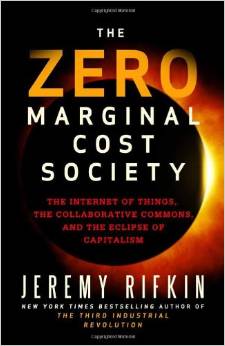
Edward Berge - Review of Jeremy Rifkin's "The Zero Marginal Cost Society"

The Zero Marginal Cost Society

Ed Berge has been reviewing the new book from Jeremy Rifkin, The Zero Marginal Cost Society: The Internet of Things, the Collaborative Commons, and the Eclipse of Capitalism, over at his Postmetaphysical Spirituality forum. All of the individual posts from that thread have been organized into a lengthy article that was posted at Integral World. It's an interesting book that will end up in my stack of things to read.

Review of Jeremy Rifkin's "The Zero Marginal Cost Society"

Edward Berge

This is a review of Jeremy Rifkin's new book, The Zero Marginal Cost Society: The Internet of Things, the Collaborative Commons, and the Eclipse of Capitalism (NY: Palgrave Macmillan, 2014). It is excerpted from the Integral Postmetaphysical Spirituality forum thread of the same name.
Granted the complete demise of capitalism is a long way off, it being mixed with the Commons for some time to come. 
In chapter 1 [The Great Paradigm Shift from Market Capitalism to the Collaborative Commons] he discusses how monopolies intentionally thwart competition and innovation so as to maintain their stranglehold. But he claims entrepreneurs will find a way around it and end up forcing competition with better tech and price reductions (6). Larry Summers 2001 paper acknowledges the emerging information economy was indeed moving to near marginal cost, but Summers didn't propose something like Rifkin, instead recommending “short-term natural monopolies” (8).

Recall Summers was Obama's pick for Director of the National Economic Council. His policy suggestions were well in line with his promotion of “natural monopolies,” as his resume attests. And we're seeing exactly this economic philosophy at play with FCC Chairman Wheeler's proposed pay-to-play rules, where the ISP monopolies will destroy internet neutrality. Recall that Wheeler was another Obama pick, and was a former, and will return to being, a cable and wireless lobbyist. While Obama claims to back income equality and net neutrality he appoints the likes of Summers and Wheeler who make no bones about their support of monopolies. And without net neutrality good bye to Rifkin's entire plan, which requires it to succeed.[1]

 
Chapter 2 [The European Enclosures and the Birth of the Market Economy] was about the transition from a feudal to market economy. The feudal system was based on the Great Chain of Being, a strict theological and hierarchical structure with God at the apex. Property was communally shared based on one's position in the chain. It was when property became 'enclosed' that it turned into private ownership. And with this the shift from a theological Great Chain to a more secular worldview of individual rights, at least for those that owned property. The hierarchy was retained on a societal level but now based on property instead of God. We might also say that these conditions led to the widespread emergence of egoic rationality for said individual property owners.

We can see that Wilber retains the Great Chain in its transcend and include philosophy.[2] Granted there is no longer pre-fixed Platonic forms but it does retain the morphogenetic gradient which involves from Spirit, or God by another name. Sure evolution plays its part, but it still must follow this gradient back up to Spirit. And we can directly experience Spirit via meditative techniques. We will then interpret Spirit through our evolutionary level, but given proper evolution through transcend-and-include, and proper meditative training, we can and do advance up the chain back toward God. This structure is feudal and theological to the core.

Wilber, like the transition to a market economy, retained the hierarchy but also included the shift to individual private property. Along with this came the notion that one was better than others based on their degree of private ownership, if not God. Granted those still into religion combined that into the belief that God favored those who owned more, even in secular circles this better than thou attitude prevailed. It was through one's hard work and merit that they earned a higher socio-economic status. And those without such status deserved their lot due to sloth and laziness.

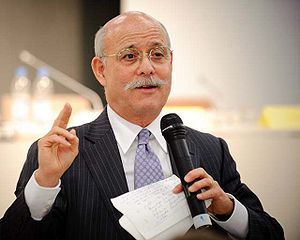
Jeremy Rifkin
Jeremy Rifkin 
 
Or in the case of Wilber, not evolving enough based on its own theological Great Chain structure, combined with its market-based private property rights. There too is a version of the “if you can manifest money and own more private property it's a sign of your spiritual progress.” There is no sign of evolving into the kind of commons Rifkin promotes, or the kind of consciousness that goes with it. Or any analysis of the energy-communication infrastructure that goes along with that. Wilber is still stuck in both the feudal and market economic and consciousness models.

Chapter 3 [The Courtship of Capitalism and Vertical Integration] is on the first two industrial revolutions, which required vast amounts of capital to build its infrastructure. It also required vertical integration of huge organizational structures with top-down hierarchical control which he calls not coincidentally “rationalization.” I suggest that this is the rationalized Great Chain hierarchy[3] we saw from the feudal era, where due to public education we entered the formal rational mode. All of which also saw the emergence of the legal rights of individuals.

On 55 Rifkin notes that while greed, deregulation and corruption certainly plays a part in what capitalism has become, he also asserts that this structure was a natural process for this sort of communication-energy-consciousness regime that provided a general increase in the standard of living for all. It's what Wilber calls the dignity and disaster of the era. For now I simply note that in the emerging Commons era the capitalist structure has reached the point where its disasters outweigh its dignities. And, as Rifkin said, its own impetus for ever-increasing productivity at lower marginal costs has made itself near obsolete.

Chapter 4 [Human Nature through a Capitalist Lens] is a quick run through of the accompanying worldviews from feudal to capitalism. He starts by noting that worldviews justify themselves as the ways things are, either by divine or natural order. The feudal Great Chain promised salvation by knowing one's place in the hierarchy and doing one's duty. In the transitional medieval market economy this shifted to one's hard labor, earnings and property as signs that one was favored by God, which shifted to a more secular notion of one's autonomy and worth as equivalent with one's property.

When the market economy transitioned into capitalism there arose much more vigorous defense of individualism tied with private property as inherent to human nature. Utilitarianism became the defining worldview justification. This led Herbert Spencer to twist Darwin's idea's into social Darwinism, a justification for “survival of the fittest.” Darwin was aghast at such a torturous distortion of his work.

Nonetheless Spencer saw the way of things thusly: “...all structures in the universe develop from a simple, undifferentiated state, to an every more complex and differentiated state, characterized by greater integration of the various parts” (64). Therefore only the most complex and vertically integrated business should survive, as this was natural to evolutionary development. All of which leads to oligopoly with its hierarchical and centralized command and control. This remains the dominant and regressive Republican view today in the US. And I might add the predominant spiritual, philosophical and economic Wilberian view as well.

Not to fret. At the end of the chapter Rifkin assures us that complexity is not synonymous with such a structure. As I've been saying, there is another kind of complexity as explored in this thread. That's where the emerging structure of the collaborative commons comes in, featured in the coming chapters.

On 71 of chapter 5 [Extreme Productivity, The Internet of Things, and Free Energy] he discusses energy as the missing factor in measuring productivity, in addition to the usual factors of machine capital and labor performance. Thermodynamic efficiencies accounted for 86% of productivity gains in the first two industrial revolutions. This figure is misleading though in that the aggregate energy efficiency at the height of the 2nd revolution was 13%, meaning “the ratio of useful to potential physical work that can be extracted from materials” (72). He asserts given the infrastructure and fossil fuel supplies involved, there will not likely be further efficiency increases.

He notes that renewable energy (RE) energy efficiency however will have dramatic increases over fossil fuels. This is because of the exponential growth in RE development, where production prices are dropping and efficiencies are increasing at an accelerating rate much like the PC industry. Plus RE resources are virtually infinite compared to fossil fuels. He estimates that RE can improve aggregate energy efficiency to 40% or more in the next 40 years (72).

There was an interesting discussion of privacy and transparency. Capitalism was the age of privacy and individual autonomy, whereas the collaborative commons there is much more sharing and openness. Throughout much of history humanity did things much more communally and publicly, like eating, sleeping and even excreting waste products. With capitalism we moved many of these functions indoors and in our own private rooms. “The enclosure and privatization of human life went hand-in-hand with the enclosure and privatization of the commons” (75).

While the Internet of Things (IoT) is opening us again to more communal sharing, it is not a return to the kind that was pre-capitalism. Instead it is a concern with the balance between individual and communal, so that one can still have control over what private information one shares in social networks. We want to collaborate and share more, be more transparent than the capitalistic individualist, but also retain our private autonomy and property to some degree. Hence having some control over what we choose to share or not is a key security issue in the emerging IoT, as well as reflecting a worldview shift.

Chapter 6 [3-D Printing: From Mass Production to Production by the Masses] on 3-D printing is astounding in the rapid developments being made. See the chapter for the voluminous details. My focus is on how it manifests in the emerging worldview. For one thing, it is based on open source software, not intellectual property. For another it is sustainable, give its additive construction process uses about one tenth the raw materials and wastes far less in the process. The materials used can also be local and re-used waste, thus eliminating high-end base materials manufactured from afar. They can even print out their own parts. The cost of 3-D printers is reducing rapidly so that the means of production will soon be in the hands of individuals and small collaborative groups. The entire process is P2P, democratic, lateral and based in local and regional communities, yet connected to the global community via the smart grid.

On 101 there are two anti-capitalist factions coming together. One is those who have been pushing for a return to more tribal culture using traditional, sustainable methods and reducing consumption. They are now merging with the high-tech nerds with the same values, but by implementing tech like 3-D printing. All of the above features of its infrastructure promote those values without regressing to a form of life that cannot change capitalism (107). Rather the new tech both transforms capitalism to the next wave and retains values from pre-capitalism, the latter also elevated in the process.

Chapter 7 [MOOC and a Zero Marginal Cost Education] on education is eye-opening. It is being transformed from the authoritarian top-down model where the teacher has all the answers to collaborative learning experiences with teachers as facilitators. Critical and holistic thinking[4] are encouraged over memorization. Previously learning was thought of as a private, autonomous experience where the knowledge was one's exclusive property, and that one had to hoard it to compete with others for grades and jobs, just as in the capitalist paradigm. In the collaborative era knowledge is something to be shared in a community of peers, thereby creating a public good for all.

Virtual, online classrooms are currently supplementing brick-and-mortar and may eventually replace them. Pedagogy is also having students provide services in their local communities, as well as engage in environmental projects. Again this encourages moving education from a private affair into seeing how one empathically relates to others, their communities and the world at large. Such online classes also cost considerably less than attending universities, sometimes even free, thereby making an education available to a much larger portion of society. One of the primary requisites for a functioning democracy is an educated, informed and active public, and this new model is 'paving the way'[5] toward that end.

Chapter 8 [The Last Worker Standing] on work highlights that automation, robotics and computer programs are taking over much of the workforce and replacing human labor at an accelerating pace. He gives countless examples which are all true. However I question when he dismisses that many job losses are due to relocation to cheaper labor markets like China (124). There is no question that it is valid. It's true that even China is slowly taking up the automation process, and that they will eventually replace their own cheap labor with such tech. But right now cheap human labor far outweigh it and is a direct reason for many US companies to ship manufacturing and textile jobs thereto. Most of Walmart's products come from China and why they make such huge profits.

Near the end of the chapter he talks about deep play replacing hard work, the former more concerned with social capital. He thinks this will come about when we are all empowered to be prosumers, both creating, consuming and sharing value as well as products. That may be, but in the meantime millions have lost their jobs and millions more will. We can social network all we want, and create/share intellectual/spiritual value all we want, but we might starve in the process without income. I guess that's one way to solve the current labor problem.

He also does not analyze another factor caused by both automation and shipping many jobs overseas. Big businesses like Walmart and McDonald's have driven wages down for what few existing jobs are still available. With 3 people for every job we take what we can get to feed our families, like it or not. Meanwhile those very same businesses are reaping record profits and just don't want to share the wealth. They'd rather see those hard-working folks have to get food stamps and other social welfare programs that cost society rather than pay them a living wage. Sure, things look rosy in Rifkin's future society but right now not so much. He doesn't deal with what we need to do now to address these problems of capitalism in the interim. I'll take Reich, Sanders, Warren and Krugman for that job.

Chapter 9 [The Ascent of the Prosumer and the Build-Out of the Smart Economy] is on the prosumer in a smart economy. A major question is how the IoT infrastructure will be financed. Should public goods be government or privately financed? Both sides agreed that public goods should maintain a natural monopoly, since competition for such services would generate waste. The US opted for the privately owned public utilities option. Now this battle is playing out over the internet, where mega-business wants to own it and everyone else wants the FCC to declare it a government owned public utility.

Rikfin argues that the internet and emerging IoT infrastructure are financed by consumers, not big business. Yes, the latter has invested large amounts in its infrastructure. But incentives like the governmental feed-in tariff guarantees a premium price above market value for early adopters of renewable energy production. When RE production's efficiency rivals traditional energy sources the tariff will phase out. Small prosumers dominate this transfer and thus finance the majority of the transition to RE through the tariff.

Which of course is coming to challenge the notion of dominant, private public utilities. And playing out with the FCC internet debate. A new generation like Yochai Benkler are promoting the Networked Commons, a third alternative to either strict government or market control. And that is just the lead-in to Part III of the book to come on its incipient rise.

Chapter 10 [The Comedy of the Commons] starts with a historical overview of commons governance structures. They have been criticized by conservatives due to the free rider syndrome. If property is held in common for grazing, for instance, the free riders will abuse the system and bring ruin to the land because of self-interest and overgrazing. Interesting argument for a capitalist. But a history of the commons shows that self-interest was indeed the exception rather than the rule, and obeying self-governing rules for the public good was the rule.

While such historical examples are generally from the feudal era, commons governance still exists in some communities today. These are democratically run in local communities where public resources are managed with definitive protocols including punishments. Since the members live in the communities they are keenly aware of the natural limitations to grazing, forestation, soil degradation and the like so manage their resources sustainably. From a wide survey of such commons governance 7 key principles were held in common (see 162 for the list).

Following are other examples of application to contemporary society. The public square was considered a shared resource for meeting, celebrating, sharing and the like. This now manifests in social media sites. The commons is also now expressing through the free genetics movement, which is trying to preserve our genetic heritage from being enclosed and privatized by big biotech. And which is just another addition to the emerging P2P meme in RE, 3-D printing, education, music and so on.

Also of note is that both Clinton in the US and Blair in the UK were part of a trend started by Reagan/Thatcher to sell off the commons to the highest private bidders via deregulation (163-64). Both of the former were held to be 'integral' leaders by Wilber.

Chapter 11 [The Collaboratists Prepare for Battle] is on the emerging ecological worldview of global consciousness, the democratization of everything. One of its expressions was the free software and open source movements, both dedicated to making information accessible to all for minimal to no cost. It was based on the notion that everyone could share, change, mix knowledge in a collaborative endeavor where no one person or company owned it. All of which transpired in the global commons of the internet beyond blood ties, religious affiliations and national boundaries, thus enacting global consciousness.

Cultural creation though is limited by the nature of the communication medium. The print revolution, and later tv and radio, favored individual authorship and copyright protection, the enclosure and privatization of knowledge. Previously in scribe cultures knowledge was shared and authorship was from divine inspiration. The internet reincorporates the sharing but replaces the theological underpinnings with global collaborative efforts. It also replaces the notion of scarcity with abundance.

This new commons needed a unifying narrative or worldview, heretofore having to navigate within the capitalist paradigm or regress to old notions of the commons. They found their theme in the ecological sciences, where the focus was not so much on individual species but how they interacted within environments. And most importantly, how all the environmental niches interacted with the biosphere as a whole.

It replaced the capitalist invisible hand, which was itself a holdover from a theological God in control to rational, self-interested individuals in control. Lacking a systems view it replaced God with the invisible force of a marginally less superstitious autonomous Market. Backed by ecological and other scientific advances, it is being replaced with the visible systems view of the global eco-social commons and redefining our place within it.

Note that the invisible hand of the market is still metaphysical in that it must posit some supernatural agency that operates on its own if we but focus on our self-interest, i.e. the market will take care of itself. Moving into systems science and ecological consciousness thus naturalizes this process, making previously supernatural agencies like Gods or markets 'visible' and understandable, and reconnecting us with ourselves, our peers and our environments, but in a postmetaphysical framework. This also applies to the sort of instrumental rationality inherent to 'enclosure' of disciplines of study rather than to interdisciplinary cross-sharing more indicative of Habermas' collaborative, communicative action. It is not by chance that Habermas' calls this latter form of rationality postmetaphysical.[6]

Chapter 12 [The Struggle to Define and Control the Intelligent Infrastructure] is on defining and controlling the IoT. The problem is that the capitalists of the earlier industrial revolutions want to own and control the new infrastructure with their centralized, top-down command and control methodology. And yet the IoT is itself structured for distributed, collaborative, lateral, peer-to-peer modes. The latter is also more ideally suited for management of renewable energies, as they also exemplify the same qualities.

Focusing on the 3 parts of the IoT Rifkin starts with the communications internet. We see the dominant ISPs wanting to use the capitalist model to end net neutrality so they can create fast and slow lanes on different fee scales. While they won't admit it, this will also create content interference as those with less money will be relegated to slower connection speeds. And likely some content providers might be eliminated access altogether if they espouse philosophies contrary to the kind of capitalist paradigm of the owners of access. The ISPs use capitalist justification that they need to continually feed the beast of ever-growing profits when in fact they already make a shitload of money selling neutral access. They are under the spell of capitalist winner take all mentality that leads inevitably to greed.

It's not just the ISPs that want to dominate the internet. Social networking sites like Facebook also have a capitalist model in which they want to dominate all member personal information as proprietarily enclosed to do with as they please. This includes selling it to third parties for advertising lists, as well as forking it over to the NSA on 'national security' grounds. It also includes the very real possibility of selling it to insurance companies which could affect one's coverage and premiums with private information not typically available. This is also a concern when employers track your personal information in making hiring or firing decisions. I've read that some employers will not even consider a candidate unless they have a comprehensive personal profile obtained from the internet.

Other areas of internet enclosure are also of concern. Google has a 66% market share in the US (much higher in other countries), Amazon 33%, eBay 99%, Facebook 72%. Twitter has 500 million registered users. They thus control access to, and the content of, information in ways conducive to their own capitalistic motives. These companies constitute an oligopoly in direct opposition to the very nature and structure of the internet. To “just hope that corporate goodwill will be sufficient to preserve the integrity of the process is at best naïve and at worst foolhardy” (203).

Big energy companies want to control the energy internet, again dominating with their capitalist structure. In some cases they are blocking the emergence of a smart grid altogether. Fortunately the EU has instituted regulations to keep it an open format, requiring them to unbundle energy production from transmission. Feed-in tariffs are also promoting local and regional green energy production. He cites the huge success story of the Tennessee Valley Authority, where the government invested in creating a huge hydroelectric plant for these rural areas previously without electricity. They empowered local electricity cooperatives through low-interest loans to build the infrastructure. And they did so much more efficiently and at lower cost than the big private companies could. The results were a boom to not only the local but the national economy.

He then devotes a section to cooperatives generally, with impressive statistics on their successes. He concludes that “cooperatives are the only business model that will work in a near zero marginal cost society” (214).

In terms of logistics, the capitalist way of handling this is incredibly inefficient and costly. Companies only have so many distribution centers, each of which must cover large areas. Thus when it comes to shipping goods drivers must take circuitous routes adding to fuel costs. Also the goods often stay in these isolated centers for far too long thus causing spoilage and/or backlogs, not being delivered in a timely fashion causing shortages on store shelves. Whereas if logistics were managed on the commons model, all of the 535,000 existing distribution centers and warehouses could be shared. This would allow the drivers to just do one leg of the journey with a full load instead of cross-regional or cross-country journeys with diminishing loads to limited distribution centers. This of course will require the logistics internet to track all the trucks and goods, and time the exchanges at the centers to arrive at their end destinations efficiently. There is considerable savings on cargo space, fuel costs and quicker delivery via these shared and distributed logistics.

Chapter 13 [The Transfer from Ownership to Access] is on the transfer of ownership to access. The automobile is the perfect metaphor for the capitalist paradigm. Therein freedom is defined as being enclosed in one's autonomy with the ability to move about at will. But this is being replaced in the sharing economy of the Commons, as car sharing is becoming increasingly common. Here freedom is defined as the right to include others. He cites voluminous statistics on the growing use of sharing which in turn if drastically reducing car ownership, thus reducing inefficient use, emissions and traffic congestion.

Sharing is also extending to other good and services, including clothing, housing, tools, toys and skills. It turns out with the economic downturn many are questioning why they needed so much stuff in the first place. It lies dormant most of the time and has put them in dire debt. People are becoming aware that they can reduce their debt while making use of their possessions by sharing, which in turn makes them feel part of a community instead of locked away in their enclosed spaces of home and car. They realize the were “sold a bill of goods” (233) that does not add to their happiness. “Reducing addictive consumption, optimizing frugality, and fostering a more sustainable way of life is not only laudable, but essential if we are to ensure our survival” (237).

The change to a Commons is seriously affecting advertising. This is the industry that got us to buy into over-consumption in the first place, equating it with success. The industrial revolution's increased production and wages led to surplus goods and disposable income, so advertising quickly set about to mate the two in a happy marriage of accumulating stuff to feed our enclosed egos. But per above we are shifting away from this and sharing our stuff and reconnecting with each other. Communicating about our stuff directly with one another has reduced the need for depending on advertisers. We now depend far more on each others review of goods and services, since we trust the opinions of peers not bent on selling us something. The rise of Craigslist and Angie's List are examples of this growing trend. And indicative of people taking responsibility to do their own fact checking and peer review on information instead of just accepting an ad on corporate media.

There was also a section on how the Commons is affecting medicine. Therein is 3-D printing's ability to 'grow' human tissue using one's own living cells to prevent rejection. So far they've achieved the creation of some liver tissue and a human kidney. They expect that growing organs and specialized tissues will be commonplace within 10 years.[7]

Chapter 14 [Crowdfunding Social Capital, Democratizing Currency, Humanizing Entrepreneurship and Rethinking Work] addresses how the Commons applies to other paradigms. After the financial crises other means of banking have been explored, crowdfunding being one. Capital is raised from the general public for one's project and a specified minimal amount must be raised for the funds to be collected. Companies like Kickstarter that organize the funding get a small cut, as does Amazon for collecting it. There are different forms of investor compensation, from future goods by the provider to shares in the profits to interest on the loan. It eliminates the banks with their usurious interest rates.

Alternative currencies is another expression. Instead of monetary exchange there is social exchange. Goods and services can be exchanged in labor time banks. One provides a good or service to another and his time is updated to a database. When that provider needs a good or service he can look up another provider and use his stored labor to obtain that service. Some of these banks do not differentiate the type of service or expertise level but others do, so not all types of time deposits are equivalent. Some even keep the time banks confined to their local or regional community, thereby keeping it 'in the family.'

The build-out of the IoT infrastructure will create a lot of new jobs in the short to mid-term. Granted when fully implemented it will have little need of jobs to maintain it, but in the interim there will be plenty. Of course many will need to be retrained to tackle the new tech, but that of course can be handled by the sort of commons education previously discussed. All of which will “give birth to a new economic order whose life force is as different from market capitalism as the latter was from the feudal and medieval systems from which it emerged” (269).

Chapter 15 [The Sustainable Cornucopia] is on the tension between scarcity and abundance. Capitalism is based on scarcity due to the limited sources used to maintain it, like fossil fuels. Whereas renewal energies are abundant. Therefore the former uses exchange value and the latter share value. The former depletes our environmental stores, the latter sustains it. It depends though on how we define abundance. It is not the sort of over consumption inherent to capitalism. Biologically humans need 2000 – 2500 calories of food per day. The average American consumes about 3700, while much of humanity on far less than what's needed. We are consuming far to much to sustain our biospheric ecology.

Part of the solution is finding the balance of what is enough to make us happy. Studies indicate that we are happiest when we have enough income, about $20,000[8] in the US, to buy the necessities. More than that has an inverse relationship on happiness. Buying more stuff feeds off of capitalism's inherent scarcity, in that we can never have enough. Focusing on individual material surplus only reinforces our dysfunctional autonomy and represses our empathy. Whereas when our focus is more on sharing surplus with each other we feel not only more connected but that enough is enough. We consume only the resources needed, transform our wants into sharing social goods, and are far happier in the process. And greatly reduces our ecological footprint in the process.

Another issue is that if we create a society of shared abundance won't we thereby continue to consume much more than is sustainable? Yes, if we were to remain in a individualistic mindset beset with scarcity. The whole point though is that the reason a commons mindset is emerging is due to the commons lifestyle. He cites studies that show youth growing up in this milieu are much more socially and environmentally conscious, thus reducing their consumption of material goods and increasing their sharing of those goods. If we implement a commons economy on a global scale, thus producing material abundance, any surplus will not be transferred into more material stuff but a better and fuller life for everyone, including sustainable environmental practices based on RE.

However two key elements can derail the entire transition into the commons era. One is climate change, the other cyberterrorism. 
However two key elements can derail the entire transition into the commons era. One is climate change, the other cyberterrorism. Already the overall global warming is disrupting the water cycle causing increasingly disastrous events. Agricultural food losses due to flooding and drought are bad and will only get worse, causing severe scarcity. Vital infrastructure is being decimated by extreme weather events. Hence we need a quick, effective transition to RE to curtail climate change. Cyberterrorism's prime target is the current centralized energy grid. Take that out and you virtually destroy society. This too requires a quick transition to a distributed smart grid system that cannot incapacitate the entire society. All of which will require “a fundamental change in human consciousness” (296) from capitalism to the commons.

Chapter 16 [A Biosphere Lifestyle] is a recap of the historical eras. In forager/hunter societies our empathic drive was limited to one's family and tribe in mythological consciousness. We then moved into agricultural civilization where empathy was extended to one's religious family in theological consciousness. Next up was a steam-powered civilization that extended our empathy to those in our nation states and an ideological consciousness. Next was mass electrification and an extension of empathy to larger associations based on cultural, professional and technical affiliation via psychological consciousness. And now we are entering the commons via the internet and emerging IoT, our empathy extending to all humanity as well as the environment via biospheric consciousness.
He notes that all of the above still exist in each of us with different emphases as well as culturally is various degrees depending on context. There are also regressions and progressions depending on a variety of factors. But overall there is an unmistakable trajectory of greater empathetic embrace. And this is not some transcendent, ever-more abstract worldview detached from our basic empathetic connections. Empathy is what keeps us grounded in this body and this world as we acknowledge that this life is finite and we all die.

Somewhere around the shift from ideological to psychological consciousness we realized this via our existential crises. As we move into biospheric consciousness we use death to remind us of how precious and fragile life is in all its manifestations and take responsibility for better stewardship of that life knowing it will end. Whatever relative immortality there is lies in our contributions to a progressive biospheric culture in which we participate. And if that shift reaches enough of us in enough time then that culture just might survive the environmental devastation wrought by capitalist consciousness. That of course remains uncertain. The path ahead is being laid and it's now up to us to walk the talk, or more than just individuals will die.

In the Afterword Rifkin expresses mixed feelings for the end of capitalism. He appreciates the entrepreneurial spirit that animated it. He thinks that it is in fact the so-called 'invisible hand' and disagrees with Adam Smith that it involves pure self interest devoid of public concern. Such a spirit is driven by a need to create newer and better products and services to serve the public, which of course also serves one's own financial interests. And that capitalism was an appropriate and efficient response to the energy-communication regime of the times.

The irony is that the entrepreneurial spirit played out to its logical conclusion in creating products approaching near zero marginal cost. This Trojan horse was inherent to the system all along and created its own downward spiral toward extinction. That along with the other downsides inherent to the system, like creating monopolies, not sharing the wealth with workers and exploiting natural resources to the point of possibly disastrous climate change.

Granted the complete demise of capitalism is a long way off, it being mixed with the Commons for some time to come. The former will slowly subside as the latter rises. The second industrial revolution emerged when the first was in full swing. It took 50 years for the second to be the major economic system. It will likely take another 50 for the third revolution to be the dominant player. But the writing is already on the wall. It's here now and here to stay, so perhaps it's time to get with the program?

NOTES

[1] If you haven't yet, please take action to preserve it. Here's one place and you can find several others if you but look. 

[2] I certainly accept progress, which is tied to a kind of 'complexity.' But of a different kind than Wilber's transcend-and-include. We discussed this at length in several threads but this one ["Complexity and Postmodernism"] is a good place to start, bringing in Cilliars, Morin, Prigogine, Bryant, DeLanda, Deleuze, Bhaskar and others. All of which, not surprisingly, are completely absent from the work of Ken Wilber. 

And, btw, Rifkin addresses this other form of complexity science by bringing in thermodynamics. His apt analysis shows how economics was stuck in Newtonian science sans such thermodynamic considerations. The same is true of certain kinds of complexity, chaos and quantum science as well, explored in the link. All of which stems from certain kinds of worldviews. 

Rifkin is also good at showing the relation of worldviews to modes of production and communication. It is no coincidence that Wilber has yet to embrace the emerging Commons, or its concomitant p2p structural dynamics. 

[3] This mode is still metaphysical in moving from theological to rational justification. How this process goes postmetaphysical will be explored with the emergence of the Commons era, forthcoming. 

[4] By holistic thinking Rifkin means “to tear down the walls that separate academic disciplines and to think in a more integrated fashion. Interdisciplinary and multicultural studies prepare students to become comfortable entertaining different perspectives and more adept as searching out synergies between phenomena” (110). The strict placement of academic disciplines into myopically focused areas is indicative of the capitalist and “reductionist approach to learning that characterized an industrial era based on isolating and privatizing phenomena” (113). This is maintained in Wilber's quadrant and zone fetishism, with little said about how disciplines interrelate. Aside from indexing (giga-glossing), which is itself just more of the same. Most specialists in particular disciplines are now getting with the newer trend of cross-pollinating their work with other disciplines, thus expanding their specializations while still retaining its boundaries, though now much more porous. 

[5] As an aside, that is more than a metaphor. In object-oriented ontology terms, this model is actually creating infrastructural educational pathways which enact an entirely different worldview. And again, it is not a regressive worldview due to the advanced technological and educational infrastructure being used, thereby creating a progressively better and more integrative view. 

[6] Speaking of Habermas, he devotes a chapter to Mead in PT. See this old Gaia thread on Mead for how it relates to postmetaphysicality. Also see this blog post, where he argues that while Habermas accepts Weber's disenchantment of the world, Habermas nonetheless still sees a means for reenchantment. The disenchantment came from instrumental rationality necessarily having to refute the magical worldview, thereby causing a rift with reason and nature. It did so by a differentiation of the value spheres than eventually went into dissociation, as Wilber phrases it. Habermas finds the reenchantment of nature with reason not by returning to a transcendent God, or even through the “metaphysical conception of objective reason,” but through a form of reason grounded in pragmatic, this worldly (natural) communication. 

[7] Which reminds me of the movie Transcendence (see this discussion). Recall that was one of the AI's projects, at first making plants, then human tissues, then organs, then people. That part of the movie at least is barely science fiction. (Well, human cloning production is a bit further off.) Also the people who were connected to, and enhanced by, the AI still maintained their individuality but were all connected to each other like the Commons. The movie may very well be a metaphor for the Commons and the emerging IoT smart grid. 

[8] I'm guessing $20,000 is a bit high due to likely including a range of types, from commoners to capitalists. I personally am getting by nicely on far less since I retired. Yes, I reduce rent by living with others in a home share. And I've drastically reduced the amount of owned stuff, even books, sharing them via the library. I have enough to eat and my health care is covered by the VA since I'm a vet. Even if I weren't I'd likely qualify for very low-cost to free care with Obamacare. And I'm happier than when I made a shitload of money working for a company that had little to no ethics or social concern.

Friday, May 09, 2014

Barbara Ehrenreich - A Rationalist’s Mystical Moment (Living with a Wild God)


I just ordered a copy of Barbara Ehrenreich's newest book, Living with a Wild God: A Nonbeliever's Search for the Truth about Everything. Her last book (as far as I know) was Bright-Sided: How Positive Thinking Is Undermining America (2009), a very fascinating and insightful book:
In this utterly original debunking, Barbara Ehrenreich confronts the false promises of positive thinking and shows its reach into every corner of American life, from Evangelical megachurches to the medical establishment, and, worst of all, to the business community, where the refusal to consider negative outcomes--like mortgage defaults--contributed directly to the current economic disaster. With the myth-busting powers for which she is acclaimed, Ehrenreich exposes the downside of positive thinking: personal self-blame and national denial. This is Ehrenreich at her provocative best--poking holes in conventional wisdom and faux science and ending with a call for existential clarity and courage.
I have no doubt her new book will be equally as fascinating and astute in its observations.

There have already been a ton of reviews, including the New York Times, Los Angeles Times, Slate, Seattle Times, The Independent, The New Republic (an interview, included below), NPR (another, much longer interview - best choice), Harper's (still another interview), and many, many more.

This quote is taken from the review in the LA Times:
"How," she asks, "do we reconcile the mystical experience with daily life? Let us be open to the anomalous experience. If you see something that looks like the Other, do not fall on your knees. Find out what it is and report back."
Thank Darwin for an open-minded atheist.

The following is a brief excerpt from her new book.

A Rationalist’s Mystical Moment


By BARBARA EHRENREICH
APRIL 5, 2014 | New York Times


Credit Kris Mukai

MY atheism is hard-core, rooted in family tradition rather than adolescent rebellion. According to family legend, one of my 19th-century ancestors, a dirt-poor Irish-American woman in Montana, expressed her disgust with the church by vehemently refusing last rites when she lay dying in childbirth. From then on, we were atheists and rationalists, a stance I perpetuated by opting, initially, for a career in science.

How else to understand the world except as the interaction of tiny bits of matter and mathematically predictable forces? There were no gods or spirits, just our own minds pressing up against the unknown.

But something happened when I was 17 that shook my safely rationalist worldview and left me with a lifelong puzzle. Years later, I learned that this sort of event is usually called a mystical experience, and I can see in retrospect that the circumstances had been propitious: Thanks to a severely underfunded and poorly planned skiing trip, I was sleep-deprived and probably hypoglycemic that morning in 1959 when I stepped out alone, walked into the streets of Lone Pine, Calif., and saw the world — the mountains, the sky, the low scattered buildings — suddenly flame into life.

There were no visions, no prophetic voices or visits by totemic animals, just this blazing everywhere. Something poured into me and I poured out into it. This was not the passive beatific merger with “the All,” as promised by the Eastern mystics. It was a furious encounter with a living substance that was coming at me through all things at once, too vast and violent to hold on to, too heartbreakingly beautiful to let go of. It seemed to me that whether you start as a twig or a gorgeous tapestry, you will be recruited into the flame and made indistinguishable from the rest of the blaze. I felt ecstatic and somehow completed, but also shattered.

Of course I said nothing about this to anyone. Since I recognized no deities, and even the notion of an “altered state of consciousness” was unavailable at the time, I was left with only one explanation: I had had a mental breakdown, ultimately explainable as a matter of chemical imbalances, overloaded circuits or identifiable psychological forces. There had been some sort of brief equipment failure, that was all, and I determined to pull myself together and put it behind me, going on to finish my formal education as a cellular immunologist and become a responsible, productive citizen.

It took an inexcusably long time for me to figure out that what had happened to me was part of a widespread category of human experience. Some surveys find that nearly half of Americans report having had a mystical experience. Historically, the range of people reporting such experiences is wide — including saints, shamans and Old Testament prophets as well as acknowledged nonbelievers like Virginia Woolf and the contemporary atheist writer Sam Harris. It is of course impossible to ascertain how much these experiences have in common. We may be comparing apples and asteroids.

On the religious end of the spectrum, people have tended to describe their experiences as encounters with familiar deities or spirits, while nonbelievers — like some quoted by William James — are likely to speak of a more generic “living Presence.” Others write of something more akin to my own experience, which was wordless and profoundly unsettling. When the early 20th-century Protestant theologian Rudolf Otto surveyed the works of (mostly Christian) mystics for clues as to the nature of the “Other” they had encountered, he concluded that it was “beyond all question something quite other than the ‘good.’ ” It was more like a “consuming fire,” he wrote, and “must be gravely disturbing to those persons who will recognize nothing in the divine nature but goodness, gentleness, love and a sort of confidential intimacy.”

Of course all such experiences can be seen as symptoms of one sort or another, and that is the way psychiatry has traditionally disposed of the mystically adept: The shaman was simply the local schizophrenic, Saint Teresa of Avila a clear hysteric. The Delphic oracles may have been inhaling intoxicants; all of the great Christian mystics showed clear signs of temporal lobe epilepsy. A recent paper from Harvard Medical School proposes that the revelations experienced by Abraham, Moses, Jesus and Paul can all be attributed to “primary or mood-disorder-associated psychotic disorders.” I suspect we would have more reports of uncanny experiences from ordinary, rational people if it were not for the fear of being judged insane or at least unstable.

An alternative to the insanity explanation would be that such experiences do represent some sort of encounter. It was my scientific training, oddly enough, that eventually nudged me to consider this possibility. Sometime in middle age, when I had become a writer and amateur historian, I decided that the insanity explanation may have been a cop-out, that I could have seen something that morning in Lone Pine.

If mystical experiences represent some sort of an encounter, as they have commonly been described, is it possible to find out what they are encounters with? Science could continue to dismiss mystical experiences as mental phenomena, internal to ourselves, but the merest chance that they may represent some sort of contact or encounter justifies investigation. We need more data and more subjective accounts. But we also need a neuroscience bold enough to go beyond the observation that we are “wired” for transcendent experience; the real challenge is to figure out what happens when those wires connect. Is science ready to take on the search for the source of our most uncanny experiences?

Fortunately, science itself has been changing. It was simply overwhelmed by the empirical evidence, starting with quantum mechanics and the realization that even the most austere vacuum is a happening place, bursting with possibility and giving birth to bits of something, even if they’re only fleeting particles of matter and antimatter. Without invoking anything supernatural, we may be ready to acknowledge that we are not, after all, alone in the universe. There is no evidence for a God or gods, least of all caring ones, but our mystical experiences give us tantalizing glimpses of other forms of consciousness, which may be beings of some kind, ordinarily invisible to us and our instruments. Or it could be that the universe is itself pulsing with a kind of life, and capable of bursting into something that looks to us momentarily like the flame.

Barbara Ehrenreich is the author of Living With a Wild God and Nickel and Dimed: On (Not) Getting By in America.

A version of this op-ed appears in print on April 6, 2014, on page SR8 of the New York edition with the headline: A Rationalist’s Mystical Moment. Order Reprints|Today's Paper|Subscribe
* * * * *

Here is the interview she did with The New Republic - the interview is most interesting as an example of how NOT to interview a smart person. 

http://www.newrepublic.com/sites/default/files/u184605/barbara-ehrenreich-getty-lede.jpg

Barbara Ehrenreich: I'm an Atheist, But Don't Rule Out "Mystical Experiences" A Q&A with the author of "Living With a Wild God"

BY ISAAC CHOTINER
APRIL 20, 2014
Barbara Ehrenreich, the best-selling author of Nickel and Dimed: The (Futile) Pursuit of the American Dream, is generally known for reportage on subjects such as the minimum wage and the rights of workers. But this month she has released a new book that is less a change of pace than a step in an entirely different direction.

Living With a Wild God: A Nonbeliver’s Search for the Truth About Everything is Ehrenreich’s personal story of mystical experiences that she says first occurred when she was a girl. It is also a critique of science for failing to adequately investigate experiences like her own. The book has aroused controversy and discussion, in part because it comes from such an unexpected source.

Ehrenreich and I recently spoke on the phone about her problems with monotheism, why she can’t read Christopher Hitchens, and why she still insists on calling herself an atheist.

Isaac Chotiner: What are you arguing in this book?

Barbara Ehrenreich: This book is not an argument. It is a report.

IC: Tell us what you are reporting then.

BE: I think of it as a metaphysical thriller. The story starts when I am a child, around 12, and I start asking the questions, What is this all about? Why are we here? What is going on? My parents were atheists, strong atheists. I never got the answer “God.”

IC: Some things happen in the book that cause you to ask the questions differently.

BE: Right. When I was 13, I had some particular mental adventures. Perceptual adventures. I began to see things rather differently. It seemed like a layer peeled off the world, layers that contained all the meanings and words and significance. Everything we apply to the world. I didn’t find it frightening. It was fascinating.

Then when I was 17, I had an experience that I later learned could be called a “mystical experience.” It was almost violent. No faces, voices, nothing like that. It is like the world burst and flamed into life all around me. That is not a great image, but it is as good as I will ever do.

IC: At that age, what was your explanation?

BE: I had a sense that I had answered those questions from earlier. What is the world about? But there were no words for it. I knew it was an encounter with something, some being or beings. But I also knew or suspected that the rational or scientific explanation would be mental breakdown. And I decided to go with breakdown. And then I thought I got better. It was only in middle age I began to say, “No, that was a kind of encounter.”

IC: What caused the change?

BE: I became a student of the history of religion. I am fascinated by how religions often center on mystical experience, and in the Old Testament tradition you find flames, the burning bush. I was beginning to find that other people had experienced such things. And furthermore I became convinced that historically our kind of monotheism is a kind of aberration. Multiple dieities, animal deities, but not good and benevolent deities. We now have a strange and limited vision.

IC: Saying these experiences are real—that there are other spirits or consciousnesses out there—is very different from saying that maybe our brains just make us think that they are real?

BE: What do you mean? Our brains visually perceive the world if we are not blind. The world is real.

IC: So there is no difference between perceiving a spirit and perceiving a chair? I am confused.

BE: It takes work to even perceive the world that you and I share. Protons travel to my eyes but the brain has to do a lot of work to say, “desk, chair, table.”

IC: Yes but we both agree the desk I am leaning on exists. That it is real. It may take a lot to perceive but it is there.
BE: We are impelled to see the world as dead, without conscious agency. We are reductionists. We see the chair and know we can sit in it or lift it. But there are some things we experience that maybe do call for a different sort of explanation. And as a rational person with a scientific background I am putting that forward. And being called insane.

IC: I am not calling you insane. I still don’t know whether you think they are real or whether they are products of our brain. Those seem like hugely different claims and ideas and even subjects.

BE: As I say in the last paragraph of my book, it is all in my head. And yes, of course, it is.

IC: But it is not all in your head if there are other conscious beings floating about.
BE: Well, that’s what I would like to know. Here is one example. In the 19th century, most physicians would have said that contagious diseases were caused by mist in the air. If you had said, no, there are living things, you would have sounded insane because those things were invisible. There is a lesson in that. There may be invisible things that are still there.

IC: Well, there is no end to the number of things that might be there.
BE: That’s right.

IC: When you say “wired,” do you mean designed, like with intelligent design, or just some evolutionary reason?

BE: I wouldn’t even speculate. I have no theory of why natural selection would favor these sorts of experiences.

If there is something I am arguing, it is a critique of science. Science has consistently denied the existence of consciousness other than human. Only in the last 20 years do we have acknowledgement of animal feeling or culture or experience.

IC: No one considered the existence of animal feeling before 20 years ago?1
BE: Absolutely no! We know in our ordinary lives that our pets are conscious beings with feelings. But the doctrine was still Cartesian. These are little mechanisms or things. We are alone. That has been central to science, the denial of agency except in the case of humans and some hypothetical diety.

IC: Are you critiquing science or just saying science needs to get better? We know all this stuff because of science.
BE: I remain a scientific rationalist. I want science to look at these odder phenomena, and not rule out the possibility of mystical experiences with another kind of mind.

IC: Are scientists ruling it out, or saying these are not evidence for it?

BE: We need databases. William James kept one. But it is unexamined, the data that might be there. People are so afraid to talk about it. My book has gotten readers, and I have gotten friends to tell me that similar things happened but they were scared to talk about it. This is going to sound totally crazy to you but this is a public health issue! When people have a shattering type of experience and never say anything about it, it is time to investigate.

IC: The last five or ten years have seen the rise of what’s called the ‘New Atheism.’ How do you think about this, and about the use of the word atheism?

BE: I am an atheist. As for the ‘New Atheists,’ I am not that interested because I was raised on this. I couldn’t, delightful as he is, read Hitchens’s book. He sounded too much like my dad. I have heard it all. That is a tiny American working class tradition. Skepticism, free thought, atheism.

IC: It’s interesting that you call yourself an atheist rather than an agnostic.

BE: I am insistent on atheist. If we are talking about a monotheistic, benevolent God, I know there is no such thing.

IC: How do you know that there is no benevolent God when you think there might be spirits talking to me?

BE: It depends on what I have experienced. I have many areas of experience which show there is no giant benevolent force.

IC: But some people claim to experience a monotheistic God.

BE: That is not my experience.

IC: But we don’t make these grand judgments based on our own experience. [Pause] Do we?

BE: Yeah.

IC: We do?

BE: To an extent. Where is the evidence for a benevolent God?

IC: I agree with you. But there isn’t evidence for spiritual figures in the room either.

BE: Well, we need to find out.

This interview has been edited and condensed.