Showing posts with label New Year. Show all posts

Wednesday, December 31, 2014

WebMD - Fat-Fighting Foods

Tomorrow begins the New Year and a lot of people make resolutions for weight loss and/or healthier nutrition. WebMD offered this list of healthy fat-fighting foods to help you get the results you seek.

Fat-Fighting Foods
December 31, 2014

Greek Yogurt

Greek yogurt has twice as much protein as other yogurts. It takes longer to leave your stomach, keeping you satisfied longer. Plus, you burn= more calories digesting protein than carbs. Choose nonfat, low-fat, and low-sugar types.

Quinoa

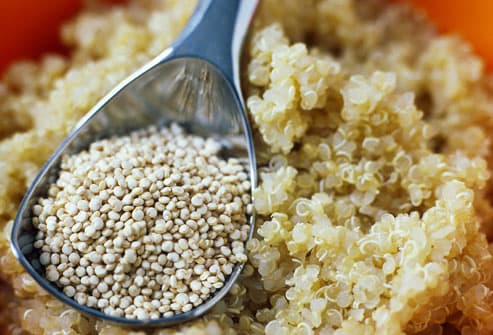
Quinoa (pronounced keen-wa) is a nutritional all-star that belongs in your weight loss plan. This whole grain has 8 grams of hunger-busting protein and 5 grams of fiber in one cup, and you'll also get iron, zinc, selenium, and vitamin E. Quinoa is as easy to cook as rice. For a quick dinner, mix in some vegetables, nuts, or lean protein. 

Cinnamon

Some studies suggest cinnamon may have a stabilizing effect on blood sugar levels. This could curb your appetite, particularly in people with type 2 diabetes, Bonci says. Nearly everyone can benefit from cinnamon in its traditional role. Stir some into your coffee, tea, or yogurt to add sweetness without adding calories.


Hot Peppers

Hot peppers have a flavorless chemical called capsaicin. It's more plentiful in habaneros, but jalapeƱos also have it. Capsaicin seems to curb appetite and speed up metabolism slightly, but only for a short time. It probably doesn't have a big impact on weight, unless you eat less food because it's spicy. 

Green Tea

Several studies suggest green tea may promote weight loss by stimulating the body to burn abdominal fat. Green tea contains catechins, a type of phytochemical that may briefly affect the metabolism. To get the most benefit, you may need to drink green tea several times a day. Bonci recommends taking your tea hot, because it takes longer to drink, providing a soothing, mindful experience.

Grapefruit

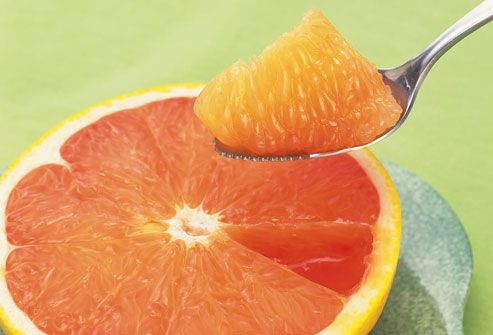
Grapefruit doesn't have any magical fat-burning properties, but it can help you feel full with fewer calories. That's because its soluble fiber takes longer to digest. Having half a grapefruit or a glass of grapefruit juice before a meal fills you up, so you eat fewer calories during the meal.


Watermelon

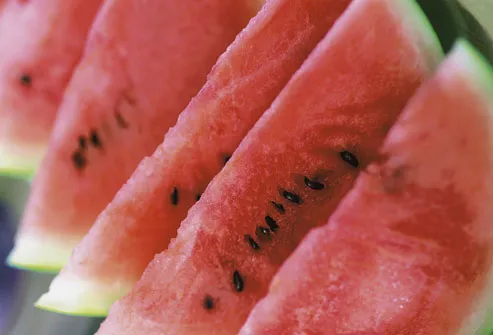
Foods that are rich in water take up more room in your gut. This signals the body that you've had enough to eat and leaves less room for other foods. Many raw fruits and vegetables are full of water and nutrients, and low in calories. Watermelon is a great example. It's a good source of the antioxidant lycopene and gives you some vitamin A and C, too.

Pears and Apples

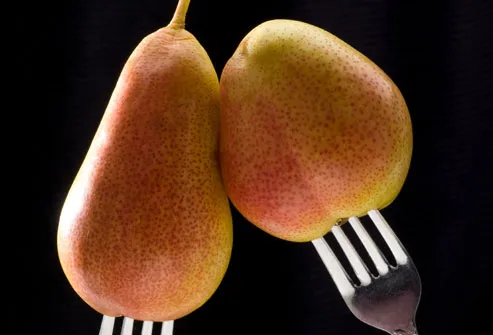
Pears and apples are also high in water content. Eat them with the peels for extra fiber, which will keep you full longer. Go for whole fruits rather than fruit juice. You'll get more fiber, and you have to chew the fruits. This takes longer and you'll burn a few calories chewing, as opposed to gulping down a smoothie.

Grapes vs. Raisins

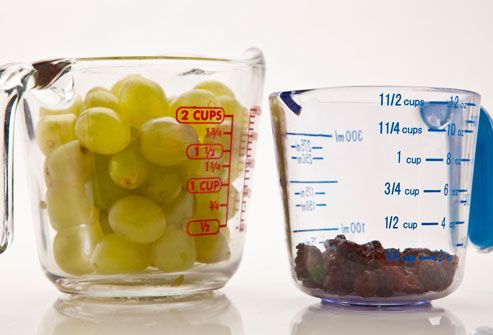
Compare two cups of grapes to 1/4 cup of raisins. Either choice has a little more than 100 calories, but you'll probably be more satisfied with the grapes. Dried fruit has its place. When used sparingly, a few raisins or dried cranberries can liven up a salad.


Berries

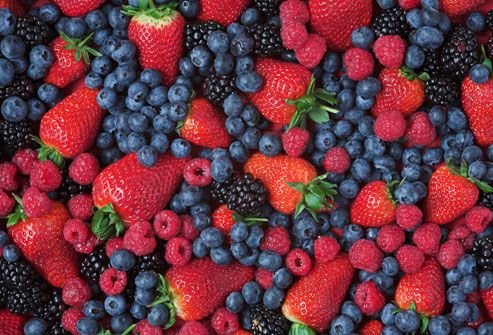
Like other fruits, berries are high in water and fiber, which can keep you full longer. They're also very sweet, satisfying your sweet tooth for a fraction of the calories you would get from cookies or brownies. Blueberries are a good example because most stores carry them and they're loaded with antioxidants.

Raw Vegetables

Raw vegetables make an outstanding snack. They satisfy the desire to crunch, they're full of water to help you feel full, and they're low in calories. Half a cup of diced celery has just eight calories. Coat celery with a little peanut butter or dunking carrots in salsa. When you're in the mood for chips and dip, replace the chips with raw veggies.

Sweet Potatoes

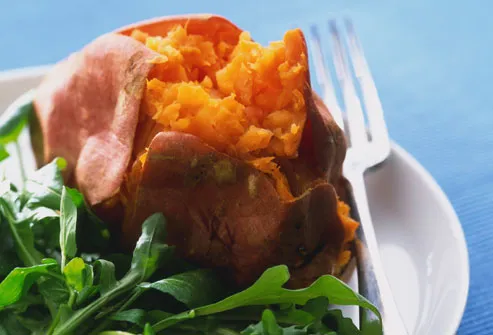
Think of the typical toppings on your baked potato -- butter, sour cream, maybe cheese and bacon bits. If you substitute a sweet potato, you might not need any of that. Baked sweet potatoes are so full of flavor, they don't need a lot. This can save you loads of calories. As a bonus, sweet potatoes are packed with potassium, beta carotene, vitamin C, and fiber.


Eggs

One egg has only 75 calories and 7 grams of protein, along with other vital nutrients. Remember, your body will burn more calories digesting eggs than a carb-heavy breakfast. If you have high cholesterol, one egg is almost all the cholesterol you should have in a day. Choose egg whites, which are cholesterol free.

Coffee

It sounds too good to be true -- one of your favorite beverages may actually help rev the metabolism and help you lose weight. Coffee does stimulate the metabolismm, but only a little. Don't count on this for weight loss, especially if you add calories with toppings.

Oatmeal

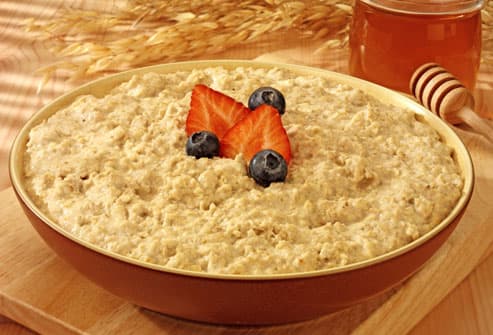
Oatmeal has three things going for it: fiber-rich whole-grain oats, lots of water, and it's hot. It's a very filling combination. Hot food takes longer to eat, and all that liquid and fiber will help you feel full longer. Avoid super-sugary oatmeal. Stirring in cinnamon or nutmeg will give you a sweet taste with less sugar.


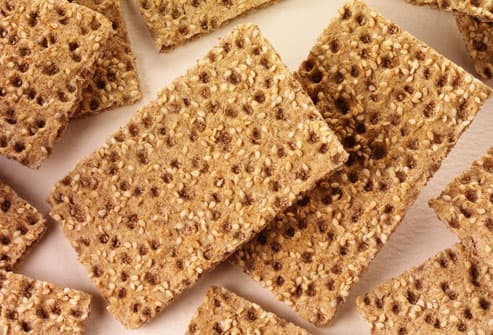
Crispbreads

Whole-grain rye crackers, sometimes called crispbreads, offer a low-fat, fiber-packed alternative to traditional crackers. Research suggests people who replace refined grains with whole grains tend to have less belly fat. Whole grains also provide a richer assortment of plant nutrients. This doesn't just apply to crackers. You can get the same benefits by switching to whole-grain breads, cereals, and pastas.

Tabouli

A standout whole grain is bulgur wheat, the type found in tabouli. It's high in fiber and protein, but low in fat and calories. That helps you fill up with a minimum of calories. It also tastes great. To turn this dish into a meal, you could add beans and stir in extra tomato, cucumber, and parsley.

Soup

Soup -- we're talking broth-based, not creamy -- has a lot going for it. It's full of water, which fills you up with the fewest possible calories. It's hot, which prevents you from eating too much. Have it before a meal, and soup can take up space that might have gone to higher calorie foods. You can also make a satisfying, low-calorie meal out of soup alone by adding chicken, fish, cut-up vegetables, or beans.

Salad

Another way to fill up before a meal is by eating salad. Lettuce has plenty of water content to take up space in the stomach. That leaves less room for fattier foods that might come later in the meal. Make your salad interesting by adding a variety of fruits and vegetables or grated cheese. Be careful about dressing, which can add a lot of calories. 

Vinegar

Dress your salad with oil and vinegar. It's easy to make and it's full of flavor that can make salad more satisfying -- and it has no calories.

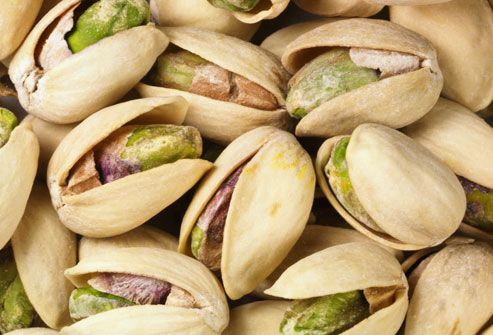
Nuts

Nuts are an excellent way to curb hunger between meals. They're high in protein, fiber, and heart-healthy fats. Studies suggest nuts can promote weight loss and improve cholesterol levels when eaten in moderation. They're also rich in calories, so limit your portions. If you have to get them out of their shell, you'll slow down and not eat as much.
 

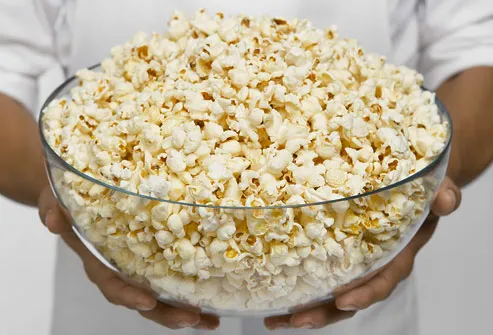
Air-Popped Popcorn

Three cups of plain, air-popped popcorn may seem like a lot, but you're not getting a lot of calories. All that air adds volume without adding fat or sugar. 

Skim Milk

Skim milk provides plenty of protein, calcium, and vitamin D with none of the fat found in whole milk. And even though it's fat-free, skim milk can help you feel full. It takes longer to leave the stomach than drinks with less protein.

Lean Meat

You know that protein can keep you full longer and burn more calories during digestion. Choose your protein carefully. Dark meat tends to be high in fat, which could cancel out some of the benefits. Skinless chicken breast is a great choice. And some cuts of beef can make the grade. Flank steak, eye of round, and top sirloin are extra-lean with less than 4 grams of saturated fat per serving. Stick with a 3- to 4-ounce portion.


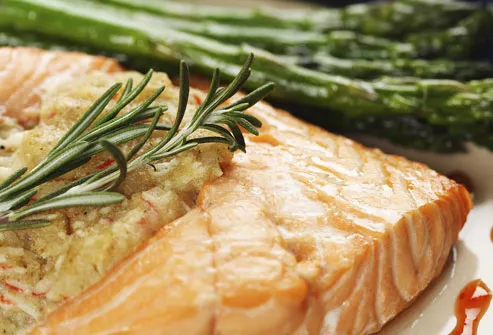
Fish

One of the best sources of protein is fish. Most fish is low in fat, and the exceptions usually have a good form of fat -- omega-3 fatty acids. Omega-3's, which are found in salmon, herring, and other fatty fish, may help protect against heart disease and other chronic conditions.

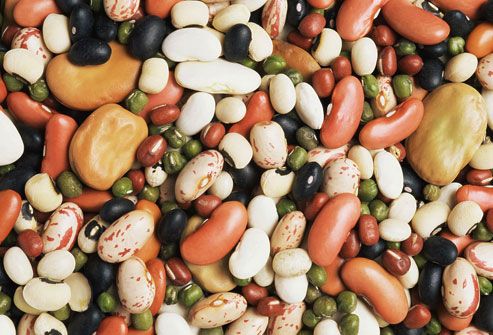
Beans

Beans are a vegetable, a protein, and a great source of fiber. You feel full for very few calories. TOpen a can of garbanzo beans (chickpeas) and toss them into soup or salad or mash them up to use as a dip. One cup packs 12 grams of fiber, just 4 grams of fat, and 15 grams of protein.
Reviewed by Michael W. Smith, MD on February 13, 2014

IMAGES PROVIDED BY:
1)         FoodCollection
2)         Joy Skipper/Fresh Food Images
3)         Fotosearch
4)         Robert J Bennett/Age Fotostock
5)         Junko Mugita/AFLO
6)         Fotosearch
7)         Image100
8)         Hallmark Institute/Index Stock Imagery
9)         Steve Pomberg/WebMD
10)       IStockfoto
11)       Radius Images
12)       Dorling Kindersley
13)       Nicolas Lemonnier/StockFood Creative
14)       Jupiterimages/Photos.com
15)       Foodfolio
16)       Foodfolio
17)       Dorling Kindersley
18)       Hall/SoFood Collection
19)       Imagebroker
20)       Adam Adam/Photocuisine
21)       Laszlo Selly/FoodPix
22)       Clover/Amanaimages
23)       Burke/Triolo Productions/Brand X
24)       Stockbrokerextra Images
25)       Stockbrokerextra Images
26)       Photolibrary


REFERENCES:
American Diabetes Association web site.
American Dietetic Association web site.
Brown, J. Diabetes Care, 2004.
Center for Science in the Public Interest web site.
David Heber, MD, PhD, professor of medicine and public health; chief and founding director, Center for Human Nutrition, Division of Clinical Nutrition, UCLA; author of What Color Is Your Diet?
Diane L. McKay, PhD,  Human Nutrition Research Center, Tufts University; assistant professor, Friedman School of Nutrition Science and Policy, Tufts University.
Faghih, S. Nutrition, Metabolism, and Cardiovascular Diseases, March 2010.
Flood, J.E. Appetite, November 2007.
Hoffman, J. Journal of the International Society of Sports Nutrition, May 2006.
Journal of Agricultural and Food Chemistry, July 8, 2009.
Journal of the American College of Nutrition, September 2010; February 2010.
Judith Rodriguez, PhD, RD, past president, American Dietetic Association; nutrition professor, University of North Florida.
Leslie Bonci, MPH, RD, director of sports nutrition, University of Pittsburgh Medical Center.
McKeown, N. American Journal of Clinical Nutrition, November 2010.
Norris, S. American Journal of Medicine, 2004.
Rolls, Barbara. The Volumetrics Eating Plan. HarperCollins Publishers, 2005.
Shahar, D. American Journal of Clinical Nutrition, November 2010.
Slavin, J.L. Journal of the American Dietetic Association, 2008.
The Journal of Nutrition, July 2011.
USDA Nutrient Data Laboratory.
Vander Wal, J.S. Journal of the American College of Nutrition, August 2005.
Weight-control Information Network web stie.
Whole Grain Council web site.
Yeh, Y. Diabetes Care, April 1, 2003.


This tool does not provide medical advice. See additional information:Disclaimer
© 2014 WebMD, LLC. All rights reserved.

Wednesday, January 01, 2014

The Science of Willpower: 15 Tips for Making Your New Year’s Resolutions Last from Dr. Kelly McGonigal

http://www.amazon.com/gp/product/1583334386/ref=as_li_ss_tl?ie=UTF8&camp=1789&creative=390957&creativeASIN=1583334386&linkCode=as2&tag=integraloptio-20 

Via Open Culture, here is a little assistance from Dr. Kelly McGonigal on how to use your willpower to make your New Year's revolutions into a way of life. McGonigal is the author of The Willpower Instinct: How Self-Control Works, Why It Matters, and What You Can Do to Get More of It, so she knows a little about how to maintain changes in our lives.

As a side note, a lot of what she says in the 15 bullet points below is good advice for anyone seeking a little more physical and psychological resilience.

The Science of Willpower: 15 Tips for Making Your New Year’s Resolutions Last from Dr. Kelly McGonigal

January 1st, 2014


At the stroke of midnight, millions of New Year’s resolutions went into effect, with the most common ones being lose weight, get fit, quit drinking and smoking, save money, and learn something new. Unfortunately, 33% of these resolutions will be abandoned by January’s end. And upwards of 80% will eventually fall by the wayside. Making resolutions stick is tricky business. But it’s possible, and Stanford psychologist Kelly McGonigal has a few scientifically-proven suggestions for you.

For years, McGonigal has taught a very popular course called The Science of Willpower in Stanford’s Continuing Studies program, where she introduces students to the idea that willpower is not an innate trait. Rather it’s a “complex mind-body response that can be compromised by stress, sleep deprivation and nutrition and that can be strengthened through certain practices.” For those of you who don’t live in the San Francisco Bay Area, you can also find McGonigal’s ideas presented in a recent book, The Willpower Instinct: How Self-Control Works, Why It Matters, and What You Can Do to Get More of It, which just came out in paperback yesterday. Below, we have highlighted 15 of Dr. McGonigal’s strategies for increasing your willpower reserves and making your New Year’s resolution endure.
  1. Will power is like a muscle. The more you work on developing it, the more you can incorporate it into your life. It helps, McGonigal says in this podcast, to start with small feats of willpower before trying to tackle more difficult feats. Ideally, find the smallest change that’s consistent with your larger goal, and start there.
  2. Choose a goal or resolution that you really want, not a goal that someone else desires for you, or a goal that you think you should want. Choose a positive goal that truly comes from within and that contributes to something important in life.
  3. Willpower is contagious. Find a willpower role model — someone who has accomplished what you want to do. Also try to surround yourself with family members, friends or groups who can support you. Change is often not made alone.
  4. Know that people have more willpower when they wake up, and then willpower steadily declines throughout the day as people fatigue. So try to accomplish what you need to — for example, exercise — earlier in the day. Then watch out for the evenings, when bad habits can return.
  5. Understand that stress and willpower are incompatible. Any time we’re under stress it’s harder to find our willpower. According to McGonigal, “the fight-or-flight response floods the body with energy to act instinctively and steals it from the areas of the brain needed for wise decision-making. Stress also encourages you to focus on immediate, short-term goals and outcomes, but self-control requires keeping the big picture in mind.” The upshot? “Learning how to better manage your stress is one of the most important things you can do to improve your willpower.” When you get stressed out, go for a walk. Even a five minute walk outside can reduce your stress levels, boost your mood, and help you replenish your willpower reserves.
  6. Sleep deprivation (less than six hours a night) makes it so that the prefrontal cortex loses control over the regions of the brain that create cravings. Science shows that getting just one more hour of sleep each night (eight hours is ideal) helps recovering drug addicts avoid a relapse. So it can certainly help you resist a doughnut or a cigarette.
  7. Also remember that nutrition plays a key role. “Eating a more plant-based, less-processed diet makes energy more available to the brain and can improve every aspect of willpower from overcoming procrastination to sticking to a New Year’s resolution,” McGonigal says.
  8. Don’t think it will be different tomorrow. McGonigal notes that we have a tendency to think that we will have more willpower, energy, time, and motivation tomorrow. The problem is that “if we think we have the opportunity to make a different choice tomorrow, we almost always ‘give in’ to temptation or habit today.”
  9. Acknowledge and understand your cravings rather than denying them. That will take you further in the end. The video above has more on that.
  10. Imagine the things that could get in the way of achieving your goal. Understand the tendencies you have that could lead you to break your resolution. Don’t be overly optimistic and assume the road will be easy.
  11. Know your limits, and plan for them. Says McGonigal, “People who think they have the most self-control are the most likely to fail at their resolutions; they put themselves in tempting situations, don’t get help, give up at setbacks. You need to know how you fail; how you are tempted; how you procrastinate.”
  12. Pay attention to small choices that add up. “One study found that the average person thinks they make 14 food choices a day; they actually make over 200. When you aren’t aware that you’re making a choice, you’ll almost always default to habit/temptation.” It’s important to figure out when you have opportunities to make a choice consistent with your goals.
  13. Be specific but flexible. It’s good to know your goal and how you’ll get there. But, she cautions, “you should leave room to revise these steps if they turn out to be unsustainable or don’t lead to the benefits you expected.”
  14. Give yourself small, healthy rewards along the way. Research shows that the mind responds well to it. (If you’re trying to quite smoking, the reward shouldn’t be a cigarette, by the way.)
  15. Finally, if you experience a setback, don’t be hard on yourself. Although it seems counter-intuitive, studies show that people who experience shame/guilt are much more likely to break their resolutions than ones who cut themselves some slack. In a nutshell, you should “Give up guilt.”
To put all of these tips into a bigger framework, you can get a copy of Kelly McGonigal’s book, The Willpower Instinct: How Self-Control Works, Why It Matters, and What You Can Do to Get More of It. Or you can get The Willpower Instinct, as a free audio book, if you care to try out Audible.com’s free trial program.

If you live in the SF Bay Area, you can take Kelly’s The Science of Willpower course that begins on January 13. (Anyone can enroll, and yes, I know that because I help run the Continuing Studies program at Stanford.)

Finally you might also want to peruse How to Think Like a Psychologist (iTunes Video), a free online course led by Kelly McGonigal. It appears in our collection of 800 Free Courses Online.

Related Content:

Monday, December 31, 2012

Kelly McGonigal, Ph.D. - Five Things You Can Do Instead of New Year’s Resolutions


New Year's resolutions are a great to set ourselves up for failure. We make the promises to ourselves and then when we fail (and most people do not keep their resolutions) we beat ourselves up and feel even worse about ourselves than we did on New Year's Eve.

This collection of ideas for alternatives to the usual resolutions are creative and - to me - a lot more useful and practical in terms of improving our lives.

Five Things You Can Do Instead of New Year’s Resolutions

Fresh alternatives to help you celebrate 2012 and get to your 2013 goals.
Published on December 29, 2012 by Kelly McGonigal, Ph.D. in The Science of Willpower

Tired of the traditional New Year’s resolution to lose weight, get fit, or get out of credit card debt?

Below are five fresh alternatives to help you celebrate yourself in 2012, and get to your goals in 2013.

1. Write yourself a letter from your future self, dated 1/1/2014. Imagine looking back at 2013, from a place of having achieved your most important goal for the year. In your letter, thank your present self for all you did to achieve your goals—and be specific. Or give yourself some compassionate advice from your wiser, 2014 self. Research shows that connecting to your future self in this way can help you make a difficult change and succeed at your goals.

2. List your favorite memories and triumphs of 2012, including the challenges you faced with courage or humor (even if things didn't turn out the way you hoped). Studies show that remembering your strengths increases future perseverance and willpower; and reminiscing about the past increases future happiness.

3. Imagine the highlights of 2013. Make a list of at least 5 things to look forward to in the coming year. Anything from new episodes of a favorite TV show to a big trip you want to plan. Research shows that one of the best predictors of emotional health is the ability to anticipate and savor future pleasures.

4. Make a list of what you are grateful for in your life. Sure, New Year’s is a great time to think about what you’d like to change about your life. But you’ll be much happier if you first think about everything you’re grateful for. In fact, if you make a gratitude list first, you might be surprised how it shapes your wish list for 2013. You’ll have a clearer sense of what matters most to you, and a better vision of what you want the future to look like.

5. Make a 2013 commitment to someone else. Who says a New Year’s resolution has to be about what’s wrong with you, and how you should change? Honor something bigger than yourself with a financial commitment to a cause you care about. Most non-profit organizations will allow you to pledge a monthly donation for a one-year term. A side benefit: research shows that donating money boosts happiness and self-image--the perfect antidote to the self-critical resolution.

Kelly McGonigal, PhD is a psychologist at Stanford University. Her new book is The Willpower Instinct: How Self-Control Works, Why It Matters, and What You Can Do to Get More of It.


Kelly McGonigal, PhD, is a psychologist at Stanford University. Her latest book is The Willpower Instinct: How Self-Control Works, Why It Matters, and What You Can Do to Get More of It. She is also the author of The Neuroscience of Change and Yoga for Pain Relief.

Monday, January 02, 2012

Big Think - 2011: The Year in Ideas

Nice summary of the major ideas from 2011, by Daniel Honan of Big Think.

2011, The Year in Ideas

Ideas2011
What's the Big Idea?

Was 2011 a good year for ideas? In other words, did mankind advance knowledge through scientific discoveries or other breakthroughs in thinking in the past 12 months? This is a question we are obsessed with at Big Think. While the answer may be nearly impossible to quantify, we have compiled a concise survey below of the most significant and relevant ideas that rose to light on Big Think in 2011. Please feel free to offer your suggestions in the comment thread below.

Demography
One of the most alarming milestones this year was the human population hitting 7 billion. The current rate of human population growth, which Harvard biologist E. O. Wilson called "more bacterial than primate," will put us over 9 billion by 2050.

How many people can the Earth sustain? It depends who you ask, but even the most optimistic scientists have stated that we are well past the point where we can sustain our current levels of consumption, especially if everyone on the planet consumed like North Americans. We would need perhaps 4 Earths to support that kind of consumption of resources. For anyone interested in learning more about this challenge, watch this excerpt from Great Big Ideas, a new online course offered by The Floating University, multiple-award-winning mathematical biologist Joel Cohen explains that population interacts with environment, economics, and culture to shape our world. 

So what's the solution? One of the books we are most looking forward to in the New Year is Abundance (due out in February, 2012) by Peter Diamandis and Steven Kotler, which takes the contrarian view that "we will soon be able to meet and exceed the basic needs of every man, woman and child on the planet," the authors write. "Abundance for all is within our grasp." When seen through the lens of technology, "few resources are truly scarce; they're mainly inaccessible. Yet the threat of scarcity still dominates our worldview." Stay tuned to Big Think to learn more about this in the New Year. 

Energy
In 2011, we finally came to grasp the awesome potential of solar power, and to put this potential in its proper context. While solar accounts for less than 1 percent of the world's energy needs, according to Ray Kurzweil, "driven by exponentially-increasing nanotechnology, solar will satisfy the entire world's energy needs in 16 years."

Space
"The First Trillionaires Will Make Their Fortunes in Space" was one of my favorite headlines of 2011, and the idea comes from, once again, space enthusiast and X Prize founder Peter Diamandis. 

Twenty trillion USD is the estimated market value of a relatively small metallic asteroid that was first calculated by John S. Lewis in his book Mining The Sky: Untold Riches from the Asteroids, Comets, and PlanetsLewis argued that "using presently available or readily foreseeable technologies, we can relieve Earth of its energy problem, make astronomical amounts of raw materials available, and raise the living standard of people worldwide." Diamandis notes that everything we hold of value, "the things we fight wars over," such as metals, minerals and real estate, exist "in infinite quantities in space."

While NASA's space shuttle era drew to a close this year, the incentives are there for private companies and private teams like those started by Microsoft co-founder Paul Allen and space entrepreneur Elon Musk.

Sunday, January 01, 2012

Mircea Eliade - Templum-Tempus: New Year's Day in Sacred Time


Today is New Year's Day and a lot of people around the world, from the most primal cultures to the postmodern technological cultures, see this day as a fresh start on a new year.

While we still enact many of the ritual behaviors of the new year, we have lost our sense of what this day means in the mythic history of our consciousness. For example, millions of people still engage in a wild night of drinking and celebrating on New Year's Eve, an activity that was once associated with a last symbolic night of debauchery before the fresh start of a New Year.

In many belief systems, the New Year is equivalent to the rebirth of the world. It is no coincidence that the early Christians chose a day close to the New Year to celebrate the birth of Jesus, the day in which the word of God was made flesh - a new beginning for a symbolic new world, a life of Heaven on Earth.

In his classic book, The Sacred and the Profane, Mircea Eliade examines the world of traditional myths and symbolic practice. In chapter two, Sacred Time and Myths, Elaide looks at the nature of sacred time, including mythology of the New Year.

The templum and tempus of this section are seen as an intersection between space and time: "templum designates the spatial, tempus the temporal aspect of the motion of the horizon in space and time." The templum is embodied by the temple, the sacred space, the image of the world. In many early cultures, the temple was round, symbolizing the circular nature of time.

With each New Year, the cycle of time is begun anew - each New Year's Day is the first day. And with this rebirth, we, too, are reborn anew, cleansed of the previous year.

In the annual peyote ceremony of the Huichol people in Mexico, the group who make the pilgrimage to the part of the desert where the peyote is found spend a night in a circle becoming purified of the previous year's "sins," everyone confesses transgressions, including affairs or crimes, free from retribution. It is believed that they musty be pure to enter the land of the peyote and bring back the sacred plant. The yearly pilgrimage marks their new year, a renewal for the community.

Eliade offers other tales here that repeat this motif. [This text is copied from a PDF, so apologies for any errors I did not catch and correct.]

TEMPLUM-TEMPUS
We shall begin our investigation by presenting certain facts that have the advantage of immediately revealing religious man's behavior in respect to time. First of all, an observation that is not without importance: in a number of North American Indian languages the term world (= Cosmos) is also used in the sense of year. The Yokuts say "the world has passed," meaning "a year has gone by." For the Yuki, the year is expressed by the words for earth or world. Like the Yokuts, they say "the world has passed" when a year has passed. This vocabulary reveals the intimate religious connection between the world and cosmic time. The cosmos is conceived as a living unity that is born, develops, and dies on the last day of the year, to be reborn on New Year's Day. We shall see that this rebirth is a birth, that the cosmos is reborn each year because, at every New Year, time begins ab initio.

The intimate connection between the cosmos and time is religious in nature: the cosmos is homologizable to cosmic time (= the Year) because they are both sacred realities, divine creations. Among some North American peoples this cosmic-temporal connection is revealed even in the structure of sacred buildings. Since the temple presents the image of the world, it can also comprise a symbolism. We find this, for example, among Algonquins and the Sioux. As we saw, their sacred lodge represents the universe; but at the same time it symbolizes the year. For the year is conceived as a journey through the four cardinal directions, signified by the four doors and four windows of the lodge. The Dakotas say: "The Year is a circle around the world" - that is, around their sacred lodge, which is an imago mundi.

A still clearer example is found in India. We saw that the erection of an altar is equivalent to a repetition of the cosmogony. The texts add that "the fire altar is the year" and explain its temporal system as follows: the 360 bricks of the enclosure correspond to the 360 nights of the year, and the 360 yajusmati bricks to the 360 days (Shatapatha Brahmama, X, 5, 4, 10; etc.). This is as much as to say that, with the building of each fire alter, not only is the world remade but the year is built too; in other words, time is regenerated by being created anew. But then, too, the year is assimilated to Prajiipati, the cosmic god; consequently, with each new altar Prajzpati is reanimated-that is, the sanctity of the world is strengthened. It is not a matter of profane time, of mere temporal duration, but of the sanctification of cosmic time. What is sought by the erection of the fire altar is to sanctify the world, hence to place it in a sacred time.

We find a similar temporal symbolism as part of cosmological symbolism of the Temple at Jerusalem. According to Flavius Josephus (Ant. Jud., 111, 7, 7), the twelve loaves of bread on the table signified the 12 months of the year and the candelabrum with seventy branches represented the decans (the zodiacal division of the seven planets into tens). The Temple was an imago mundi; being at the Center of the World, at Jerusalem, it sanctified not only the entire cosmos but also cosmic life-that is, time.

Hermann Usener has the distinction of having been the first to explain the etymological kinship between templum and tempus by interpreting the two terms through the concept of "intersection," (Schneidmg, Kreuzung). Later studies have refined the discovery; "templum designates the spatial, tempus the temporal aspect of the motion of the horizon in space and time."

The underlying meaning of all these facts seems to be the following: for religious man of the archaic cultures, the world is renewed annually; in other words, with each year it recovers its original sanctity, the sanctity that it possessed when it came from the Creator's hands. This symbolism is clearly indicated in the architectonic structure of sanctuaries. Since the temple is at once the place par excellence and the image of the world, it sanctifies the entire cosmos and also sanctifies cosmic life. This cosmic life was imagined in the form of a circular course; it was identified with the year. The year was a closed circle; it had a beginning and an end, but it also had the peculiarity that it could be reborn in the form of a new year. With each New Year, a time that was "new," "pure," "holy" -- because not yet worn -- came into existence.

But time was reborn, began again, because with each New Year the world was created anew. In the preceding chapter we noted the considerable importance of the cosmogonic myth as paradigmatic model for every kind of creation and construction. We will now add that the cosmogony equally implies the creation of time. Nor is this all. For just as the cosmogony is the archetype of all creation, cosmic time, which the cosmogony brings forth, is the paradigmatic model for all other times that is, for the times specifically belonging to the various categories of existing things. To explain this further: for religious man of the archaic cultures, every creation, every existence begins in time; before a thing exists, its particular time could not exist. Before the cosmos came into existence, there was no cosmic time. Before a particular vegetable species was created, the time that now causes it to grow, bear fruit, and die did not exist. It is for this reason that every creation is imagined as having taken place at the beginning of time, in principio. Time gushes forth with the first appearance of a new category of existents. This is why myth lays such an important role; as we shall show later, the way in which a reality came into existence is revealed by its myth.

ANNUAL REPETITION OF THE CREATION
It is the cosmogonic myth that tells how the cosmos came into existence. At Babylon during the course of the akitu ceremony, which was performed during the last days of the year that was ending and the first days of the New Year, the Poem of Creation, the Enuma elish, was solemnly recited. This ritual recitation reactualized the combat between Marduk and the marine monster Tiamat, a combat that took place ab origine and put an end to chaos by the final victroy of the god. Marduk created the cosmos from Tiamat's dismembered body and created man from the blood of the demon Kingu, Tiamat's chief ally. That this commemoration of the Creation was in fact a reactualization of the cosmogonic act is shown both by the rituals and in the formulas recited during the ceremony.

The combat between Tiamat and Marduk, that is, was mimed by a battle between two groups of actors, a ceremonial that we find again among the Hittites (again in the frame of the dramatic scenario of the New Year), among the Egyptians, and at Ras Shamra. The battle between two groups of actors repeated the passage from chaos to cosmos, actualized the cosmogony. The mythical event became present once again. "May he continue to conquer Tiamat and shorten his days!" the priest cried. The combat, the victory, and the Creation took place at that instant, hic et nunc.

Since the New Year is a reactualization of the cosmogony, it implies starting time over again at its beginning, that is, restoration of the primordial time, the "pure" time, that existed at the moment of Creation. This is why the New Year is the occasion for "purifications," for the expulsion of sins, of demons, or merely of a scapegoat. For it is not a matter merely of a certain temporal interval coming to its end and the beginning of another (as a modem man, for example, thinks) ; it is also a matter of abolishing the past year and past time. Indeed, this is the meaning of ritual purifications; there is more than a mere "purification"; the sins and faults of the individual and of the community as a whole are annulled, consumed as by fire.

The Nawroz -- the Persian New Year -- commemorates the day that witnessed the creation of the world and man. It was on the day of Nawroz that the "renewal of the Creation" was accomplished, as the Arabic historian a1-Biriini expressed it. The king proclaimed: "Here is a new day of a new month of a new year; what time has worn must be renewed." Time had worn the human being, society, the cosmos-and this destructive time was profane time, duration strictly speaking; it had to be abolished in order to reintegrate the mythical moment in which the world had come into existence, bathed in a it pure," "strong," and sacred time. The abolition of profane past time was accomplished by rituals that signified a sort of "end of the world." The extinction of fires, the return of the souls of the dead, social confusion of the type exemplified by the Saturnalia, erotic license, orgies, and so on, symbolized the retrogression of the cosmos into chaos. On the last day of the year the universe was dissolved in the primordial waters. The marine monster Tiamet -- symbol of darkness, of the formless, the nonmanifested -- revived and once again threatened. The world that had existed for a whole year really disappeared. Since Tiamat was again present, the cosmos was and Marduk was obliged to create it once again, after having once again conquered Tiamet.

The meaning of this periodical retrogression of the world into a chaotic modality was this: all the "sins" of the year, everything that time had soiled and worn, was annihilated in the physical sense of the word. By symbolically participating in the annihilation and re-creation of the world, man too was created anew; he was reborn, for he began a new life. With each New Year, man felt freer and purer, for he was delivered from the burden of his sins and failings. He had reintegrated the fabulous time of Creation, hence a sacred and strong time -- sacred because transfigured by the presence of the gods, strong because it was the time that belonged, and belonged only, to the most gigantic creation ever accomplished, that of the universe. Symbolically, man became contemporary with the cosmogony, he was present at the creation of the world. In the ancient Near East, he even participated actively in its creation (cf. the two opposed groups, representing the god and the marine monster).

It is easy to understand why the memory of that marvelous time haunted religious man, why he periodically sought to return to it. In illo tempore the gods had displayed their greatest powers. The cosmogony is the supreme divine manifestation, the paradigmatic act of strength, superabundance, and creativity. Religious man thirsts for the real. By every means at his disposal, he seeks to reside at the very source of primordial reality, when the world was in statu nascendi.
Mircea Eliade, The Sacred and the Profane, p. 73-80.

D'Ann White - Have You Made Your New Year's Resolution Yet?


It's New Year's Day - a lot of people make some form of promise to themselves - and others - to change some behavior or habit that they feel unhappy with. And within a few weeks, a lot of those people will have ditched their resolution, within six months, half will have given up, and by the end of the year, only 10% will have kept their resolutions.

D'Ann White takes a look at New Year's resolutions in this article.

Have You Made Your New Year's Resolution Yet?

Bloomingdale-Riverview area residents prepare to lose weight, exercise more, stop smoking, save money and eat healthier as the New Year rolls around. Here are some places to help you meet your 2012 goals.
It happens every Jan. 1.

People make resolutions to improve themselves. Some stick to them; most don't.

According to Psychology Today, the majority of Americans will make some kind of resolution for the New Year. However, research has shown that, after six months, fewer than half the people making resolutions stick to them. After a year, the number declines to 10 percent.

According to USA.gov, the U.S. government's official web portal, the following are the top 10 resolutions Americans will make this year:
  1. Drink less alcohol
  2. Eat healthy food
  3. Get a better education
  4. Get a better job
  5. Get fit
  6. Lose weight
  7. Manage stress
  8. Quit smoking
  9. Reduce, reuse and recycle
  10. Save money
It's Brandon resident Jean Batronie's job to help people achieve several of those resolutions.

Owner of Brandon Hypnosis & Counseling, behavior counselor and hypnotist Batronie has been helping people achieve their goals for more than 40 years.

"I see a lot more clients come in during the beginning of the year because they've made resolutions to improve themselves," said Batronie. "People are all gung-ho at the beginning of the year, and it's my job to keep them motivated so they achieve their goals."

By far, the biggest problems Batronie sees are anxiety-related.

"Because of economic pressures right now, stress and anxiety are rampant. People are running scared right now and getting very stressed. This can exacerbate other problems. If you're a smoker, you'll smoke more if you're stressed. If you have a weight problem, you'll eat more when stressed," said Batronie. "People with economic concerns can also lose their positive attitudes and self esteem, which can lead to other problems."

Batronie said he not only works with clients on their core problems but also works to improve their attitudes so they have a better chance of a successful outcome.
Read the whole article - but the rest is focused a bit in local support for resolutions.

Here is the beginning of the Psychology Today article mentioned at the top.
Why can't you stick with your New Year's resolutions?
Ah, a new year, a new chance to start fresh, another opportunity to make to New Year's resolutions, and, sadly, another year of likely failed New Year's resolutions. We want those resolutions to last, we really do, but we just can't make them stick. Well, we're not alone. Research has shown that, after six months, fewer than half the people who make New Year's resolutions have stuck with them, and, after a year, that number declines to around ten percent. Gosh, with those kinds of statistics, what's the point of even thinking about New Year's resolutions?

On the hopeful side, other research has reported that some simple strategies can help us stick with our New Year's resolutions, for example, setting specific goals, sharing our resolutions with others, and focusing on the benefits of achieving the resolution. But, even with these helpful hints, far more people fall off the New Year's resolution wagon than stay on.

I think the problem is that many of us don't understand what New Year's resolutions are about, namely, change, usually significant life change, for example, losing weight, getting out of debt, or quitting smoking.

Related Articles


We want to change and there's a $2.5 billion self-help industry out there to help. Why change? Because without change, we are assured of staying just the way we are and doing things just the way we always have (which, if we're making New Year's resolutions, is not the way we want to be). Yet anyone who has ever tried to change their thinking, emotions, or behavior knows how difficult it is.

The question that must be asked is: Why do we have such a hard time making significant changes in our lives?
Read the whole article.