Thursday, December 06, 2012

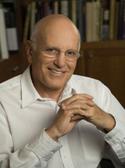
Dr. Dan Siegel: Time-In: Reflection, Relationships, and Resilience at the Heart of Internal Education


Dr. Daniel Siegel presents "Time-In: Reflection, Relationships, and Resilience at the Heart of Internal Education," at the Garrison Institute's symposium The Art and Science of Contemplative Teaching and Learning, November, 2012.


dsiegel tDaniel J. Siegel, M.D. received his medical degree from Harvard University and completed his postgraduate medical education at UCLA with training in pediatrics and child, adolescent and adult psychiatry.  He served as a National Institute of Mental Health Research Fellow at UCLA, studying family interactions with an emphasis on how attachment experiences influence emotions, behavior, autobiographical memory and narrative.

Dr. Siegel is currently clinical professor of psychiatry at the UCLA School of Medicine where he is on the faculty of the Center for Culture, Brain, and Development and the Co-Director of the Mindful Awareness Research Center. An award-winning educator, he is a Distinguished Fellow of the American Psychiatric Association and recipient of several honorary fellowships. Dr. Siegel is also the Executive Director of the Mindsight Institute, an educational organization that focus on how the development of mindsight in individuals, families and communities can be enhanced by examining the interface of human relationships and basic biological processes. He serves as the Medical Director of the LifeSpan Learning Institute and on the Advisory Board of the Blue School in New York City, which has built its curriculum around Dr. Siegel’s Mindsight approach.
Siegel, D. J., Siegel, M. W., & P., S. C. (2012). Internal Education and the Roots of Resilience: Relationships and Reflection as the New R’s of Education. 1-36. 

Wednesday, December 05, 2012

David Richo - The Power of Coincidence on the Spiritual Path


Based on his book, The Power of Coincidence: How Life Shows Us What We Need to Know, David Richo offered this four-part lecture on the power of coincidence on the spiritual path, based in Jung's concept of synchronicity (meaningful coincidence).


The Power of Coincidence on the Spiritual Path
A series of unusual events or a combination of similar happenings may not be mere coincidence. Synchronicity is the meaningful coincidence or connection of events that can set the course of our life. They can guide us, warn us, and confirm us on our life's path. Drawing on Jung's concept of synchronicity-and combining insights from psychology and Buddhism, we explore how synchronicity, i.e., meaningful coincidences operate in our daily lives, in our intimate relationships, and in our creative endeavors.

We can discover a felt sense of what may be incubating in the depths of ourselves, the same depths as in the universe. This practice reveals the crucial significance of timing and how to honor it. We thereby activate timeless inner oracular wisdom that speaks to our condition. Then awkward jolts can become graceful transitions, stops can become steps. We face our destiny rather than fall into fate.

Based on Dave's book The Power of Coincidence.

Here is some information on Richo and the four podcast episodes.
David Richo

David Richo, Ph.D., M.F.T., is a psychotherapist, teacher, workshop leader, and writer who works in Santa Barbara and San Francisco California. He combines Jungian, transpersonal, and mythic perspectives in his work.

Here are examples of where I present classes/workshops:

In the bay area, I usually teach daylong classes at:
Spirit Rock Retreat Center in Marin:http://www.spiritrock.org
UC Berkeley Extension in San Francisco: 510-642-4111
San Damiano Retreat Center in Danville: www.sandamiano.org
At Esalen in Big Sur: esalen.org

In Santa Barbara I teach classes at:
City College Adult Education: http://sbcc.augusoft.net
One ongoing class in spring and summer is: Reading and Writing Poetry for Personal Growth, Fridays 10-12. All these classes are free.


David Richo's Website

2012-12-01

The Power of Coincidence on the Spiritual Path, Part 1 of 4, 59:29

Listen | Download | Order

Spirit Rock Meditation Center


* * * * *

2012-12-01

The Power of Coincidence on the Spiritual Path, Part 2 of 4, 54:38

Listen | Download | Order


* * * * *

2012-12-01

The Power of Coincidence on the Spiritual Path, Part 3 of 4, 45:29

Listen | Download | Order


* * * * *

2012-12-01

The Power of Coincidence on the Spiritual Path, Part 4 of 4, 34:58

Listen | Download | Order

Childhood Trauma Leaves Mark On DNA of Some Victims

This is an important piece of research. We now know that early childhood trauma causes epigenetic changes in the DNA of some of these children (likely the ones who are least resilient or healthy). In those with the genetic variant that allows this to occur, "trauma causes long-term changes in DNA methylation leading to a lasting dysregulation of the stress hormone system. As a result, those affected find themselves less able to cope with stressful situations throughout their lives, frequently leading to depression, post-traumatic stress disorder or anxiety disorders in adulthood." 

Understanding that this is a hard-wired issue allows survivors of trauma to feel less like victims of their anxiety or depression, as well as allowing them to understand that there is nothing inherently wrong with them - what can be wired can be rewired.

Full Citation:
Torsten Klengel, Divya Mehta, Christoph Anacker, Monika Rex-Haffner, Jens C Pruessner, Carmine M Pariante, Thaddeus W W Pace, Kristina B Mercer, Helen S Mayberg, Bekh Bradley, Charles B Nemeroff, Florian Holsboer, Christine M Heim, Kerry J Ressler, Theo Rein, Elisabeth B Binder. Allele-specific FKBP5 DNA demethylation mediates gene–childhood trauma interactions. Nature Neuroscience, 2012; DOI: 10.1038/nn.3275

Childhood Trauma Leaves Mark On DNA of Some Victims: Gene-Environment Interaction Causes Lifelong Dysregulation of Stress Hormones

ScienceDaily (Dec. 2, 2012) — Abused children are at high risk of anxiety and mood disorders, as traumatic experience induces lasting changes to their gene regulation. Scientists from the Max Planck Institute of Psychiatry in Munich have now documented for the first time that genetic variants of the FKBP5 gene can influence epigenetic alterations in this gene induced by early trauma.

In individuals with a genetic predisposition, trauma causes long-term changes in DNA methylation leading to a lasting dysregulation of the stress hormone system. As a result, those affected find themselves less able to cope with stressful situations throughout their lives, frequently leading to depression, post-traumatic stress disorder or anxiety disorders in adulthood. Doctors and scientists hope these discoveries will yield new treatment strategies tailored to individual patients, as well as increased public awareness of the importance of protecting children from trauma and its consequences.

Many human illnesses arise from the interaction of individual genes and environmental influences. Traumatic events, especially in childhood, constitute high risk factors for the emergence of psychiatric illnesses in later life. However, whether early stress actually leads to a psychiatric disorder depends largely on his or her genetic predisposition.

Research Group Leader Elisabeth Binder of the Max Planck Institute of Psychiatry examined the DNA of almost 2000 Afro-Americans who had been repeatedly and severely traumatised as adults or in childhood. One-third of trauma victims had become ill and was now suffering from post-traumatic stress disorder. The risk of developing post-traumatic stress disorder rose with increasing severity of abuse only in the carriers of a specific genetic variant in the FKBP5 gene. FKPB5 determines how effectively the organism can react to stress, and by this regulates the entire stress hormone system. The scientists hoped to cast light on the mechanisms of this gene-environment interaction by comparing modifications of the DNA sequence of victims who had not become ill with that of those who had.

The Munich-based Max Planck scientists were then able to demonstrate that the genetic FKBP5 variant does make a physiological difference to those affected, also in nerve cells. Extreme stress and the associated high concentrations of stress hormones bring about what is called an epigenetic change. A methyl group is broken off the DNA at this point, causing a marked increase in FKBP5 activity. This lasting epigenetic change is generated primarily through childhood traumatisation. Consequently, no disease-related demethylation of the FKBP5 gene was detected in participants who were traumatised in adulthood only.

Torsten Klengel, a scientist at the Max Planck Institute of Psychiatry, explains the findings of the study as follows: "Depending on genetic predisposition, childhood trauma can leave permanent epigenetic marks on the DNA, further de-repressing FKBP5 transcription. The consequence is a permanent dysregulation of the victim's stress hormone system, which can ultimately lead to psychiatric illness. Decisive for victims of childhood abuse, however, is that the stress-induced epigenetic changes can only occur if their DNA has a specific sequence."

This recent study improves our understanding of psychiatric illnesses which arise from the interaction of environmental and genetic factors. The results will help tailor treatment particularly for patients who were exposed to trauma in early childhood, thereby greatly increasing their risk of illness.


Bookforum Omnivore - Set Your Morals Aside

This collection of cool links from Bookforum's Omnivore blog was posted a couple of weeks ago, but the topics of ethics and morality are timeless. Enjoy!


Tuesday, December 04, 2012

Alva Noë - We Are the Singularity

From NPR's 13.7 Cosmos and Culture blog, philosopher Alva Noë argues that the singularity everyone in the transhumanism community is waiting for has already arrived.

 The human machine in action.
Will machines one day take over the world?

Yes. In fact, they already have.

I don't mean auto-trading computers on Wall Street, unmanned weapons systems, Deep Blue and the World Wide Web.

I mean us. We are machines.

From the dawn of our history we have amplified ourselves with tools. We have cultivated skills that take our basic body schema and extend it out into the world with sticks and rakes and then arrows and guns and rails and phones. Where do you find yourself? Spread out all over the universe. And it has always been so, really.

We don't just change our body-power — what we can do, how we can move, where we can go, how fast, how far, how strong. No, we change our mind-power. Or rather, we ourselves are the result of processes of artificial reorganization of cognition and consciousness.

Artificial intelligence? That's us. Naturally artificial. We think with tokens, symbols, artifacts. Words, spoken and written, are our medium, and together with pictures, moving and still, and other kinds of images, they structure our minds. Look inward, reach deep inside and you find a universe within that is made out of the currency of our shared, social lives together.

Ask again: where do you find yourself? Spread out all over the universe.

Futurists and physicists (on this blog!) see the singularity coming — a future in which intelligent machines take over. But the singularity has already happened. We are the singularity.


You can keep up with more of what Alva Noë is thinking on Facebook and on Twitter: @alvanoe

SciAm Mind - Why Is it Impossible to Stop Thinking, to Render the Mind a Complete Blank?

Anyone who has spent any time trying to meditate knows about the endless babble of the human mind, what has been termed monkey mind in Buddhist circles. It seems impossible to turn off the endless monologue, but it's not - it can be done. In this brief article from Scientific American Mind, Professor of Neurology, Barry Gordon.  

Why Is it Impossible to Stop Thinking, to Render the Mind a Complete Blank?


Image: JAMIE CARROLL iStockphoto

Why is it impossible to stop thinking, to render the mind a complete blank?
—John Hendrickson, via email

Barry Gordon, professor of neurology and cognitive science at the Johns Hopkins University School of Medicine, replies:

Forgive your mind this minor annoyance because it has worked to save your life—or more accurately, the lives of your ancestors. Most likely you have not needed to worry whether the rustling in the underbrush is a rabbit or a leopard, or had to identify the best escape route on a walk by the lake, or to wonder whether the funny pattern in the grass is a snake or dead branch. Yet these were life-or-death decisions to our ancestors. Optimal moment-to-moment readiness requires a brain that is working constantly, an effort that takes a great deal of energy. (To put this in context, the modern human brain is only 2 percent of our body weight, but it uses 20 percent of our resting energy.) Such an energy-hungry brain, one that is constantly seeking clues, connections and mechanisms, is only possible with a mammalian metabolism tuned to a constant high rate.

Constant thinking is what propelled us from being a favorite food on the savanna—and a species that nearly went extinct—to becoming the most accomplished life-form on this planet.

Read the whole response.

RSA Animate - The Power of Outrospection


The RSA has released a new RSA Animate on the power of outrospection. Below the video is a summary of the full talk and a download link to listen to the original podcast. The animation is based on Roman Krnaric's book, The Wonderbox: Curious Histories of How to Live.

Introspection is out, and outrospection is in. Philosopher and author Roman Krznaric explains how we can help drive social change by stepping outside ourselves. Taken from a lecture given by Roman Krznaric as part of the RSA's free public events programme.

Download RSA Animate - The Six Habits of Highly Empathic People 


The Six Habits of Highly Empathic People

February 16, 2012 by
 
At lunchtime I chaired an event with Roman Krznaric that will soon be available to download from our website. In light of the event’s intriguing title, and my current oppressive workload, I wanted just to list the six habits(from scribbles of shifting slides, so not verbatim), and add a little thoughtlet on each of them.

1) Develop curiosity about strangers
Who are all these people? Roman mentioned that people inclined towards empathy typically look for things that bring people together, rather than those that separate them. The next time you see a stranger who looks like a radically different creature, consider the abundance of things you must have in common, by virtue of being human, but also allow yourself to be pleasantly surprised by the differences.

2) Move beyond limiting assumptions
As my mother in law once told me: When we assume, we make an ‘ass’ out of ‘u’ and ‘me’.

3) Play ‘extreme sports’ i.e. take time to experience the lives of others.
As my mother in law once told me: When we assume, we make an ‘ass’ out of ‘u’ and ‘me’.
 
Roman gave examples of people who had taken extreme measures to learn what it might feel like to be others. Once recent example, close to my heart, is what it feels like to be diabetic.

Another, not mentioned by Roman, was the eighties film ‘Soul Man‘ in which a white student takes tanning pills in order to become eligible for a scholarship reserved for Black students to get into Harvard Law School. There is a great scene near the end, when the whole charade has blown up in which the (Black) professor says: “You have learnt something I could never teach you. You have learnt what it is like to be Black.” To which the chastened student says: “No sir, I don’t really know what it’s like. If I didn’t like it, I could always get out.” To which the professor says: “You have learnt a great deal more than I thought.” I watched that scene over and over when I was about 12 and it made a big impression on me.

4) Cultivate the art of conversation
It’s not completely straightforward to talk to people you don’t know, but I agree that there is an ‘art’ to it…a way of creating a shared adventure without being too intrusive. As with most forms of expertise, practice is no doubt important- the more we do it, the easier it becomes.

5) Inspire Mass Action and Social Change
Roman seemed to be saying that empathy is no mere afterthought, but something that should be at the heart of our social, economic and political decisions. One example he used was climate change, where empathy with those more immediately and directly effected was urgently needed.

6) Be Ambitiously Imaginative.
I forget the heart of this point, but I think it was about not limiting yourself to cultivating empathy in safe and predictable ways e.g. with neighbours or colleagues, but rather to challenge yourself and try to do it with people who are radically different and whom you may not particularly like.

It was a great talk, and well worth a listen when it becomes available. 
 * * * * *

The Six Habits of Highly Empathic People

16th Feb 2012

Listen to the audio

(full recording including audience Q&A)
Please right-click link and choose "Save Link As..." to download audio file onto your computer.

Watch the video (edited highlights)

RSA Thursday

Drawing on his new book, 'The Wonderbox: Curious Histories of How to Live', cultural thinker Roman Krznaric reveals how empathy - the art of stepping into the shoes of another person and seeing the world from their perspective - can not only enrich your own life but also help create social change by helping us challenge prejudices and overcome social divides.

Drawing on everything from the empathy experiments of George Orwell to developments in industrial design, from the struggle against slavery in the eighteenth century to the Middle East crisis today, Roman explores six different ways we can expand our empathic potential.

Chair: Dr Jonathan Rowson, the RSA Social Brain project.

Monday, December 03, 2012

UCTV - On Intelligence with Jeff Hawkins


Conversations with History host Harry Kreisler welcomes Jeff Hawkins, founder of both Palm Computing and Handspring and creator of the Redwood Neuroscience Institute, to promote research on memory and cognition. Hawkins traces his intellectual journey focusing on his lifelong passion to develop a theory of the brain. Hawkins explicates the brain's operating principles and explores the implications of human intelligence for engineering intelligent machines, the goal of his new company Numenta. Hawkins (along with Sandra Blakeslee) wrote On Intelligence (2004).

Brain Science Podcast - The Origin of Emotions with Jaak Panksepp (BSP 91)


In Episode 91 of the Brain Science Podcast, Dr. Ginger Campbell speaks with noted neuroscientist Jaak Panksepp on the origin of emotions, and his new book, The Archaeology of Mind: Neuroevolutionary Origins of Human Emotions (part of the Norton Series on Interpersonal Neurobiology). Here is the description of the book offered by Norton:
A look at the seven emotional systems of the brain by the researcher who discovered them.

What makes us happy? What makes us sad? How do we come to feel a sense of enthusiasm? What fills us with lust, anger, fear, or tenderness? Traditional behavioral and cognitive neuroscience have yet to provide satisfactory answers. The Archaeology of Mind presents an affective neuroscience approach—which takes into consideration basic mental processes, brain functions, and emotional behaviors that all mammals share—to locate the neural mechanisms of emotional expression. It reveals—for the first time—the deep neural sources of our values and basic emotional feelings.

This book elaborates on the seven emotional systems that explain how we live and behave. These systems originate in deep areas of the brain that are remarkably similar across all mammalian species. When they are disrupted, we find the origins of emotional disorders:
- SEEKING: how the brain generates a euphoric and expectant response
- FEAR: how the brain responds to the threat of physical danger and death
- RAGE: sources of irritation and fury in the brain
- LUST: how sexual desire and attachments are elaborated in the brain
- CARE: sources of maternal nurturance
- GRIEF: sources of non-sexual attachments
- PLAY: how the brain generates joyous, rough-and-tumble interactions
- SELF: a hypothesis explaining how affects might be elaborated in the brain

The book offers an evidence-based evolutionary taxonomy of emotions and affects and, as such, a brand-new clinical paradigm for treating psychiatric disorders in clinical practice.
Panksep's other book for a general audience is Affective Neuroscience: The Foundations of Human and Animal Emotions (Series in Affective Science).

With that background on the book, here are Drs. Campbell and Panksepp.

The Origin of Emotions with Jaak Panksepp (BSP 91)

By Ginger Campbell, MD
 

Sunday, December 02, 2012

LeveVei Podcast - Episode 57 - Terry Patton: Being Evolution Through Doing Revolution

Terry Patton joins on this episode of the LeveLei podcast to discuss Integral Revolution, one of Pattons´s newer and ongoing projects.

Episode 57: Being evolution through doing revolution

By
November 25, 2012


In this episode I have the delight of connecting with author, teacher and integral revolutionist Terry Patten who is visiting Oslo, Norway in February 2013. In our conversation we engage some of the core themes that Terry has been advocating the last couple of years. For instance, how can we – both individually and collectively – find a balanced and integral expression of our human propensity for doing and being? Is it possible to transition from only being a seeker to becoming a practitioner? And if so, how can we become effective change agents in the ever present expression of evolutionary processes? These questions, any many others, have been consistently explored by Terry through different mediums, such as the highly acclaimed book Integral Life Practice, which he co-wrote together with Ken Wilber, Marco Morelli and Adam Leonard, and the popular teleseminar series Beyond Awakening.  
Terry will be holding a public talk at Litteraturhuset in Oslo (The House of Literature) February the 7th 2013, and a follow-up workshop 9th and 10th of February. The talk on the 7th is organized by Integralt Forum and the following workshop by Kristian Merckoll. If you want more information, or even want to secure a place for the workshop, please contact Kristian directly at: kristian @ merckoll.no. More details will be posted so stay tuned!   

The host: James Alexander Arnfinsen has a teacher education from the Norwegian University of Science and Technology and has worked several years as a teacher.
His interest for dialogue and process work is derived from practical training through the Art of Hosting community and inspired by the written work of Otto Scharmer amongst others. Since 2006 he has studied the work of Ken Wilber and other integral philosophers and practitioners. The podcastshow on this website endeavors to both apply and investigate the integral perspective. His key interest is nevertheless meditation and in this regard the Danish community Vækstcenteret (The Center for Growth) and the teachings of Jes Bertelsen are his primary sources of inspiration. (more)  
Episode links: 

Undoing the Dogmas of Science: A Talk with Rupert Sheldrake


This interview with renegade biologist Rupert Sheldrake (a highly-trained scientist who has found a more comfortable home in the New Age community - which is not say that there is no merit in his current work, there is) comes from Reality Sandwich.

Sheldrake's new book is Science Set Free: 10 Paths to New Discovery, but you might also want to check out Morphic Resonance: The Nature of Formative Causation, the book that the prestigious science journal Nature said should be burned, and the book that launched his transition into fringe science.

Undoing the Dogmas of Science: A Talk with Rupert Sheldrake

cogs.jpg
 
In his explorations for a better understanding of consciousness, Dr. Rupert Sheldrake challenges the mechanistic dogma of contemporary mainstream science.  He has recently released a new book, Science Set Free: 10 Paths to New Discovery, which addresses the ideas that have become dogmas in modern scientific thought, exposes their weaknesses, and offers intriguing solutions for a way forward. 
Gabriel Roberts: Dr. Sheldrake, you are known for raising the public's awareness about morphic fields. What are they and what's the evidence to support them?

Rupert Sheldrake:  Morphic fields are the fields that organize the shape or form of living organisms, like plants and animals.  They are like the invisible plans that shape them. The idea of morphic genetic fields, or short form shaping fields, was quite well known in biology for a long time, over 90 years. That is not an original point of mine, it's a pretty mainstream idea. The key part of my theory is that there is a kind of memory in the field, and that each organism draws on the collective memory and in turn contributes to it. The evidence for that is the mysterious memory effects that occur in living things.  For example, if you train rats to learn a new maze trip in New York, then rats all around the world should be able to learn the same trick more quickly just because the rats had learned it already in New York. And there is actual evidence from experiments at Harvard, in Australia and in Scotland that this effect really happens. 

How do morphic fields relate to the other discoveries you write about in your new book Science Set Free?  In the book, you discuss the Higgs Boson and the significance that it may have. What's the correlation?

Well this doesn't have much to do with the Higgs Boson, which is a theory in physics about how things get their mass. But what the Higgs Boson does do is remind us of how little we understand about the fundamental nature of matter. After all, the Higgs Boson is supposed to explain why anything has mass. We take for granted the fact that things have weight.  If you buy a pound of fruit, it weighs a pound. We take weight and mass completely for granted. And yet it turns out it's completely unexplained in physics, and depends on this Boson that was detected elusively just a few months ago. Even then it leaves many questions unanswered.


One of the points I make in
Science Set Free is that we  actually understand so much less than we usually assume we do. In relation to genes and inheritance, for example, people thought that the genome project would explain the vast majority of heredity.  It turns out to explain only about 5 to 10 percent in most cases, and there is now a crisis in the heart of biology called the "missing heritability problem."  It's not in the genes. I think that's because it's in the morphic resonance of the collective memory I was just speaking about.


That's interesting, because when I read that part of the book I kept thinking of people looking for their keys in the wrong pair of pants.

Yes. I mean frankly, the whole of biology, for decades now, is based on this assumption that it's all molecular and genetic. I share in my book
Science Set Free that hundreds of billions of dollars have been invested on the assumption that this genetic view of inheritance is the whole truth, or almost the whole truth. It turns out it's not, and there's been a vast waste of money -- public and private money -- on this project which has been a disastrous failure, as the Harvard Business school shared in a recently report.   

What kind of reaction have you received to the things you're bringing up? In your book, you lay out what the problems are, how science had turned into dogma, and you offer some solutions.  What are the main scientific presumptions that have been turned into dogmas?

In my book I deal with ten different dogmas.  One is that the total amount of matter and energy is always the same. Another is that nature is mechanical, or machine-like. Another is that heredity is all carried in the genes. These are three of the ten dogmas I address.  


I said something just now about heredity and the genes, but take matter and energy, that the total amount is always the same, except at the moment of the Big Bang, when it all appeared from nowhere -- that's the usual assumption. Well, it turns out that physicists have discovered that there is a huge amount of so-called dark matter and dark energy. We don't have a clue what they are, but they now make up 96 percent of reality, and they've been added over the last 30 years. Now if the total amount of matter and energy is always the same, is the total amount of dark matter and dark energy always the same? No one has a clue. Actually, the total amount of dark energy seems to be increasing as the universe expands.


You know, the whole thing is in shambles, really. What we all learned at school and thought of as fixed laws turns out to relate to only to 4% of the matter and energy in the universe. And we don't know the relationship between that 4% with the rest. 

I found that in many recent comments about the Higgs, scientists used the word "magic" to suggest, "Well, we put these things in here and just like magic it pops back out!" Which reminded me of the Terence McKenna quote,"Science just asks for one small miracle and then they'll be sure to take care of the rest." That was quite amusing.

That's a great quote of Terence's. Yes, that's it. Science requests, "Give us one free miracle and we'll explain the rest." And the one free miracle is the appearance of all the matter and energy in the universe and all the laws that govern it from nothing at a single instant. 

That's just a small miracle.

Yes. 

Read the whole interview.

Saturday, December 01, 2012

Psychiatrists Approve the New DSM-5 Revisions


After several years of wrangling, arguing, and ignoring most of the serious criticisms, the APA (American Psychiatric Association) has voted to approve the controversial revisions that have been drafted for the industry standard psychiatric diagnosis manual.

Say goodbye to dyslexia, Asperger's Syndrome, several of the personality disorders, and grief as a natural response to loss - and say hello to bratty children (often the result of poor parenting skills) as mentally ill, only six personality disorders (antisocial, avoidant, borderline, narcissistic, obsessive/compulsive and schizotypal) down from ten, and grief lasting more than two weeks as a major depressive disorder ("having just 2 weeks of sadness and loss of interest along with reduced appetite, sleep, and energy").

You can find out more at the DSM-5 website or Dr. Allen Frances' Psychology Today blog, DSM-5 in Distress (Frances oversaw the DSM-IV revision process but was not even invited to participate in the 5th revision - this points to a possible bias in his criticisms [which I reject] and to the short-sightedness of the APA).


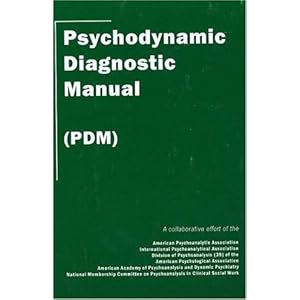
One last thought - the DSM is created by and for psychiatrists, not counselors, social workers, or psychologists (collectively, psychotherapists). We should leave them to their book and work together to create a new manual reflecting what we actually worth when we see clients (most psychiatrists no longer do therapy, they prescribe drugs). Failing that, we should switch (for now) to the Psychodynamic Diagnostic Manual, which is more suited to therapy than the DSM ever was or will be in the future.

DSM-5: Psychiatrists OK Vast Changes To Diagnosis Manual 
By LINDSEY TANNER 12/01/12 
CHICAGO -- For the first time in almost two decades the nation's psychiatrists are changing the guidebook they use to diagnose mental disorders. Among the most controversial proposed changes: Dropping certain familiar terms like Asperger's disorder and dyslexia and calling frequent, severe temper tantrums a mental illness 
The board of trustees for the American Psychiatric Association voted Saturday in suburban Washington, D.C., on scores of revisions that have been in the works for several years. Details will come next May when the group's fifth diagnostic manual is published. 
The trustees made the final decision on what proposals made the cut; recommendations came from experts in several task force groups assigned to evaluate different mental illnesses. 
Board members were tightlipped about the update, but its impact will be huge, affecting millions of children and adults worldwide. 
The manual "defines what constellations of symptoms health care professionals recognize as mental disorders and more importantly ... shapes who will receive what treatment. Even seemingly subtle changes to the criteria can have substantial effects on patterns of care," said Dr. Mark Olfson, a Columbia University psychiatry professor who was not involved in the revision process. 
The manual also is important for the insurance industry in deciding what treatment to pay for, and it helps schools decide how to allot special education. 
The guidebook's official title is the Diagnostic and Statistical Manual of Mental Disorders. The new one is the fifth edition, known as the DSM-5. A 2000 edition made minor changes but the last major edition was published in 1994. 
The manual "seeks to capture the current state of knowledge of psychiatric disorders. Since 2000 ... there have been important advances in our understanding of the nature of psychiatric disorders," Olfson said. 
Expected changes include formally adopting a term for children and adults with autism – "autism spectrum disorder," encompassing those with severe autism, who often don't talk or interact, and those with mild forms including Asperger's. Asperger's patients often have high intelligence and vast knowledge on quirky subjects but lack social skills.

Transference and Countertransference: An Interview with Kerry Malawista


Kerry Malawista is co-author of Wearing My Tutu to Analysis and Other Stories: Learning Psychodynamic Concepts from Life, and she joins Michael at The Psych Files for a discussion of transference and countertransference (which should be conceptualized as co-transference).

Transference is about the client's unconscious material being projected onto the therapist; countertransference is about the therapist's unconscious material being projected onto the client. Each of these, in their traditional usage, misses the intersubjective field created whenever two (or more) people are in conversation.

Co-transference (Donna Orange - see Working Intersubjectively: Contextualism in Psychoanalytic Practice, written with George Atwood and Robert Stolorow) recognizes that if the client is projecting onto the therapist, then the therapist is also contributing to the dynamic. Likewise, if the therapist is projecting onto the client, the client is contributing to that exchange as well.

As you listen to this podcast, please keep in mind that the ideas of transference and counterference are conventional concepts - co-transference is an intersubjective perspective, and represents a post-conventional understanding.

Dr. Malawista is a training and supervising analyst with the Contemporary Freudian Society. She has taught and supervised in a variety of settings, including the George Washington University Psy.D. program, Smith College and Virginia Commonwealth University Schools for Social Work, and The New York Freudian Society.

Ep 185: The Dynamics of Therapy: Transference and Counter Transference: An Interview with Kerry Malawista


Transference and countertransference are two key concepts in psychoanalysis and they are fascinating. If you’re interested in the therapy side of psychology – particularly psychoanalysis – this is the episode for you. Kerry Malawista, psychoanalyst and author, along with Anne Adeleman and Catherine Anderson, talks about their new book, “Wearing My Tutu To Analysis“. In this episode we focus on two of the stories in the book, which focus on transference and countertransference. In earlier episodes of The Psych Files I asked you not to dismiss Freud’s ideas. Too often we only hear about his (100 year old) ideas on sex. There is A LOT more to Freud and this episode will convince you of that.
Basically, transference is when we take real live feelings from our own life and then literally transfer them onto the therapist or analyst. We do this in all aspects of our lives. If the brain had to respond to every new encounter like it had never seen it before we’d be overwhelmed with data. So transference is our way of using what se’ve learned from our earlier lives and then representing it on new people that come along. Sometimes that’s for positive when things went well in the past, and sometimes negatively when we keep repeating relationships [from the past] that weren’t helpful. – Kerry Malwista
Just like transference, countertransference is ubiquitous. It’s all the emotional responses a therapist has to a patient – both conscious and unconscious – and how valuable that data is if it can be used in the right way. That’s where the skills of the therapist come in. They can make note of the feelings they’re having and their [own] reactions and use them to further the work and maybe understand how the patient is actually feeling. – Kerry Malawista

Resources on Psychoanalysis